






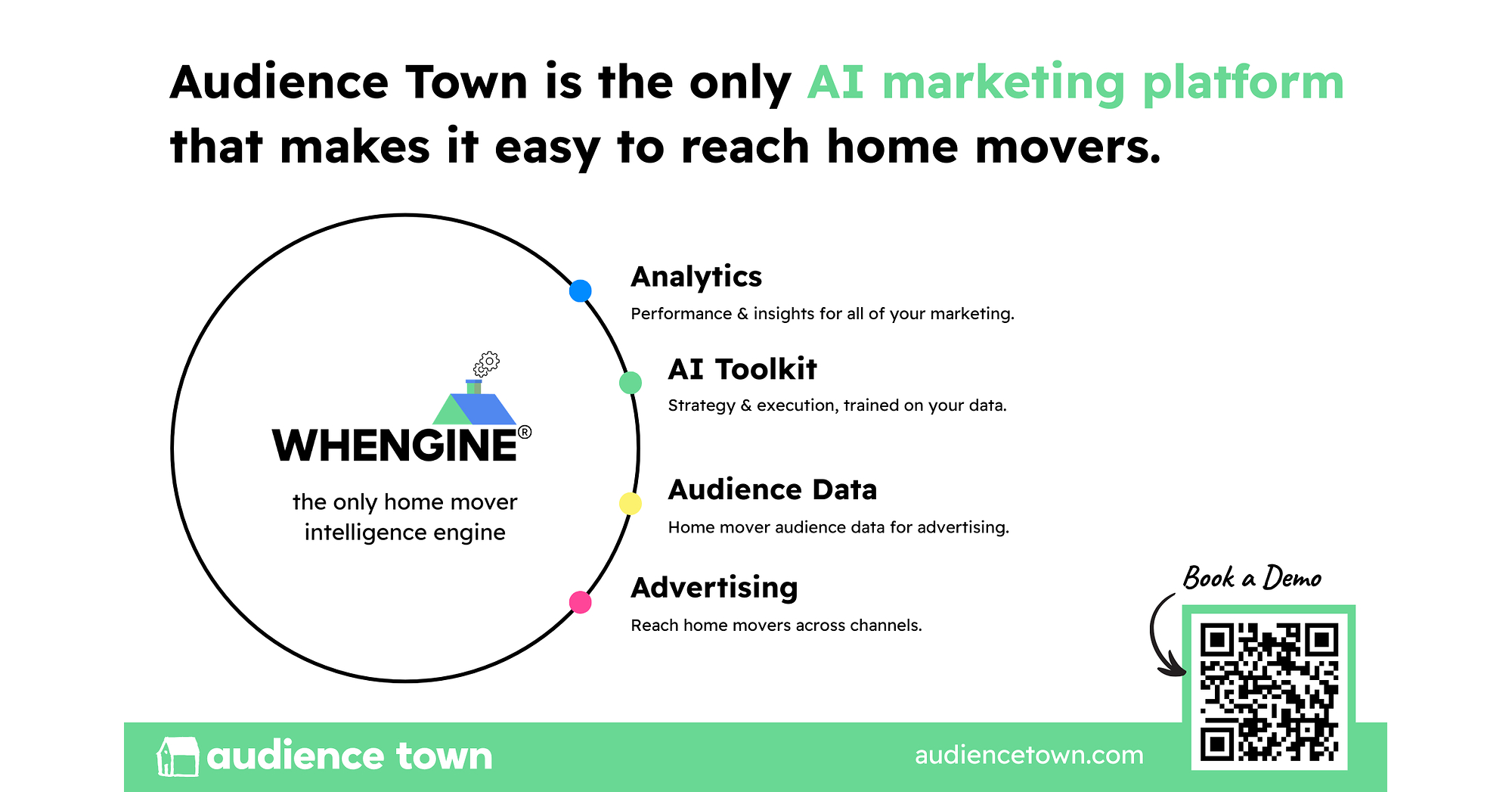
Audience Town and Cotality expanded their data alliance to create an end-to-end, activatable “home buyer journey” audience combining Audience Town’s pre-mover intent intelligence with Cotality’s post-mover property and location data. Audience Town cites 200% year-over-year growth and reports its Whengine uses 280M U.S. adults / 120M households, while Cotality adds billions of property lifecycle signals across 152M parcels. The combined data is now live in 50+ programmatic audience segments via major DSPs (e.g., LiveRamp, The Trade Desk, Google DV360, Amazon DSP), extending beyond analytics into broader activation for any brand targeting movers.
This is a modest positive for the “activation layer” of ad tech more than for the underlying data providers. If these mover segments actually scale inside major DSPs, TTD has the cleanest operating leverage because better identity-rich intent data raises bid efficiency and can reduce churn among performance advertisers; AMZN benefits secondarily through its DSP and retail-media cross-sell, while GOOGL is mostly a distribution conduit rather than the economic owner of the signal. The second-order effect is on vertical advertisers with short purchase cycles — home improvement, furniture, appliances, insurance, and mortgage/refi — where better timing can lift ROAS enough to justify higher CPMs.
The market should be careful not to over-assign near-term revenue impact. For a data alliance like this, the first 1-2 quarters are about testing, integration, and seat expansion, not a step-function in spend; most of the upside would show up in retention, pricing power, and incremental share of wallet over 6-18 months. The main risk is that privacy limits, signal duplication, or weak conversion lift make these audience products look like commodity packaging rather than proprietary alpha, which would cap the multiple impact for TTD and AMZN.
Contrarian view: consensus likely treats this as incremental ad-tech plumbing, but the bigger implication is that deterministic life-event targeting may become a must-have feature for performance platforms, not a differentiator. If that happens, the winners are the DSPs with the best workflow integration and closed-loop measurement, while standalone data boutiques face margin pressure as their signals get bundled into larger ecosystems. Falsifiers: if TTD audience-related spend or customer concentration does not improve over the next 2-3 quarters, or if privacy changes reduce match rates, the bullish read-through should be faded.
AI-powered research, real-time alerts, and portfolio analytics for institutional investors.
Request TrialOverall Sentiment
mildly positive
Sentiment Score
0.12
Ticker Sentiment
