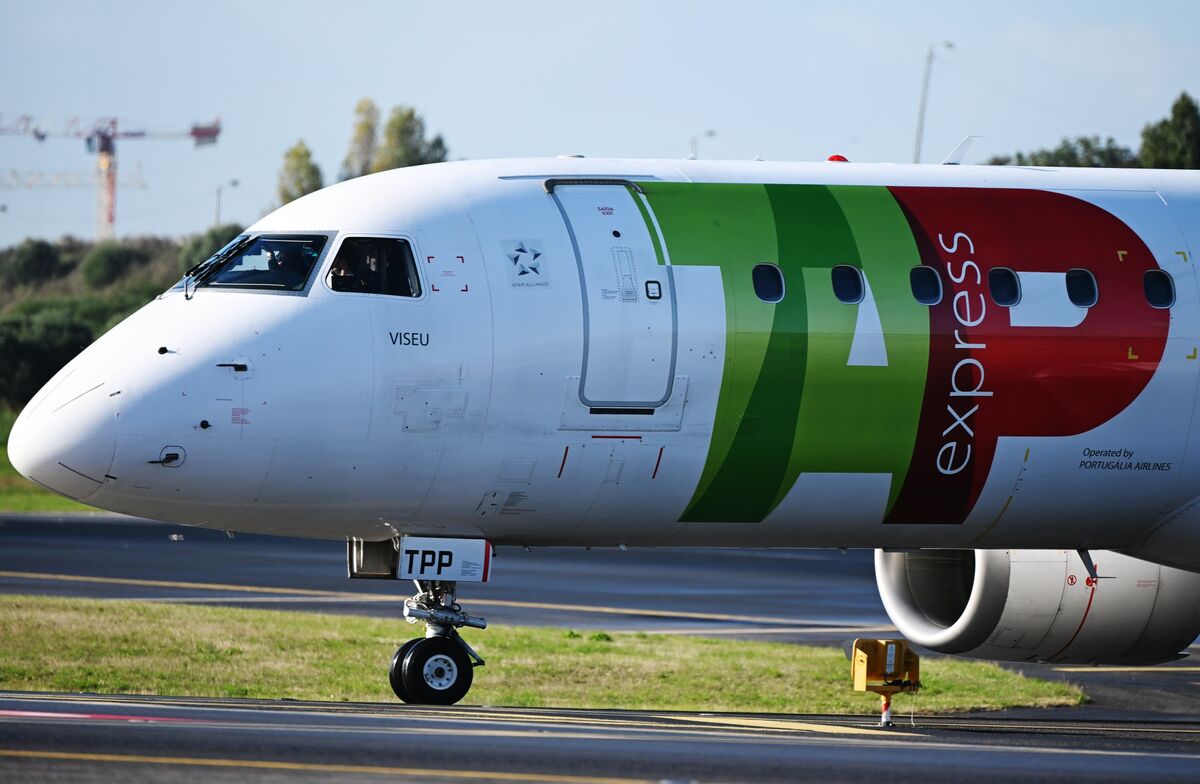
Portugal has invited Air France-KLM and Deutsche Lufthansa to submit binding bids for a minority stake in TAP, advancing the privatization process for one of Europe’s last state-owned airlines. The move creates a competitive auction that could support TAP’s strategic value and attract investor interest. Impact is likely limited to the airline sector and related European transport names.
This is less about TAP itself and more about the state creating an auction process that should re-rate the entire European airline asset class on consolidation optionality. For Air France-KLM and Lufthansa, even a minority investment can be strategically valuable if it improves slot access, network density, and bargaining power with labor and airports; the real economic prize is not control of TAP’s earnings but the ability to steer traffic flows across the Atlantic and into Iberia. The second-order winner is likely IAG/BA indirectly, because any stronger flag-carrier consolidation in the region raises the value of hub economics and makes it harder for smaller point-to-point operators to win premium long-haul feed.
The main loser is not another legacy airline per se, but marginal European capacity: if TAP is stabilized with a stronger parent, price discipline on Portugal-Brazil and Portugal-US routes should improve over a 12-24 month horizon. That matters for low-cost carriers and adjacent leisure operators because route-specific fare pressure can ripple into yields across southern Europe. The regulatory angle is key: Brussels will likely tolerate a minority stake more readily than a full merger, so the first-order market reaction may overestimate the eventual strategic freedom of the bidder and underestimate the political constraints that keep synergies capped.
The catalyst path is slow and binary: next 1-3 months for bid clarity, then 6-12 months for governance and integration terms, with any real P&L impact likely deferred to 2026. Tail risk is deal failure or a structure that gives the bidder too little operating influence, in which case the market may fade the enthusiasm quickly. A deeper contrarian read is that the auction could be a reminder that European airlines remain undercapitalized and politically constrained, which keeps the sector structurally discount-valued despite improving capacity discipline.
AI-powered research, real-time alerts, and portfolio analytics for institutional investors.
Request TrialOverall Sentiment
mildly positive
Sentiment Score
0.20
