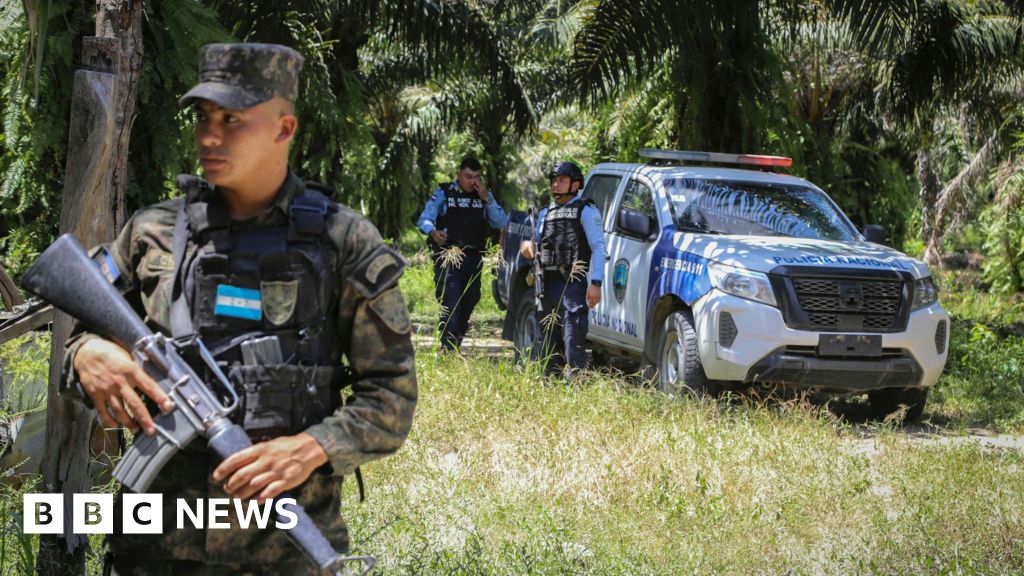
At least 24 people were killed in two violent attacks in Honduras, including four police officers and one civilian in Omoa and at least 19 workers at a ranch near Trujillo. Authorities have not identified a motive and no arrests have been reported. The incidents underscore persistent security risks and criminal violence in Honduras, but are unlikely to have broad market impact.
This reads as a local security shock, but the investable implication is broader: when state coercive capacity visibly degrades, the first-order hit is sentiment, while the second-order effect is a higher probability of interruptions in transport, agriculture, and cross-border logistics in the north. That matters less for headline GDP than for the cost of doing business, insurance pricing, and the willingness of informal capital to remain onshore; those are the channels that can keep a small economy trapped in a low-investment equilibrium for quarters, not days.
The more important catalyst is whether the government responds with a short-lived crackdown or a sustained deployment that meaningfully improves route security. If response is theatrical, expect only a brief risk-off reaction; if it escalates into a wider counter-gang campaign, the near-term risk is retaliation and further disruption around border corridors and rural production zones. Over a 1-3 month horizon, the key question is not the homicide rate itself but whether companies start re-routing freight, raising security spend, or delaying inventory replenishment.
For regional second-order effects, Guatemala-linked border traffic and any businesses reliant on Honduran transit should see the largest operational drag. In EM credit, the market typically underprices security events until they affect tax collection or transport flows; the more durable trade is not a broad sovereign short, but a relative underweight to the weakest governance names versus better-insulated Central American peers. The contrarian point is that repeated violence can sometimes trigger harder policing that improves route safety faster than consensus expects, so the downside to a tactical short is that the selloff in risk assets may be too shallow if the state overreacts effectively.
AI-powered research, real-time alerts, and portfolio analytics for institutional investors.
Request DemoOverall Sentiment
strongly negative
Sentiment Score
-0.80
