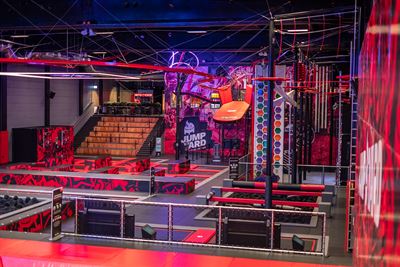
JumpYard is entering the German market with a new 3,500 sqm indoor activity park at the MERCADO shopping centre in Nuremberg, scheduled to open in early 2026 in the former Ninja Warrior premises. The park expands JumpYard’s European footprint—the Sweden-founded operator runs 27 parks across five countries and ~1,000 employees—and will offer a broad mix of attractions and food & party facilities aimed at driving full-day visits; further German sites are planned in Frankfurt and Hamburg. The move represents a strategic roll-out into Germany’s leisure real-estate and consumer entertainment market, with limited near-term market-moving implications but potential regional revenue upside as operations scale.
Market structure: JumpYard’s entry signals incremental demand for multi-attraction, all-day family destinations and benefits mall landlords that can re-tenant large experiential footprints (MERCADO owner, URW/KLE exposure). Winners include mall REITs, branded leisure operators and F&B concessionaires—per-visit spend can rise €15–35 and dwell time can lift F&B sales +20–40%, creating visible upside to NOI on 3,000–4,000 sqm anchors. Losers are small independent playgrounds and single-attraction venues that lack scale and marketing reach.
Risk assessment: Key tail risks are safety/regulatory interventions in Germany (capacity or insurance restrictions), a macro shock that cuts discretionary visits >10%, and capex overruns >20% that push payback beyond 5–7 years. Immediate effects are localized leasing and construction wins; short-term (3–12 months) tests are pre-sales and opening occupancy; long-term (2–5 years) risk is market saturation if national rollouts exceed demand density thresholds (one park per 400–600k population).
Trade implications: Tactical trades favor mall landlords and listed leisure operators with healthy balance sheets—transpose experiential upside into 6–12 month option expressions (defined-risk call spreads) and selective 1–3% equity positions in KLE.PA/URW.PA and SPG. Avoid overlevered pure-play kids-entertainment companies (debt/EBITDA >4x) and prefer assets where experiential tenants can command +5–10% rent premiums or revenue-share arrangements.
Contrarian angles: The market underestimates the re-rating potential of malls that successfully repurpose space to experience-led anchors—NOI upside of 3–6% over 12–24 months is plausible if rollouts scale without material cannibalization. Conversely, consensus underprices execution risk: rapid national rollouts can compress unit economics and inflate insurance/claims costs, producing a non-linear downside. Historical parallels (cinema-to-experience pivots) show winners concentrated among landlords that capture ancillary F&B and parking revenue.
AI-powered research, real-time alerts, and portfolio analytics for institutional investors.
Request DemoOverall Sentiment
mildly positive
Sentiment Score
0.28
