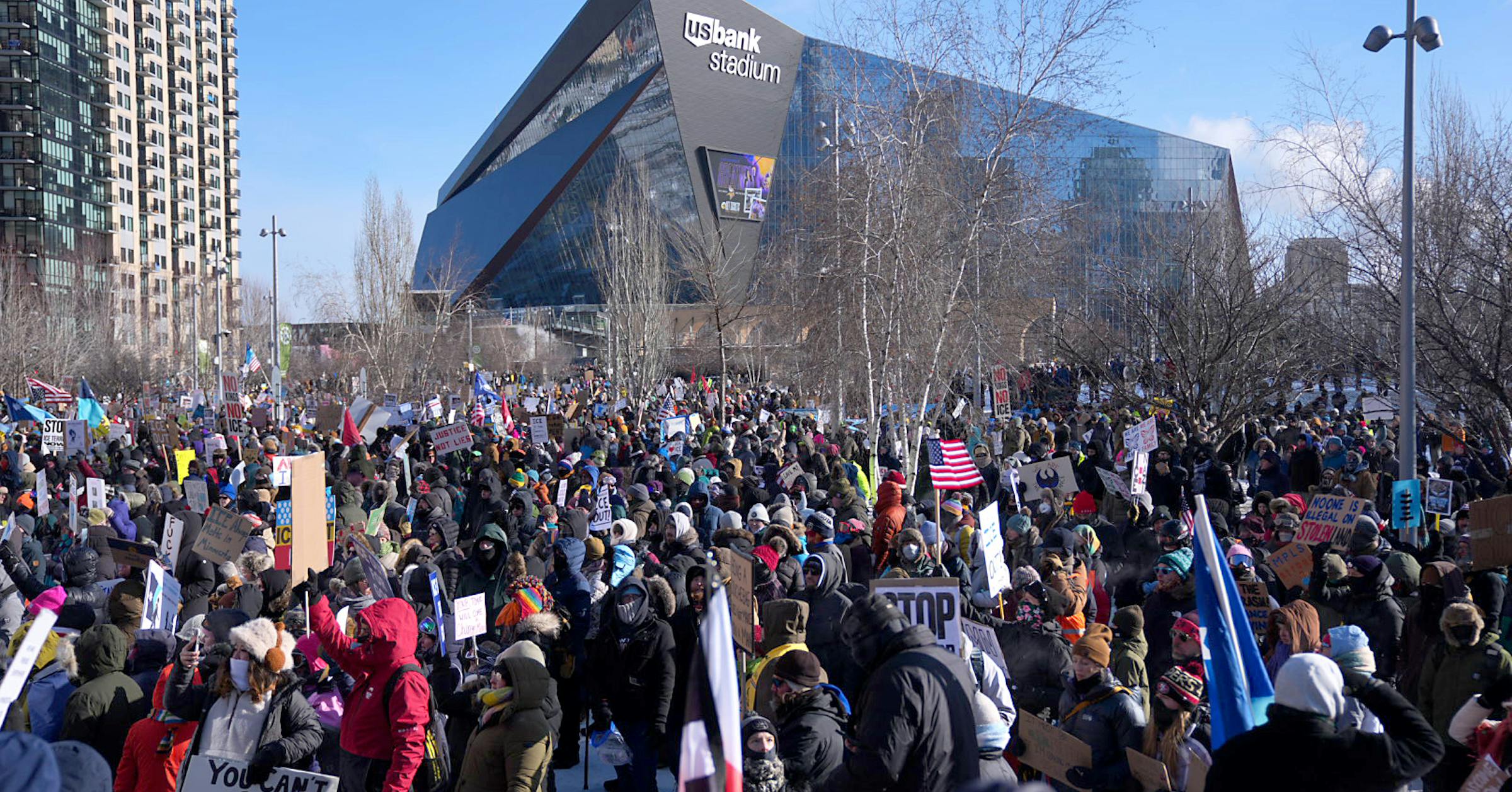
An estimated 700 restaurants, shops, museums and entertainment venues in Minnesota closed on Jan. 23 for a statewide “Day of Truth and Freedom” protest supporting immigrant communities and calling for federal immigration agents to leave the state, triggering demonstrations across Minneapolis and other cities and disruptions at the airport and federal buildings. Federal officials claim ICE arrested 10,000 “criminal illegal aliens” in Minnesota since Dec. 1—a figure the local paper could not confirm—and businesses report lost workers and customers under Operation Metro Surge, indicating localized revenue and labor impacts for retail, travel and leisure operators.
Market structure: Local small- and mid-sized retail, restaurants and downtown-facing real-estate are immediate losers (estimated 1–5% weekly revenue hit for affected corridors; foot-traffic down mid-single digits). Winners are national grocery/e‑commerce and delivery players (WMT, AMZN) that can capture shifted spend; airlines with MSP exposure (DAL) face concentrated demand risk — MSP passenger throughput could fall 5–10% in the next 2–6 weeks, pressuring short-term yields on affected routes.
Risk assessment: Tail risks include escalation into multi-week labor disruptions or targeted boycotts that depress city tax receipts and raise small-business defaults (could add 25–75bp to local commercial credit spreads). Immediate risk window is days–weeks (consumer spend shock), short-term weeks–months for labor rehiring costs (wage pressure +3–5%), and long-term quarters for any permanent change in downtown occupancy. Hidden dependencies: regional bank loan books (SME and CRE) and state muni revenue are second-order exposures.
Trade implications: Tactical short in Delta (DAL) via short-dated puts is justified for a 2–6 week window; overweight AMZN/WMT for a 1–3 month consumer reallocation trade. Trim municipal/MN-specific muni exposure and add credit-protection on small-dollar commercial loans in Minnesota (via regional-bank hedges). Entry/exit: act within 7 trading days while volatility is elevated; unwind if MSP PAX recovers to within 5% of baseline or protests subside for two consecutive weeks.
Contrarian angles: Market may overstate systemic damage — historical urban protest episodes (BLM, localized strikes) produced 2–8 week revenue shocks, then reversion. If DAL falls >7% on sentiment, buying 3–6 month call spreads offers favorable asymmetric payoff. Unintended consequence: aggressive federal or legal intervention could crystallize regulatory changes that permanently increase labor costs, so size positions conservatively (1–3% portfolio each).
AI-powered research, real-time alerts, and portfolio analytics for institutional investors.
Request DemoOverall Sentiment
moderately negative
Sentiment Score
-0.40
