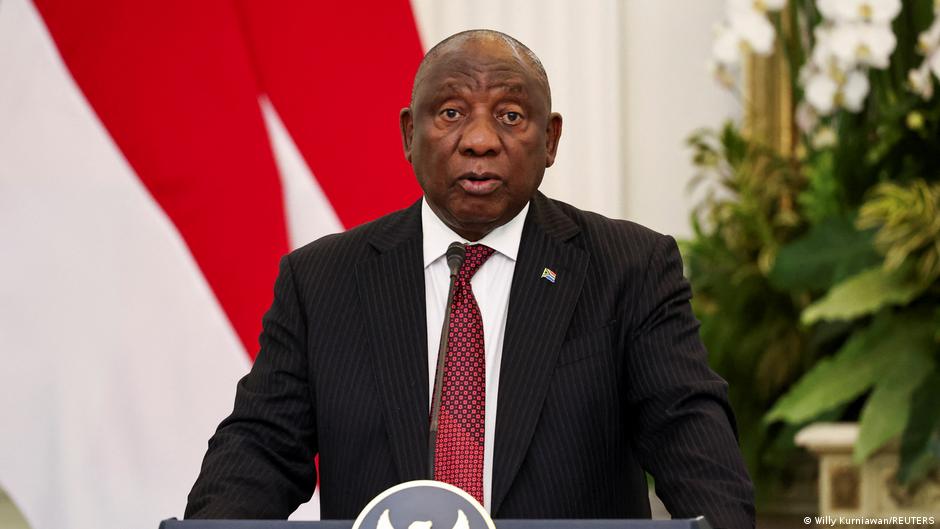
South African President Cyril Ramaphosa says he will not resign despite renewed pressure after the Constitutional Court ruled that parliament acted unconstitutionally in blocking impeachment proceedings. A parliamentary committee had found possible wrongdoing tied to about $580,000 hidden on his farm in 2020, and opposition parties are now pushing for resignation while the ANC holds emergency talks. The issue is primarily a domestic political and governance risk rather than a direct market-moving event.
This is less a single-person headline than a governing-coalition stress event. In South Africa, prolonged leadership uncertainty tends to widen the gap between political signaling and policy execution, which matters more for domestic cyclicals than for the index level itself. The first-order market reaction should be muted outside of RSA risk premium, but the second-order effect is a higher probability of delayed budget implementation, slower SOE reform, and weaker private capex intentions over the next 1-3 months.
The real transmission channel is the currency and rates complex. A governance shock that keeps ANC infighting in the headlines usually pressures ZAR via foreign-flow hesitation, especially if it coincides with any deterioration in fiscal messaging or load-shedding rhetoric. That supports higher imported inflation and can steepen the local curve; banks and retailers are vulnerable because they are levered to household confidence and funding costs, while exporters and USD earners gain an automatic buffer.
The contrarian read is that this may ultimately be a cleansing event rather than a regime break. If the legal process is allowed to run cleanly and no immediate replacement crisis emerges, markets can re-price the situation as institutional resilience, not collapse, which would unwind part of the political risk premium quickly. The bigger tail risk is not resignation versus survival; it is a messy, drawn-out intra-party fight that paralyzes decision-making into the next fiscal cycle.
AI-powered research, real-time alerts, and portfolio analytics for institutional investors.
Request DemoOverall Sentiment
mildly negative
Sentiment Score
-0.15
