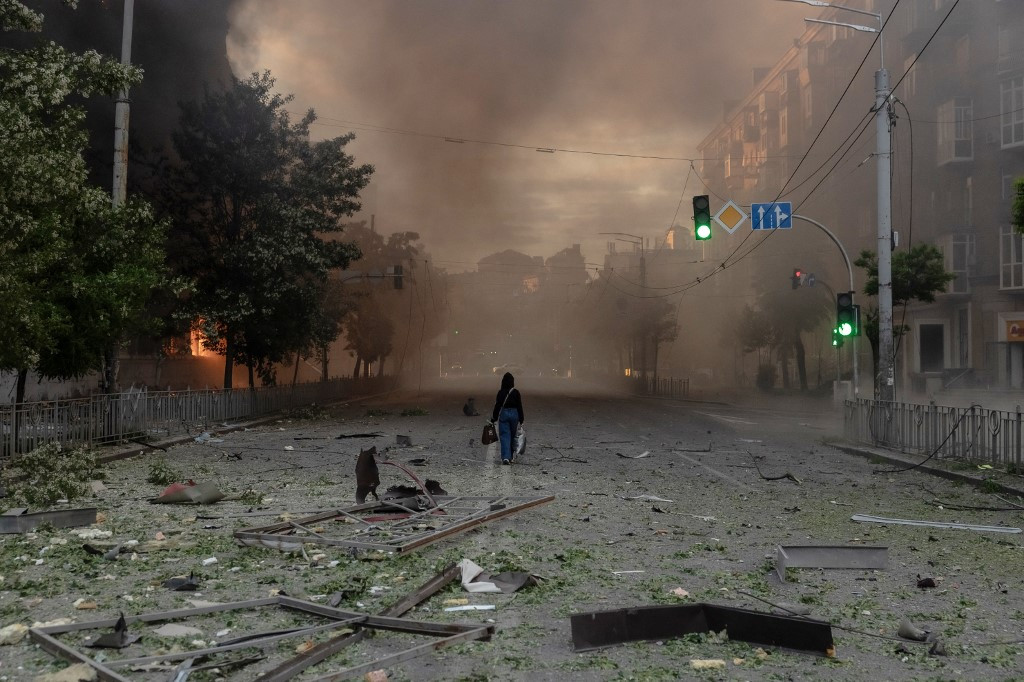
European officials are increasingly concerned Russia could expand the war beyond Ukraine, with NATO states in the Baltics singled out as potential targets. The article cites intensified Russian rhetoric, nuclear drills with Belarus, and reports that NATO is preparing a rapid troop deployment plan to defend the Baltics. The escalation risk is high and could lift defense assets while weighing on broader European risk sentiment.
The market implication is less about an immediate NATO shooting war and more about a regime shift in European risk premia: sustained defense outlays, elevated energy-security spending, and a higher floor for cyber/physical hardening budgets. That is structurally bullish for European primes and dual-use infrastructure names, but the second-order loser is anything levered to cheap continental logistics, lower power costs, or subdued sovereign borrowing needs. Even absent escalation, the probability distribution of capex is moving from discretionary to mandatory, which supports defense order backlogs for years rather than quarters. The more important catalyst is the time mismatch between rhetoric and force posture. Russia does not need to invade a Baltic state to force markets to reprice; a brief incursion, drone incident, or maritime disruption in the Baltic Sea/Arctic would be enough to trigger a rapid NATO response test and spike regional spreads. That creates a path-dependent setup where the next 30-90 days matter most: any evidence of pre-positioning, reservist mobilization, or logistics buildout should be treated as a leading indicator for a higher-escalation regime. The contrarian risk is that investors overestimate immediate kinetic escalation and miss the easier trade: prolonged gray-zone pressure that is equity-negative for Europe but supportive for defense and certain energy infrastructure beneficiaries. If Western support remains steady and Russia’s losses continue to strain manpower, Moscow may prefer coercive signaling over a broader front expansion, which caps the tail risk but keeps the risk premium sticky. In that scenario, the opportunity is not to fade the headline, but to own the industries that monetize permanent preparedness. For broader portfolios, the key is that this is a European policy shock, not a direct earnings shock to global cyclicals yet. The biggest underappreciated effect is higher sovereign issuance and tighter fiscal space in the Baltics, Nordics, and Poland, which can crowd out non-defense public investment over the next 12-24 months. That argues for relative-value exposure to defense winners versus construction/transport names that depend on stable public budgets and frictionless trade.
AI-powered research, real-time alerts, and portfolio analytics for institutional investors.
Request DemoOverall Sentiment
strongly negative
Sentiment Score
-0.75
Ticker Sentiment
