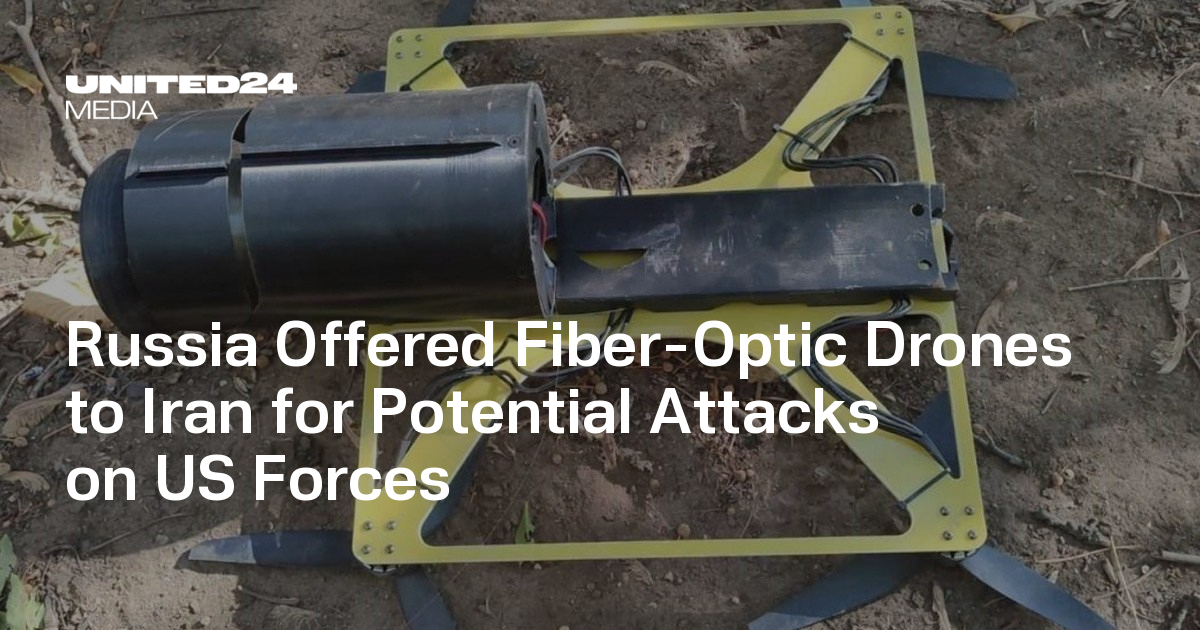
Russia reportedly proposed supplying Iran with up to 5,000 fiber-optic drones and longer-range strike systems, with plans tied to a potential U.S.-Iran conflict in the Persian Gulf. The document allegedly included operational maps around Kharg Island and concepts for swarming attacks on U.S. amphibious ships, underscoring escalation risk and deeper Moscow-Tehran military cooperation. If accurate, the proposal raises the odds of regional instability around Gulf energy infrastructure and U.S. forces.
This is less about a one-off weapons transfer and more about the diffusion of a battlefield innovation that compresses the effectiveness gap between expensive Western EW and cheap asymmetrical attack platforms. If fiber-guided drones proliferate, the marginal cost of saturating defended maritime or energy infrastructure targets falls materially, which raises the premium on layered air defense, ISR, and jamming-adjacent counters such as kinetic interceptors and directed energy. The first-order market implication is not a broad defense rally; it is a re-rating of companies exposed to persistent demand for short-range air defense, counter-UAS, and hardened infrastructure.
The second-order risk sits in the Gulf logistics stack. Even a small increase in perceived threat to chokepoints, offshore terminals, and amphibious assets can widen insurance premia, elevate tanker routing costs, and add a geopolitical volatility bid to Brent without needing actual supply disruption. That matters because energy equities may initially underreact if the market reads this as theater, but refining margins, shipping, and regional capital spending plans can reprice faster than headline crude.
The catalyst window is days to weeks, not years: any fresh US posture shift, Iranian proxy action, or credible reporting on Russian support could trigger a sharp volatility spike. The reverse case is also clear—if Washington and Tehran de-escalate, the trade unwinds quickly because the market is currently paying for tail risk rather than base-case flow. Consensus may be overpricing the probability of immediate direct conflict while underpricing the durable transfer of know-how, which is the more important medium-term bearish factor for regional security and bullish factor for counter-drone spend.
AI-powered research, real-time alerts, and portfolio analytics for institutional investors.
Request DemoOverall Sentiment
strongly negative
Sentiment Score
-0.70
