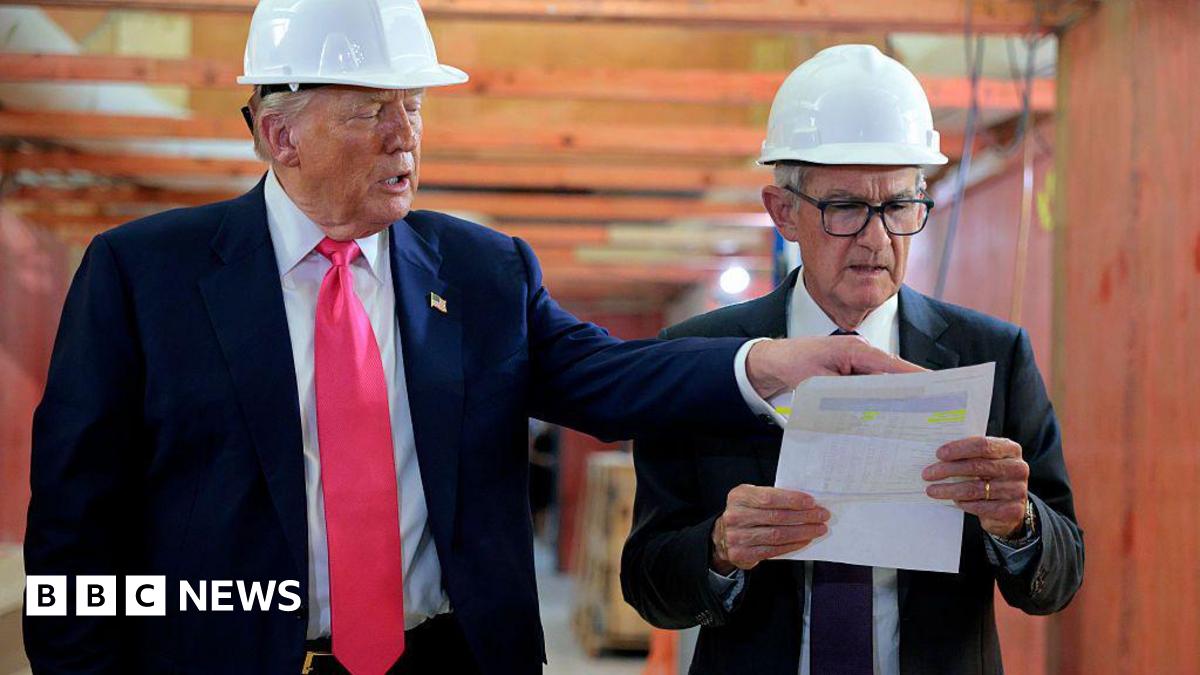
Trump has threatened to fire Fed Chair Jerome Powell if he remains in post beyond his term ending on 15 May, escalating a clash over interest-rate cuts and central bank independence. Markets had already slipped on earlier firing speculation, and this latest escalation could pressure the dollar, rates, and risk sentiment. Confirmation risk around Kevin Warsh and the potential for the first-ever dismissal of a Fed chair make this a market-wide policy event.
The market is underpricing the path dependency here: the immediate risk is not the legal feasibility of firing the chair, but the signaling effect on term premium and FX credibility if the administration keeps escalating. Even if Powell stays, repeated threats create a regime where the front end can rally on dovish speculation while the long end cheapens on inflation-risk premia, steepening the curve and weakening the dollar. That combination is usually bad for quality-duration equities and better for real assets, banks, and exporters than for long-duration growth.
The second-order winner is not just “risk assets on easier policy” but anything levered to a more volatile path of rates: steepeners, financials with deposit beta optionality, and gold as a credibility hedge. The loser set is broader than the obvious rate-sensitive cohort; it includes the parts of the market whose valuation embeds stable policy transmission, especially software and unprofitable growth where a 25-50 bps move in the 10-year has an outsized duration effect. A forced or perceived forced turnover at the Fed would also raise the probability of a weaker dollar and higher imported inflation, which feeds back negatively into real wages and consumer discretionary margins over the next 3-6 months.
The key catalyst window is the confirmation process, not the May expiration itself. A messy confirmation or even a delayed appointment would leave an interregnum that markets would interpret as institutional drift, likely lifting volatility and term premium within days; conversely, a clean confirmation would compress the headline risk fast. The contrarian view is that the initial market reaction may already be too one-dimensional: if investors believe Warsh is more dovish, front-end rates may fall, but that could be offset by higher uncertainty premium, so the real trade is not outright duration but curve shape and relative value across sectors.
AI-powered research, real-time alerts, and portfolio analytics for institutional investors.
Request TrialOverall Sentiment
mildly negative
Sentiment Score
-0.35
