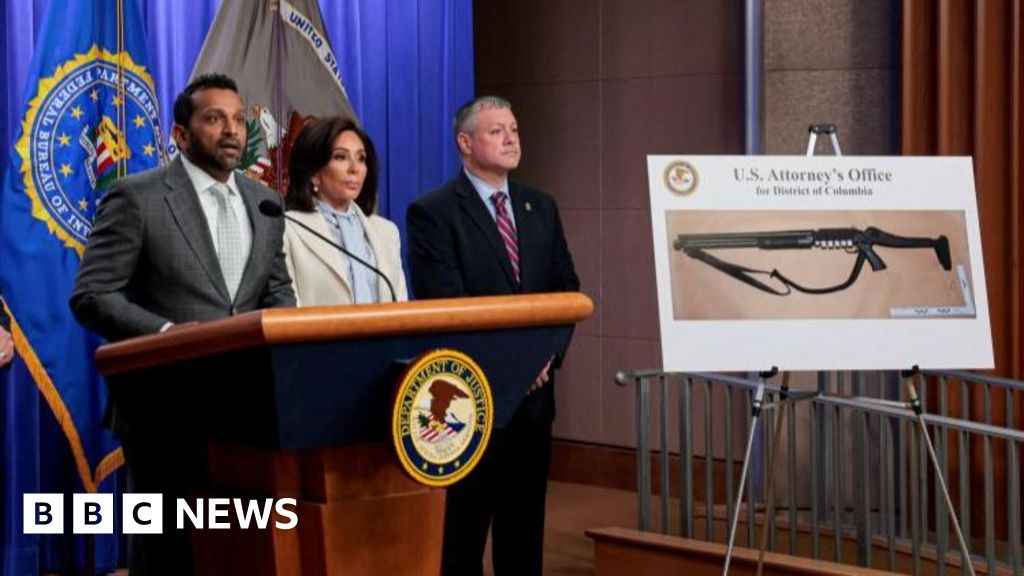
A California man was charged with attempting to assassinate President Trump after allegedly bringing a handgun, shotgun and knives into a White House dinner event, prompting a White House security review. Prosecutors said the suspect crossed multiple state lines and could face life in prison, with additional firearms charges carrying up to 10 years each. The incident raises concerns about Secret Service protocols and major-event security for high-profile government gatherings.
The immediate market implication is not event risk around this specific incident, but a higher structural security premium for any asset tied to major political gatherings, federal venues, or executive travel. That likely benefits private security contractors, airport-style screening vendors, secure logistics, and crisis-response insurers over the next 3-12 months as event organizers overcompensate with more personnel, tighter access control, and longer planning cycles. The second-order loser is the large-event economics of hotels, convention centers, and venues that rely on high-throughput attendance; higher friction reduces attendance, raises costs, and increases cancellation risk.
For defense and homeland-security spend, this is a governance catalyst more than a pure budget catalyst: the political optics increase the odds of incremental appropriations for the Secret Service, DHS protective tech, and surveillance upgrades, but these flows tend to favor incumbents with existing federal contracts and IDIQ vehicles rather than a broad beta trade. The more interesting edge is in software and hardware that reduce human error at checkpoints—credential verification, perimeter analytics, weapon detection, and command-and-control—because management teams now have a near-term justification to refresh legacy systems, especially ahead of a dense 2025–26 political calendar.
The contrarian view is that the market may overestimate the durability of the security spend impulse. These shocks typically create a 30-90 day procurement spike, but budget discipline and procurement bottlenecks often blunt the follow-through unless Congress frames it as a formal modernization initiative. The bigger medium-term risk is political overreaction: if agencies add layers of screening without better technology, throughput collapses and organizers push back, which would hurt venue operators more than it helps the security ecosystem.
AI-powered research, real-time alerts, and portfolio analytics for institutional investors.
Request DemoOverall Sentiment
strongly negative
Sentiment Score
-0.75
