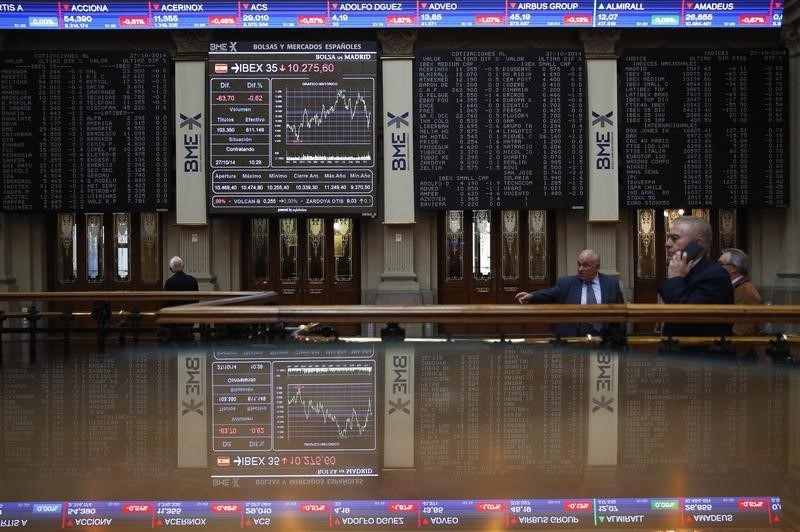
Spain's IBEX 35 fell 0.29%, with decliners in Consumer Goods, Consumer Services and Financial Services & Real Estate outweighing advancers 91 to 103. Gold futures for August dropped 1.90% to $4,165.25/oz, while July crude rose 0.07% to $76.65/bbl and August Brent gained 1.01% to $80.66/bbl. EUR/USD was flat at 1.15 and the U.S. Dollar Index Futures edged down 0.01% to 100.61.
The immediate market read-through is not just “lower oil,” but a softer geopolitical risk premium combined with a still-firm physical market. That combination tends to help transport, airlines, and energy-intensive cyclicals first, while pressuring the most levered commodity producers and anyone counting on a sustained summer risk bid. The bigger second-order effect is that a deferred U.S.-Iran diplomatic path reduces near-term tail-risk hedging demand, which can mechanically fade volatility across crude, gold, and the dollar in the next 1-3 sessions.
For metals, the move in MT is more interesting than the headline suggests: if oil stays contained and Europe’s currency is stable, input-cost relief should support margins faster than end-demand deteriorates. But the stock still faces a trapdoor if the market interprets softer geopolitics as a growth scare rather than a supply reprieve, because steel is a high-beta proxy for industrial confidence and Chinese pricing. In other words, the near-term setup favors relative longs in lower-energy-input industrials, not a broad cyclical beta chase.
The contrarian view is that the market may be underpricing how quickly a postponed negotiation can be revisited if crude resumes its climb. That makes the current dip in risk premia fragile: a single supply disruption or stronger summer demand print could reintroduce geopolitical premium within days, not months. Gold’s weakness also looks tactical rather than structural if rates or the dollar re-accelerate lower; the market is likely overshooting on the assumption that diplomacy alone removes all safe-haven demand.
AI-powered research, real-time alerts, and portfolio analytics for institutional investors.
Overall Sentiment
mildly negative
Sentiment Score
-0.10
Ticker Sentiment
