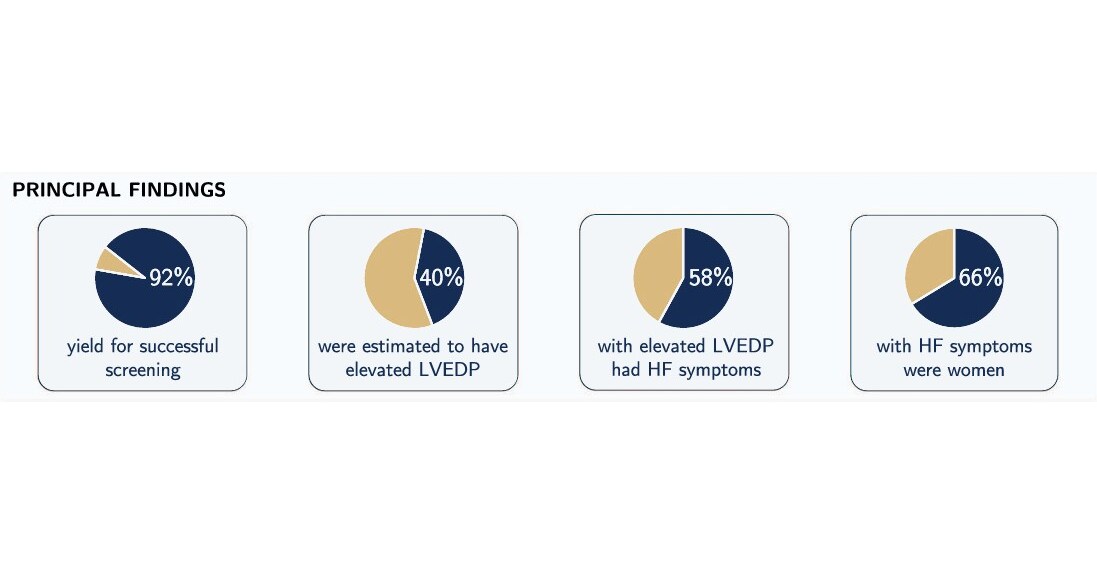
A primary-care study of the Vivio System (Faisal Amlani et al.) using a 15-minute workflow across 25 sites found a 92.2% conclusive diagnostic rate (1,141/1,238) and detected elevated LVEDP (>18 mmHg) in 40.1% of at-risk patients. Among those with elevated LVEDP who completed KCCQ-12, 42.3% were classified as asymptomatic Stage B heart failure (KCCQ=100), suggesting earlier identification before progression. The non-invasive, <5-minute test reportedly enables medical assistants to run screening workflows, with Ventric Health positioning this as a scalable model for guideline-directed therapy initiation.
This reads as evidence that the real monetization lever is not the device itself but downstream treatment capture. If a primary-care workflow can consistently surface previously untreated HF patients, the first beneficiaries are the drug franchises that get pulled earlier into the care pathway: SGLT2s and ARNI/RAAS therapies. That creates a slow-burn revenue tailwind over 6-18 months, but only if screening converts into prescription starts and persistent adherence; otherwise the economic lift stays inside the clinical literature.
The market is likely underestimating how much operational friction determines the outcome. A high-yield pilot with dedicated superusers is not the same as broad, messy deployment across lower-acuity practices, so the scalable prevalence and margin math probably compress from here. The more important second-order effect is on referral mix: successful screening can shift volume away from expensive rule-out testing and toward chronic management, which helps value-based groups and hurts low-yield diagnostic throughput.
Near term, I would expect little tradable impact without reimbursement or payer-claim confirmation. The contrarian risk is that investors overpay for a screening story while the actual earnings impact accrues to incumbents with the therapy wallet share, not the private device vendor. What would falsify the bullish read is a lack of follow-through in claims data: no uptick in HF medication initiation, no reduction in admissions, or payer pushback on coverage within the next 2-4 quarters.
AI-powered research, real-time alerts, and portfolio analytics for institutional investors.
Request DemoOverall Sentiment
moderately positive
Sentiment Score
0.55
