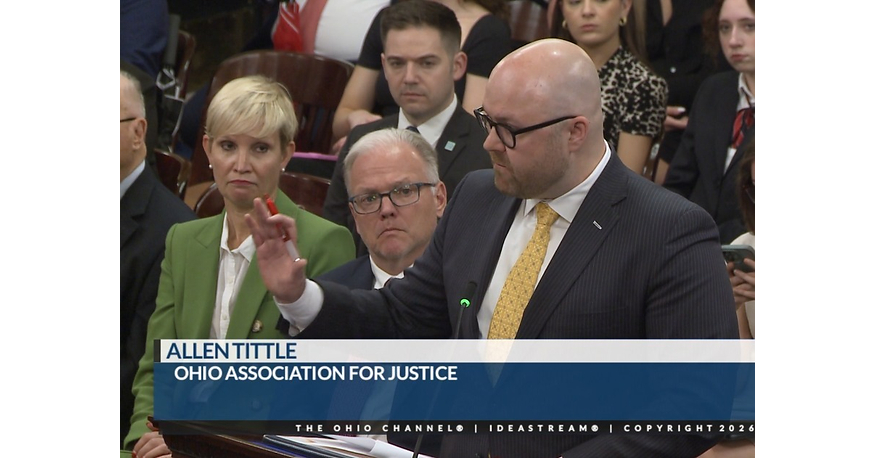
Ohio personal-injury attorney Allen Tittle urged the Ohio Senate to pass Senate Bill 292, which would index Ohio’s statutory caps on non-economic damages to inflation (and add an annual inflation adjustment going forward). The bill would keep the current cap framework while raising compensation levels reduced over ~20+ years of unchanged limits, and it would remove the absolute cap in certain medical-negligence cases. Overall impact is primarily legal/regulatory with limited direct market movement.
The market mechanism here is not “Ohio politics” but a slow upward drift in loss severity and reserve assumptions for carriers with meaningful tort exposure. The first-order winners are plaintiff-side firms and consumer litigators, but they are not publicly investable; the investable read-through is that P&C underwriters, med-mal writers, and some hospital/physician liability buyers may face higher ultimate loss costs if the bill gains traction. The biggest second-order effect would be underwriting pullback in Ohio lines that are already thinly priced, which can force rate increases or tighter terms in adjacent Midwestern states if carriers use a regional book rather than a state-specific view.
Near term, this is more of a headline catalyst than an earnings event. The inflation-indexing piece is likely manageable for diversified carriers because they can reprice over 1-3 renewals, but the removal of an absolute cap in certain med-mal cases is the tail risk: that change can alter reserve adequacy assumptions before any premium offset arrives. If the language survives committee and moves toward a floor vote, expect the small-cap and specialty liability end of the insurance complex to react first; large diversified names should mostly see sentiment pressure, not immediate P&L impact.
The contrarian view is that the move may be smaller than legal advocates imply because most public insurers already model legal inflation, and Ohio is one jurisdiction among many. The consensus may be underestimating the template risk: if one legislature successfully re-indexes tort caps, other states can copy the structure, which would matter far more over 6-18 months than the initial Ohio dollar impact. The thesis is falsified if the bill is diluted back into a symbolic adjustment or stalls before a formal vote; in that case, the trade should be closed quickly because the article itself has no hard earnings linkage.
AI-powered research, real-time alerts, and portfolio analytics for institutional investors.
Request DemoOverall Sentiment
neutral
Sentiment Score
-0.05
