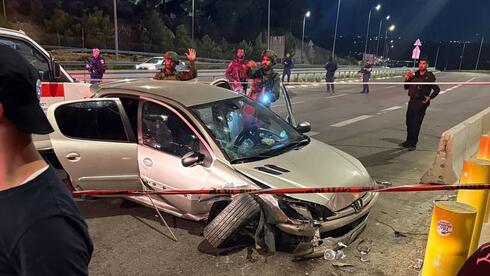
Three people were wounded in a ramming attack at Gush Junction in the West Bank's Gush Etzion, including a 17-year-old girl in serious condition and a 15-year-old girl moderately wounded. The attacker, identified as a Hebron resident, was neutralized by a soldier, and Highway 60 south of the junction was closed in both directions, disrupting local traffic. The incident underscores ongoing regional security risk, though the direct market impact is likely limited.
This is a localized security shock, but the second-order market impact is less about the incident itself and more about the probability of follow-on restrictions. The immediate drag is on intra-West Bank movement, labor access, and delivery reliability; that hits contractors, logistics-heavy businesses, and any supplier dependent on daily cross-border commuting more than headline-sensitive defense names. In this kind of event, the first derivative is panic, but the second derivative is whether authorities convert a temporary closure into a broader, more durable tightening of road control and checkpoint procedures.
The asymmetric beneficiaries are security infrastructure and systems vendors: barriers, surveillance, roadside sensors, and rapid-response capabilities tend to see budget acceleration after attacks, especially when the incident occurs on a recurrent flashpoint route. The loser set includes commercial transit, local retail, and firms with exposure to time-sensitive logistics in the region, where even short closures can compound into missed shifts and inventory delays. If there is a clustering of similar events over the next 2-8 weeks, the policy response could shift from reactive to structural, which is the real catalyst for procurement rather than the attack itself.
The consensus often overprices the immediate geopolitical headline and underprices the administrative response curve. One isolated incident rarely changes macro risk, but repeated attacks create a durable premium on security spending and a persistent discount on traffic-dependent economic activity. The key contrarian point is that short-lived fear can actually delay tourism and local commerce more than it changes strategic posture; the trade should focus on names levered to multi-quarter security capex, not on trading the newsflow in the first 24 hours.
AI-powered research, real-time alerts, and portfolio analytics for institutional investors.
Request TrialOverall Sentiment
strongly negative
Sentiment Score
-0.60
