
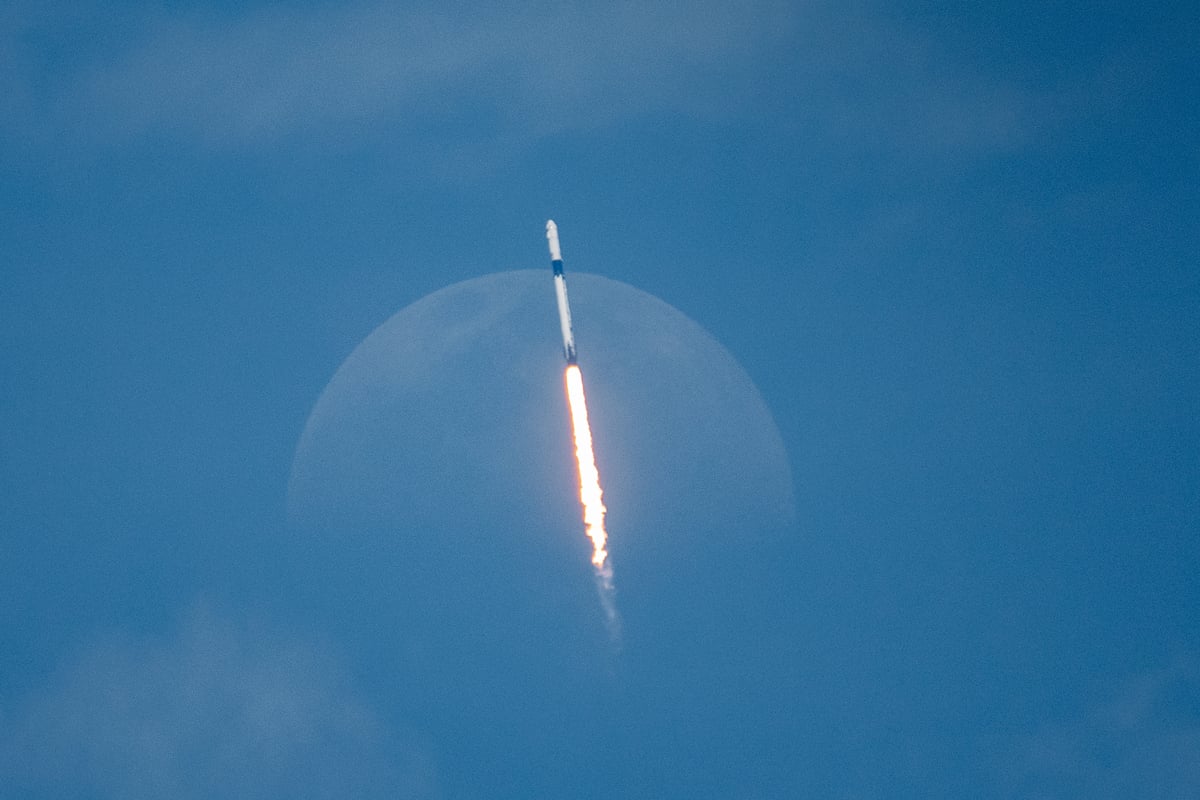
SpaceX successfully completed a Starship test launch after a seven-month delay, removing a key execution concern ahead of a possible IPO as early as next month. The article emphasizes Starship's importance to SpaceX's long-term growth strategy, including lunar operations, orbital data centers, and scaled Starlink expansion, while highlighting potential launch cost reductions from about $2 billion for NASA's SLS to roughly $100 million initially and potentially $10 million over time. The successful test is a positive signal for IPO sentiment, though it is still one step in a longer development and commercialization timeline.
The market is likely to overprice the latest test as a de-risking event and underprice how much execution remains before any IPO premium can be justified. The equity story is not “a rocket test worked”; it is whether SpaceX can convert a technically impressive platform into a repeatable, insured, and capital-efficient launch cadence. That implies the real gating item is not engineering headline risk but manufacturing throughput, launch turnaround time, and loss-rate normalization over the next 2-4 quarters.
The clearest second-order loser is SLS as a price anchor: if Starship starts to look operationally credible, the entire premium paid for legacy heavy-lift capacity becomes harder to defend. That does not just pressure government launch economics; it also raises the hurdle for any adjacent contractors whose valuation depends on scarcity rather than utilization. More broadly, a successful Starship path compresses the moat for smaller launch providers because cost per kg becomes the battleground, and at that point scale and reusability dominate point-solution reliability.
For public investors, the bigger risk is that IPO enthusiasm runs ahead of cash-generation reality. SpaceX’s prospective multiple will likely be driven by narrative around Moon/Starlink/ODC optionality, but the financing math still depends on launch reliability and capex intensity; any hiccup in the next few launches could quickly re-rate the story from “platform” to “science project.” Conversely, if cadence improves steadily through summer, the stock could command a scarcity premium well before the market has evidence of durable profitability.
Consensus is missing the path dependency: the first successful test matters less than the next 5-10 launches. The current move may be modestly underdone in the sense that a credible Starship opens a multi-year TAM expansion, but it is also vulnerable to disappointment because the market will be forced to price in operational metrics, not just aspiration. That creates a classic high-beta setup where sentiment can stay positive while the stock remains event-driven and highly sensitive to any launch anomaly.
AI-powered research, real-time alerts, and portfolio analytics for institutional investors.
Request TrialOverall Sentiment
moderately positive
Sentiment Score
0.62
Ticker Sentiment
