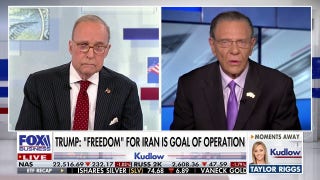
President Trump publicly threatened to cut off trade with Spain, accusing the NATO ally of failing to meet a 5% of GDP defense-spending target and denying U.S. forces use of Spanish bases for operations related to strikes on Iran. He said he directed Treasury Secretary Scott Bessent to halt dealings with Spain; administration officials on hand signaled potential investigations or further actions. U.S. goods trade with Spain totaled roughly $47 billion in 2025, with a $4.8 billion U.S. surplus, and the U.S. retains access to Naval Station Rota and Morón Air Base under a cooperation agreement that requires Spanish authorization for combat uses — raising geopolitical and defense-logistics risk with potential trade and sanctions implications.
Market structure: A threatened U.S. embargo on Spain (~$47bn bilateral goods trade) makes Spanish export names and a Spain ETF (EWP) immediate losers while near-term winners include USD, U.S. Treasuries and defense contractors that benefit from NATO friction (LMT, RTX, NOC). Pricing power shifts away from Spanish suppliers to U.S. importers for any redirected flows; autos, packaged foods and pharmaceuticals are most exposed given Spain's export mix. Cross-asset: expect EURUSD down 0.5–2% on headlines, short-term bid to TLT/IEF and a knee-jerk equity volatility spike (VIX +15–40% intraday if escalation persists).
Risk assessment: Tail scenarios include a formal 12–24 month embargo, EU retaliation (reciprocal tariffs on U.S. goods >$5bn), or a rapid Iran escalation that spikes Brent >$100/bbl. Immediate (days): headline-driven volatility and FX moves; short-term (weeks–months): trade investigations and targeted sanctions; long-term (quarters+): NATO funding reallocation and supply-chain realignment. Hidden dependencies: Spanish base denials would complicate U.S. logistics in the Mediterranean, indirectly pressuring defense logistics contractors and insurance/reinsurance spreads.
Trade implications: Tactical plays include short EWP and EURUSD put spreads for 1–3 month payoff, hedge with 2–5yr Treasuries (IEF) and selectively long defense equities or 6–12 month call overlays (LMT, RTX) for upside if NATO spending rises. Use options to cap risk: buy puts or put spreads on EWP/EURUSD, buy calls on LMT 6–12m 10% OTM sized 0.5–1% portfolio. Sector rotation: reduce Euro-centric discretionary and bank exposure, increase energy/defense and US duration exposure for 1–6 months.
Contrarian angles: The market may overreact to rhetoric—historically (e.g., 2018 tariff threats) threats led to negotiation rather than full embargo, creating buy-the-dip opportunities in Spanish assets. If EWP falls >10% in 30 days without formal measures, that gap is likely mispricing; conversely if the administration issues formal tariffs >5% or legal sanctions within 30–60 days, downside could be sustained. Unintended consequence: EU unity could trigger reciprocal U.S. export pain (agriculture/tech), turning a Spain-specific shock into broader Europe risk — watch EU coordinated response as the inflection point.
AI-powered research, real-time alerts, and portfolio analytics for institutional investors.
Request TrialOverall Sentiment
moderately negative
Sentiment Score
-0.45
