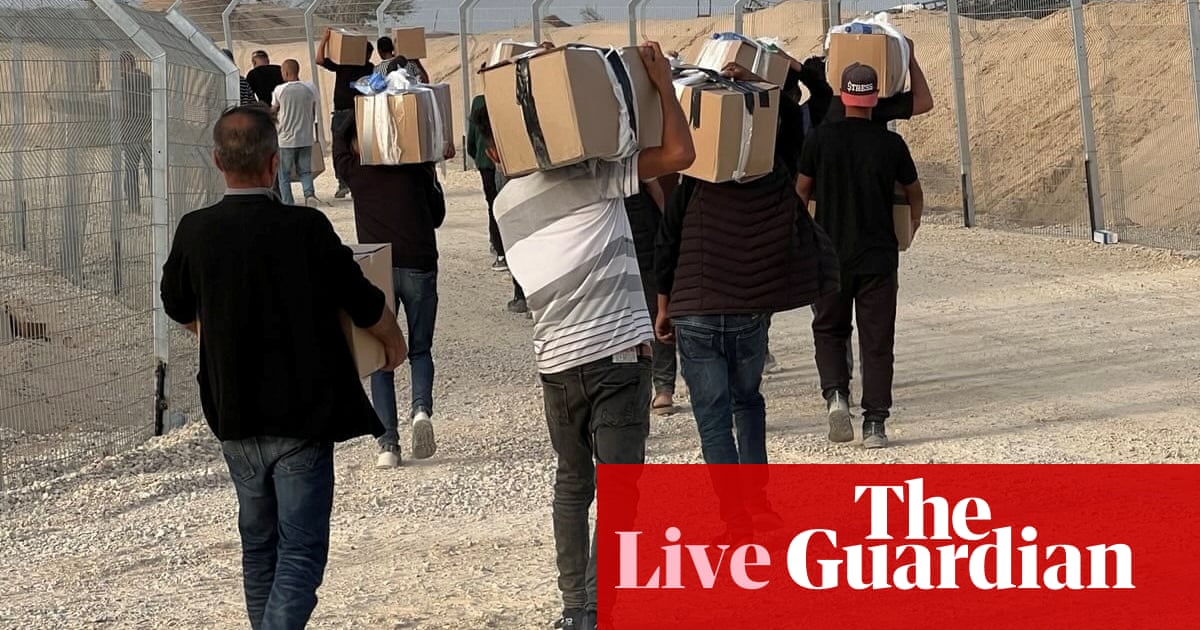
An Israeli-backed logistics group, the Gaza Humanitarian Foundation (GHF), has begun aid operations in Gaza despite UN objections and the resignation of its executive director over humanitarian concerns. The GHF's plan involves distributing aid from hubs, but the locations and selection process are unclear, raising concerns about forced displacement and the use of starvation as a bargaining chip. Meanwhile, Sweden has summoned Israel's ambassador over the "indefensible" blocking of aid to Gaza, and 300 French writers are calling for sanctions against Israel, labeling the situation in Gaza a "genocide."
The initiation of aid operations in Gaza by the Israeli-backed Gaza Humanitarian Foundation (GHF) on Monday occurred amidst significant controversy and international scrutiny, underscored by an 'extremely negative' sentiment score of -0.9. This move followed the resignation of GHF's executive director, who cited concerns that the operation could not adhere to fundamental 'humanitarian principles' such as neutrality and impartiality. The United Nations and other aid agencies have raised strong objections, describing the GHF's plan—which involves Palestinians collecting 20kg aid boxes from four distribution points in southern Gaza—as potentially 'unworkable, dangerous and potentially unlawful,' with fears it could facilitate forced mass displacement and use 'starvation as a bargaining chip.' The operational details, including the exact location of GHF hubs and beneficiary selection, remain unclear. This development unfolds against a backdrop of Israel's total aid blockade imposed in early March, which has left most of Gaza's 2.1 million Palestinians on the brink of starvation. International pressure is mounting, evidenced by Sweden summoning Israel’s ambassador over the 'indefensible' blocking of aid and a call from 300 French writers for sanctions against Israel, labeling the events a 'genocide.' Concurrently, established aid organizations like UNRWA report severe operational constraints, with only 6 of its 22 health centers functioning and 'critically low' medical supplies, despite having delivered over 8.5 million medical consultations since October 2023. The situation is further compounded by ongoing Israeli attacks, Houthi missile launches from Yemen towards Israel, and internal Israeli events such as a controversial state-funded march in Jerusalem featuring racist slogans. The identified themes of 'Geopolitics & War,' 'Sanctions & Export Controls,' 'Trade Policy & Supply Chain,' and 'Transportation & Logistics' encapsulate the multifaceted crisis, which, despite a moderate market impact score of 0.4, signals profound regional instability and severe humanitarian consequences with potential for broader economic and political ramifications.
AI-powered research, real-time alerts, and portfolio analytics for institutional investors.
Request DemoOverall Sentiment
extremely negative
Sentiment Score
-0.90
