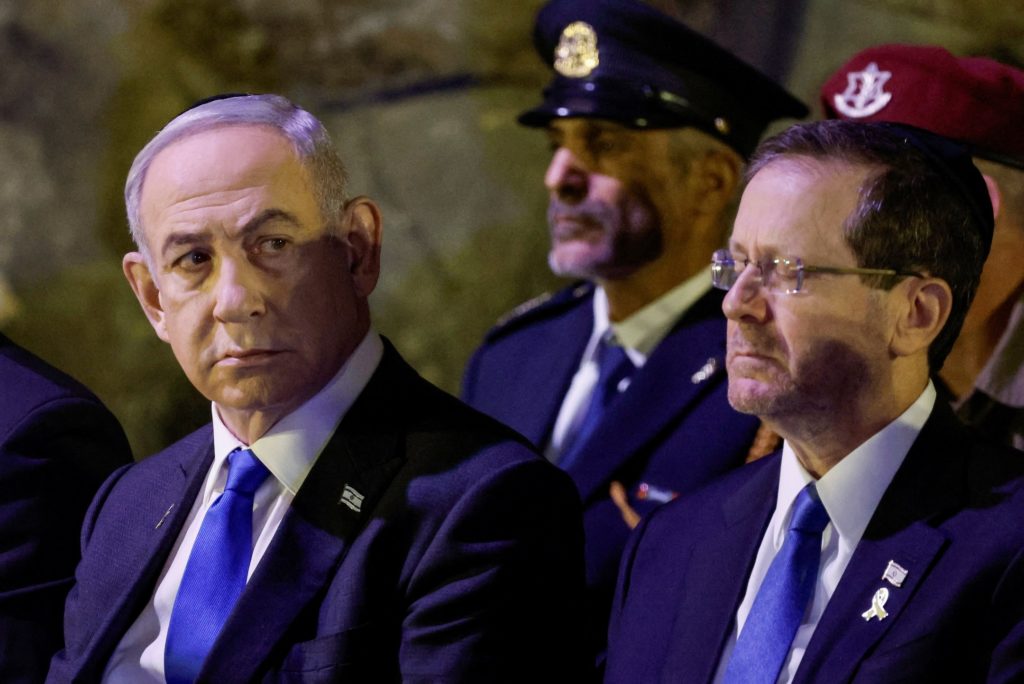
Israeli Prime Minister Benjamin Netanyahu requested a presidential pardon amid an ongoing corruption trial, a development that raises political and governance risk in Israel and could influence investor sentiment and regional policy decisions. U.S. Homeland Security Secretary Noem said the Afghan national accused of shooting two National Guard members appears to have adopted radical ideas while in the United States, heightening domestic security and immigration-enforcement scrutiny, and severe winter weather has disrupted millions of American travelers, pressuring airlines, insurers and logistics operations in the near term.
Market structure: Political/legal turmoil in Israel raises idiosyncratic geopolitical risk that disproportionately benefits defense contractors (US: LMT, RTX, NOC; Israel: ESLT) and safe-haven assets while hurting short-cycle travel & leisure (AAL, DAL, EXPE, BKNG) because flight cancellations and tourism declines cut near-term revenue by an estimated 1–5% over weeks if disruptions persist. Cross-asset: expect transient bid to gold (+1–3%), oil (up to +3–5% on escalation risk), and USD; US Treasuries may rally modestly on safe-haven flows, compressing yields by 5–20bp in immediate days of headline escalation. Risk assessment: Tail risk is low-probability/high-impact: a wider regional conflagration could spike Brent by 15–30% and push global risk premia higher for 3–12 months; probability <10% but material for portfolio VaR. Immediate risks (0–7 days) are travel disruption and volatility; short-term (1–12 weeks) is capital rotation into defense/energy; long-term (3–18 months) is potential re‑rating of defense contractors if government budgets shift. Hidden dependencies include Israeli tech supply links to semiconductors and cyber contractors; catalysts include military escalation, Israeli elections, or large protests. Trade implications: Tactical: favor small, scalable long positions in defense (target 2–4% portfolio weight, horizon 3–12 months) and hedges in gold/oil; underweight/hedge airlines and OTAs for 2–8 week revenue risk. Use options to buy protection: 30–90 day puts on major airline names sized to 0.5–1% portfolio risk and 3‑month call spreads on GLD or XLE to cost-effectively express risk-on/off. Entry: scale in during volatility spikes (>1.5% headline move) and trim into 8–15% rallies. Contrarian angles: Consensus will likely overprice immediate escalation; if no wider conflict in 4–8 weeks, airlines and OTAs could rebound 8–20% from oversold levels — a mean‑reversion trade. Conversely, defense names may already price a modest premium; avoid paying up beyond 10–15% implied upside. Historical parallels (2014/2018 regional flareups) show 2–3 month outsized moves then reversion, so prefer sized, time‑limited option structures rather than large outright exposures.
AI-powered research, real-time alerts, and portfolio analytics for institutional investors.
Request DemoOverall Sentiment
neutral
Sentiment Score
0.00
