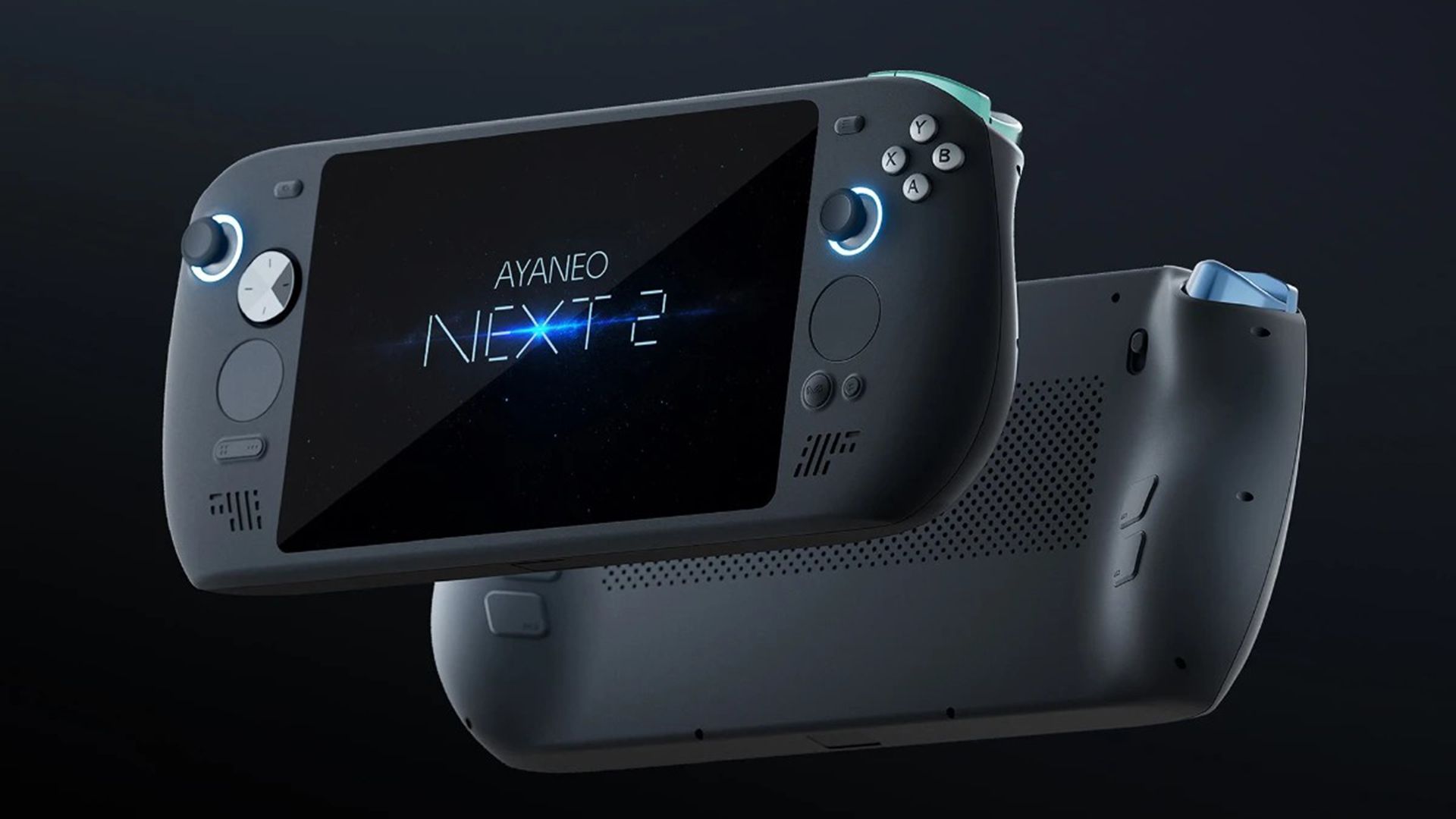
Chinese hardware maker Ayaneo launched the Next 2, a flagship Windows handheld targeting the premium gaming niche with configurations from $1,799 (32GB RAM/1TB SSD) to $4,299 (128GB/2TB and top-tier AMD APU). Key specs include AMD Ryzen AI Max+ 395 (16 Zen 5 cores) or Ryzen AI Max 385 options, Radeon 8060S/8050S integrated GPUs, up to 128GB LPDDR5X @8000 MT/s (up to 96GB allocatable as VRAM), a 9.06-inch 2400x1504 OLED (up to 165Hz), and an unusually large 116 Whr built-in battery; device weight is 3.14 lbs and pre-orders are on Indiegogo. The product showcases AMD’s Ryzen AI/Strix Halo silicon in a high-end handheld form factor, but the very high price, large size/weight and a battery capacity exceeding typical airline limits signal a niche, premium market positioning rather than a mass-market disruptor.
Market structure: The Ayaneo Next 2 is a high-ASP, halo product that disproportionally benefits AMD (design win for Ryzen AI Max+ 395) and LPDDR5X suppliers while leaving mainstream handheld makers (Steam Deck class) exposed to feature/price pressure. Price bands ($1,799–$4,299) imply constrained unit volumes initially (likely <100k units/year), so near-term revenue impact on AMD is modest but strategic—it strengthens AMD’s mobile APU narrative and raises bargaining power with OEMs over the next 2–12 months. Airline/transport regulatory friction around the 116 Whr battery is a structural constraint that can create logistics bottlenecks and negative headlines. Risk assessment: Tail risks include regulatory enforcement of >100 Whr battery shipments, thermal/recall events, or LPDDR5X supply shocks; any of these could trigger 10–30% short-term drawdowns in niche hardware stocks and reputational spillover to AMD. Timeframes: expect immediate volatility (days) around Indiegogo metrics and certification filings, short-term (weeks–months) around pre-order conversion and initial shipping, and long-term (quarters) as design wins turn into volume revenue. Hidden dependencies: large shared unified memory allocations could cannibalize discrete GPU/laptop demand patterns and concentrate inventory risk for memory suppliers. Trade implications: Direct trade favor: modest tactical long AMD (6–12 month horizon) to capture halo-design wins plus selective exposure to Micron (MU) for LPDDR5X upside; use options (call spreads) to cap downside. Pair trade: long AMD vs short INTC (6–12 months) to express relative Zen5/mobile GPU advantage; rotate into broad semis (SMH) if AMD confirms multiple OEM commitments. Entry/exit: accumulate on pullbacks >10% or after positive certification/backer milestones; target +25–35% on AMD within 6–12 months, stop-loss 15%. Contrarian angles: The market likely overstates immediate revenue impact—first-year units will be small so valuations should not fully price a large earnings lift for AMD; conversely, the market may underprice regulatory and safety headlines which can transiently depress multiple small-cap hardware names by 20%+. Historical parallel: early high-ASP niche devices (e.g., premium handheld PC prototypes) created halo effects but failed to move top-line materially; therefore prefer semiconductors exposure over direct hardware plays and size positions conservatively.
AI-powered research, real-time alerts, and portfolio analytics for institutional investors.
Request DemoOverall Sentiment
moderately positive
Sentiment Score
0.40
Ticker Sentiment
