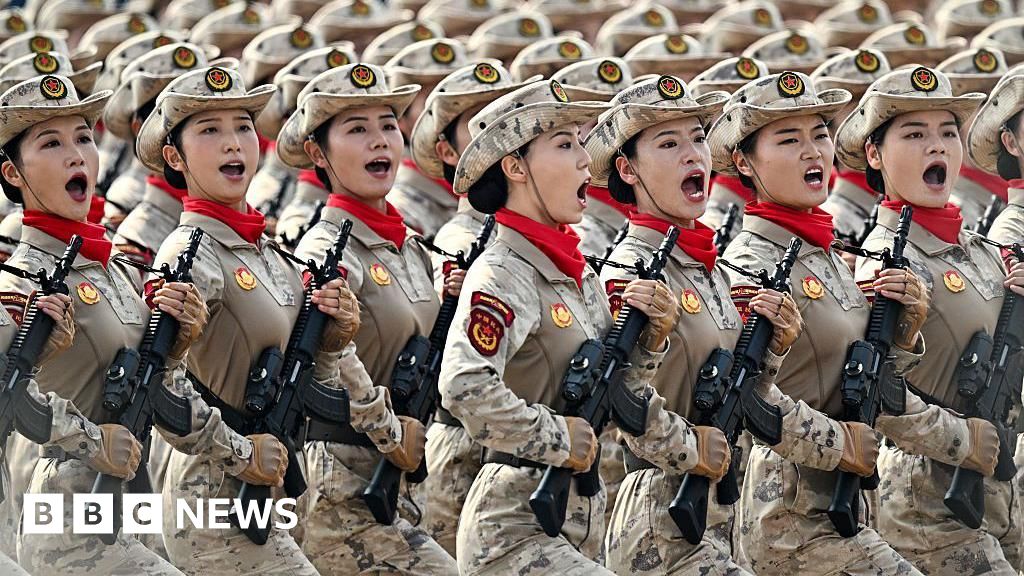
China's recent military parade showcased a significant leap in its indigenous defense capabilities, unveiling advanced missiles designed to counter US naval superiority and a strong emphasis on AI-integrated drones, reflecting rapid production and technological innovation. While demonstrating a willingness to automate the 'kill chain,' experts note China's top-down military structure may still lack the operational agility of the US. The event also served as a global arms sales pitch and a clear geopolitical statement of a united front with Russia and North Korea, signaling potential multi-front challenges to US influence.
China's recent military parade demonstrated a significant maturation of its defense-industrial complex, shifting from reverse-engineering to indigenous innovation. The unveiling of advanced platforms, particularly in missiles and drones, underscores a clear strategic focus. Systems like the Dongfeng-26D 'Guam Killer' and various hypersonic anti-ship missiles are explicitly designed to counter U.S. naval superiority and establish a credible second-strike capability. Furthermore, the extensive display of AI-powered drones, including the GJ-11 'loyal wingman' and uncrewed underwater vehicles, indicates an aggressive integration of autonomous systems into its military doctrine, reflecting lessons from the Ukraine war and a willingness to automate the 'kill chain'. However, expert commentary cited in the report questions the People's Liberation Army's operational effectiveness, contrasting its rigid, top-down command structure with the U.S. military's more agile 'bottom-up' approach. The event also served a dual purpose as a global arms sales pitch and a potent geopolitical signal, with the prominent inclusion of Russian and North Korean leaders presenting a united front that suggests the potential for multi-theater challenges to U.S. interests.
AI-powered research, real-time alerts, and portfolio analytics for institutional investors.
Overall Sentiment
mixed
Sentiment Score
0.00
