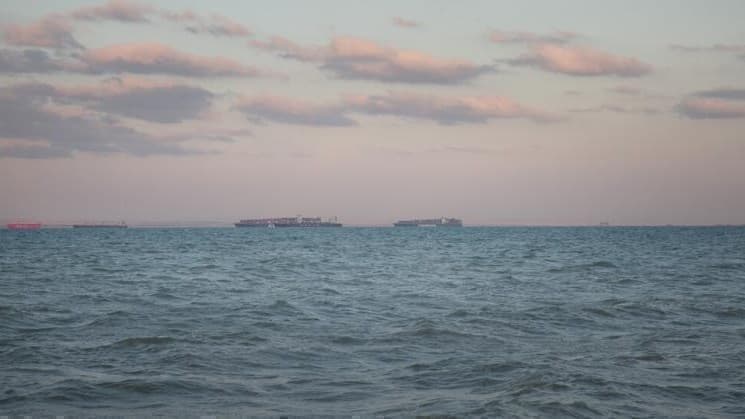
Maritime traffic through the Strait of Hormuz has reportedly collapsed by as much as 90%, with some periods seeing only about three vessels per day versus 120-140 in normal conditions, while oil exports from core Gulf producers have fallen by over 60%. The article argues that even when the strait is technically open, war-risk insurance, routing changes, and operator caution keep flows depressed, driving persistent rerouting via the Cape of Good Hope and higher logistics costs. The implications are broad for global energy markets, shipping, and supply chains, with structurally higher prices, longer transit times, and reduced Gulf export reliability.
The market is still pricing this as a transitory routing problem, but the more important shift is a regime change in contractability: once shippers, insurers, and charterers update their models for unreliability, throughput can stay depressed long after headline risk fades. That creates a persistent tax on every Gulf barrel, but the second-order effect is even broader — working capital tied up in longer voyages, higher tankage demand, and lower asset utilization across global shipping fleets. The losers are not only Gulf exporters; they are also Asian refiners and European industrials whose procurement plans assumed just-in-time maritime access.
The most underappreciated asymmetry is that partial normalization can be bearish for vol, yet still leave the physical market tight. If vessel counts recover only modestly, the system can look “open” while inventories remain bifurcated and pricing stays distorted by premium insurance, deadweight mileage, and storage arbitrage. That means front-end energy volatility can remain elevated for months even if crude benchmarks stop exploding, because the real bottleneck becomes deliverability rather than supply-at-origin.
For public markets, the clearest beneficiaries are not just upstream producers but the infrastructure and logistics layers that monetize uncertainty: pipeline operators, non-Gulf LNG exporters, tankers, and alternative-route port assets. The more durable trade is to own assets with optionality on rerouting while shorting industries that cannot pass through higher freight and input costs. The contrarian mistake would be to fade this on a “strait reopened” headline; the evidence suggests the market has not yet fully internalized the persistence of the reliability premium, especially in Asia-bound energy chains.
AI-powered research, real-time alerts, and portfolio analytics for institutional investors.
Request DemoOverall Sentiment
extremely negative
Sentiment Score
-0.85
Ticker Sentiment
