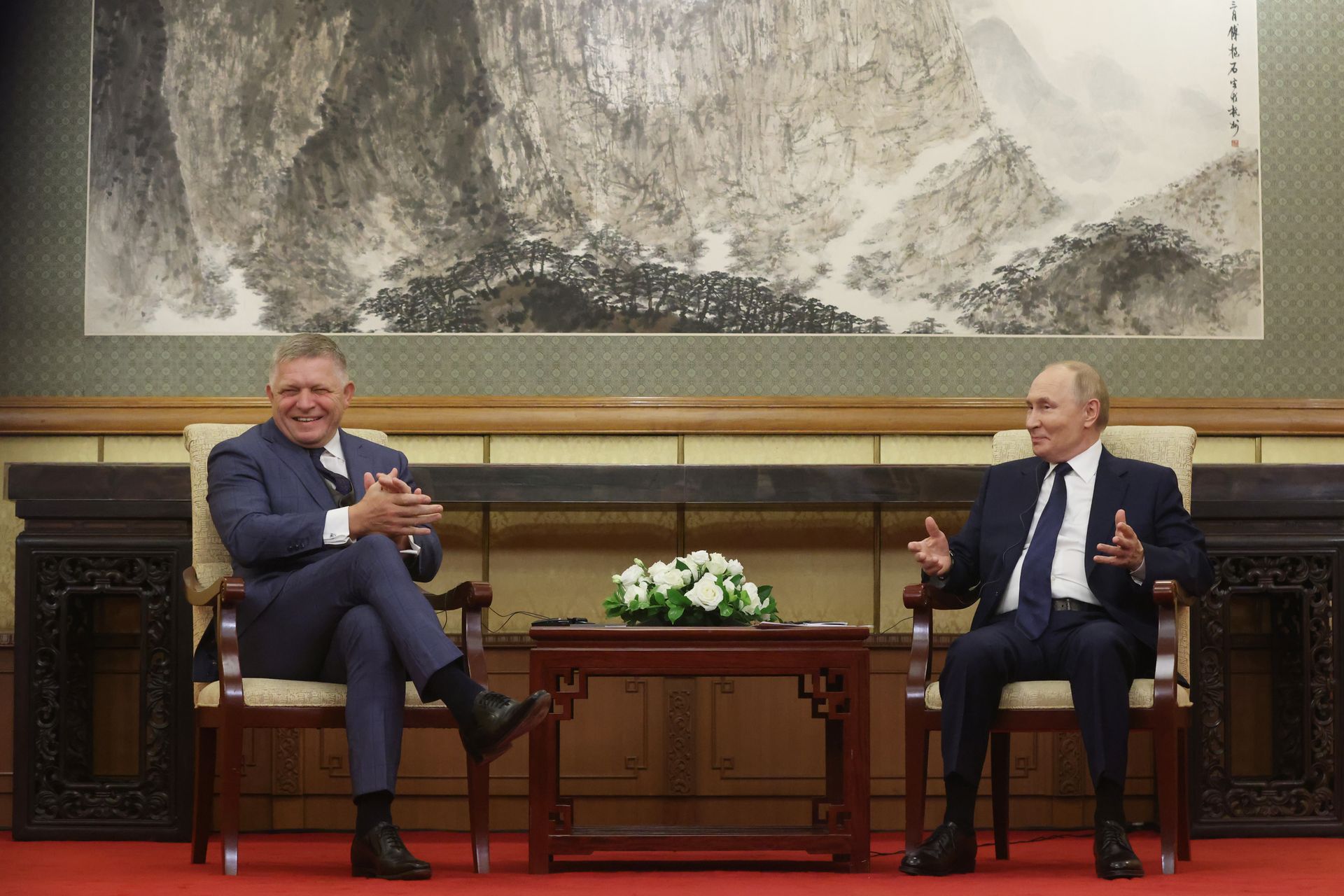
Lithuania, Latvia, and Estonia will not allow Slovak Prime Minister Robert Fico to use their airspace to travel to Moscow for Russia's May 9 Victory Day parade, forcing him to seek an alternate route. The move underscores continued EU-Russia tensions and comes as Slovakia signals it may veto the EU's 20th sanctions package unless it gets assurances on the Druzhba oil pipeline. The article also highlights broader political alignment issues in Central Europe around support for Ukraine.
This is less about one flight path and more about the EU hardening into a two-tier policy regime: core members are increasingly willing to use procedural friction to penalize governments that obstruct sanctions or normalize Moscow. The immediate market impact is negligible, but the signal matters for the next sanctions package because unanimity now depends on a small number of holdout states extracting side payments, which raises tail risk for policy slippage and headline-driven volatility in anything exposed to Russian energy or transit.
The bigger second-order effect is on logistics optionality around the Druzhba corridor. Even without an outright flow disruption, the threat of vetoes around sanctions can keep Russian pipeline barrels economically “sticky” in Central Europe longer than expected, supporting refiners and transport routes that remain connected to that system while pressuring assets that rely on seamless EU policy coordination. Over the next 1-3 months, the most tradable expression is not the airspace dispute itself but the probability that Brussels delays, dilutes, or exceptions out the next sanctions tranche to avoid a Slovak veto.
Contrarian view: the market may be overestimating the durability of the anti-Brussels bloc. Election turnover in Hungary reduces the cohort of unconditional Russia-friendly veto players, and that lowers the odds of a structural sanctions breakthrough only gradually, not immediately. In the meantime, the more relevant risk is a short-lived spike in political noise that creates entry points in defense and European security beneficiaries rather than a sustained deterioration in broader risk assets.
AI-powered research, real-time alerts, and portfolio analytics for institutional investors.
Overall Sentiment
mildly negative
Sentiment Score
-0.15
