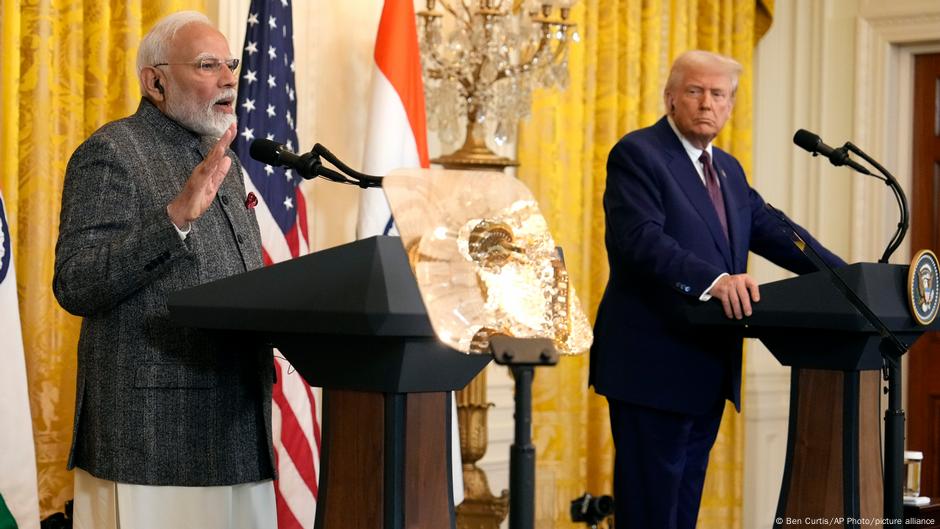
The Quad faces renewed strain as US-India tensions over tariffs, Russia ties and border-clash claims threaten momentum ahead of the New Delhi foreign ministers' meeting. Analysts warn that if leaders fail to reconvene in 2026, the grouping could drift into strategic limbo, weakening Indo-Pacific security coordination and benefiting China. While the alliance remains intact and informal, inactivity and divergent strategic priorities are the key risks.
The market implication is less about a sudden security shock and more about a gradual decay in policy credibility. That matters because Indo-Pacific risk premia are priced on the assumption that Washington can still coordinate coalitions; if the Quad looks performative rather than operational, the second-order effect is wider hedging by Asian allies via defense procurement, stockpiling, and selective de-risking from US-linked supply chains. The near-term beneficiary is China’s narrative advantage, but the real winner is any regional actor that can sell “strategic optionality” without formal alignment.
The key risk is that fragmentation shows up first in procurement and capital allocation, not headlines. Over the next 3-6 months, watch for softer language on interoperability, delayed maritime domain awareness projects, and fewer concrete working groups; those are the tells that the group is sliding from coordination into symbolism. If Rubio cannot stabilize the India channel, the spillover is likely to be felt in defense tenders and digital infrastructure standards rather than in immediate military posturing.
The contrarian view is that low institutionalization may be a feature, not a bug: the Quad can survive as a “habit of cooperation” even if leaders’ summits stall. That means the consensus may be overpricing collapse risk while underpricing the resilience of mid-level bureaucratic and military links. For investors, the cleaner expression is not a broad geopolitics short, but a selective long in defense and anti-submarine / maritime surveillance capabilities that benefit from persistent uncertainty regardless of summit cadence.
AI-powered research, real-time alerts, and portfolio analytics for institutional investors.
Overall Sentiment
mildly negative
Sentiment Score
-0.20
