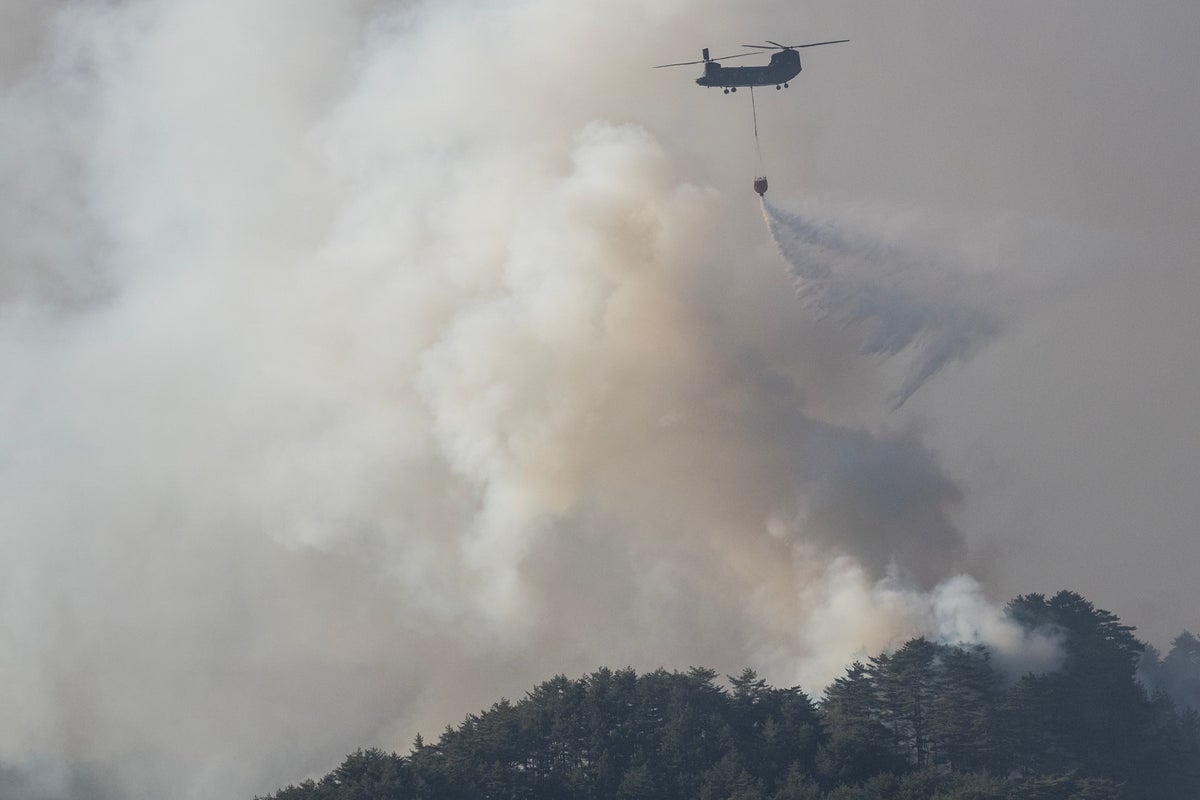
Wildfires in northeast Japan have burned more than 730 hectares and forced around 3,000 evacuations, with flames advancing toward homes and destroying at least eight buildings. More than 1,300 firefighters, Japan Self-Defense Forces troops, and helicopters have been deployed, but no casualties have been reported. The article highlights recurring dry-weather wildfire risk and the role of climate change in worsening such events.
This is a localized shock, but the second-order market effect is in municipal resiliency capex rather than the headline disaster itself. The immediate burden falls on insurers with regional Japan exposure and on local infrastructure operators, while beneficiaries sit in emergency logistics, power restoration, satellite imagery, and fire suppression equipment. The fact pattern also reinforces a broader underappreciated trend: Japan’s aging housing stock and forest management gaps create a recurring tail risk that is likely to drive higher public spending on defensible space, grid hardening, and evacuation systems over the next several budget cycles.
For equities, the nearer-term winners are companies with exposure to aerial firefighting, remote sensing, and disaster-response supply chains; the losers are any small-cap regional insurers and construction names with concentrated Tohoku exposure if claims move from contained to widespread. The larger second-order risk is to local economic activity: evacuation orders and access restrictions can hit retail, hospitality, and small manufacturing for weeks even without additional structural damage, which matters more than the burned acreage for near-term earnings revisions.
The contrarian angle is that the market may overestimate the persistence of the macro impact while underpricing the policy response. Japan has strong fiscal capacity and a history of rapid disaster-led reconstruction, so any equity weakness tied to local demand is likely to be shallow unless the fires expand materially over the next 72 hours or trigger broader utility/grid disruption. If rainfall arrives quickly, the trade shifts from catastrophe pricing to reconstruction pricing, which usually benefits contractors, materials, and engineering more than insurers for only a brief window.
AI-powered research, real-time alerts, and portfolio analytics for institutional investors.
Request DemoOverall Sentiment
strongly negative
Sentiment Score
-0.75
