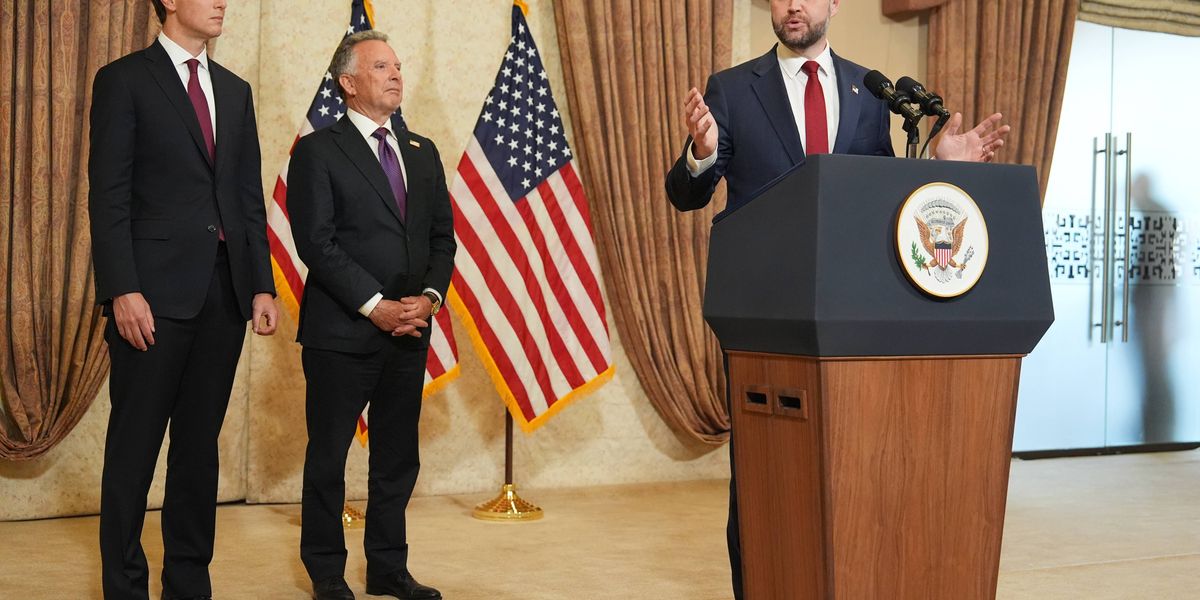
US-Iran talks in Islamabad collapsed after both sides accused the other of maximalist demands, with Washington reportedly insisting Iran end all uranium enrichment and dismantle key nuclear facilities. Trump then announced a naval blockade of the Strait of Hormuz, effective 10 am ET, while the Wall Street Journal said advisers were also considering renewed limited strikes in Iran. The escalation raises immediate risk to global energy flows, regional conflict, and broader market volatility.
The market implication is not just higher crude; it is a higher probability of an abrupt, policy-driven supply shock. A Strait-of-Hormuz blockade threat changes the distribution of outcomes from linear escalation to convex tail risk, which tends to reprice options and physical differentials before it fully moves headline Brent. The first-order winners are U.S. energy producers and defense contractors, but the second-order winner is domestic midstream/refining exposed to Gulf Coast logistics rather than imported crude, while the clearest loser is any asset with fragile input-cost pass-through. The more interesting trade is duration: if the situation remains unresolved for even 2-6 weeks, the premium migrates from spot crude into diesel, jet, and tanker rates, and then into inflation expectations and rate-cut pricing. That creates a broader cross-asset squeeze: airlines, chemicals, transport, and consumer discretionary are vulnerable on margin compression, while defense procurement names can re-rate on the expectation of supplemental appropriations and faster munitions replenishment. The blockade rhetoric also raises the chance of a policy mistake, which means realized volatility in oil could remain elevated even if prices mean-revert. Contrarian takeaway: the consensus may be underpricing diplomatic reversal risk because both sides have incentives to preserve optionality after a failed negotiation. If third-party mediation reopens within days, the market likely gives back a meaningful fraction of the geopolitical premium, especially in front-month energy and short-dated defense vol. But if there is any physical interruption in Gulf shipping, the move will be disorderly and the hedge ratio should shift immediately from equities to options and spreads.
AI-powered research, real-time alerts, and portfolio analytics for institutional investors.
Overall Sentiment
strongly negative
Sentiment Score
-0.82
