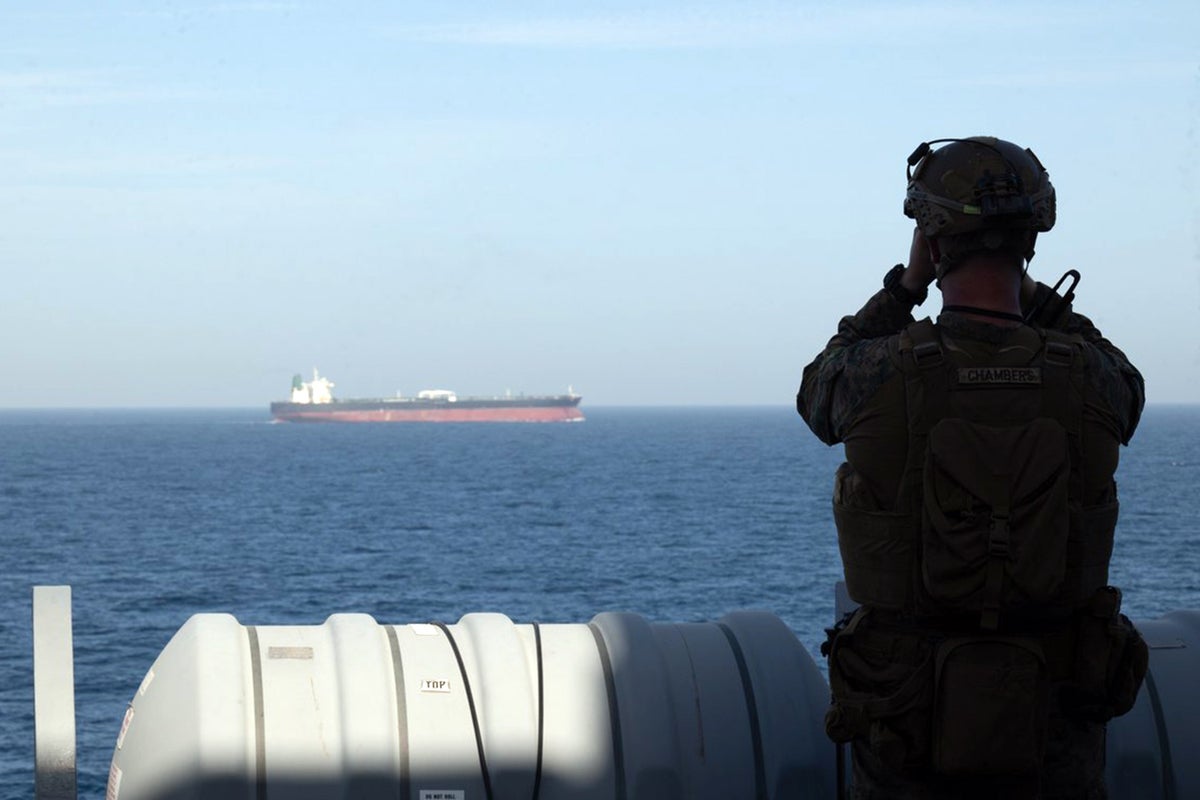
Oil markets surged after the Strait of Hormuz was reported closed again, with Brent crude up $6.11, or 6.76%, to $96.49 a barrel and WTI up $6.53, or 7.79%, to $90.38. The US seized an Iranian-flagged tanker in the Gulf of Oman, prompting Iran to vow retaliation and accuse Washington of 'armed piracy,' while both sides blamed each other for violating the ceasefire. The escalation raises the risk of further disruption to a waterway that normally carries about a fifth of global oil flows.
The market is now pricing not just a headline risk premium in crude, but a regime shift toward persistent corridor risk in the Gulf. The key second-order effect is that even if physical volumes are not fully interrupted, insurance, re-routing, and precautionary inventory builds can keep prompt barrels tight for weeks, which is more inflationary than a one-day spike. That matters because the marginal impact is amplified when inventories are already lean and traders are forced to pay up for optionality, not just molecules.
The most underappreciated beneficiary is not the integrated majors, but US midstream and logistics assets with tariff-like cash flows and limited direct commodity exposure. If shipping through the Strait becomes intermittently impaired, inland crude differentials widen and Gulf Coast storage, pipeline, and export infrastructure gain pricing power; in parallel, refiners with complex conversion capacity can outperform if they can source discounted crudes away from the choke point. On the loser side, airlines, chemical feedstocks, and consumer discretionary all face a delayed but powerful margin squeeze if energy stays elevated into the next 4-8 weeks.
The contrarian view is that the first spike may be too large relative to actual sustained supply loss. A ceasefire breach story can generate a fast risk premium unwind if there is any sign of restored passage or a negotiated toll regime, and the market will likely fade a one-off seizure if tankers keep moving. The true catalyst to watch is not rhetoric, but whether freight rates and war-risk premiums stay elevated for multiple sessions; that is what converts an event into an earnings revision cycle.
For FX, this is modestly bullish USD versus high-beta importers and emerging Asia if the energy shock persists, but the stronger trade is in relative rates: higher oil can re-accelerate inflation expectations and reduce the odds of near-term easing. That creates a narrow window where rate-sensitive growth and transport equities underperform while energy and defense-related cash flows get bid.
AI-powered research, real-time alerts, and portfolio analytics for institutional investors.
Request DemoOverall Sentiment
strongly negative
Sentiment Score
-0.72
