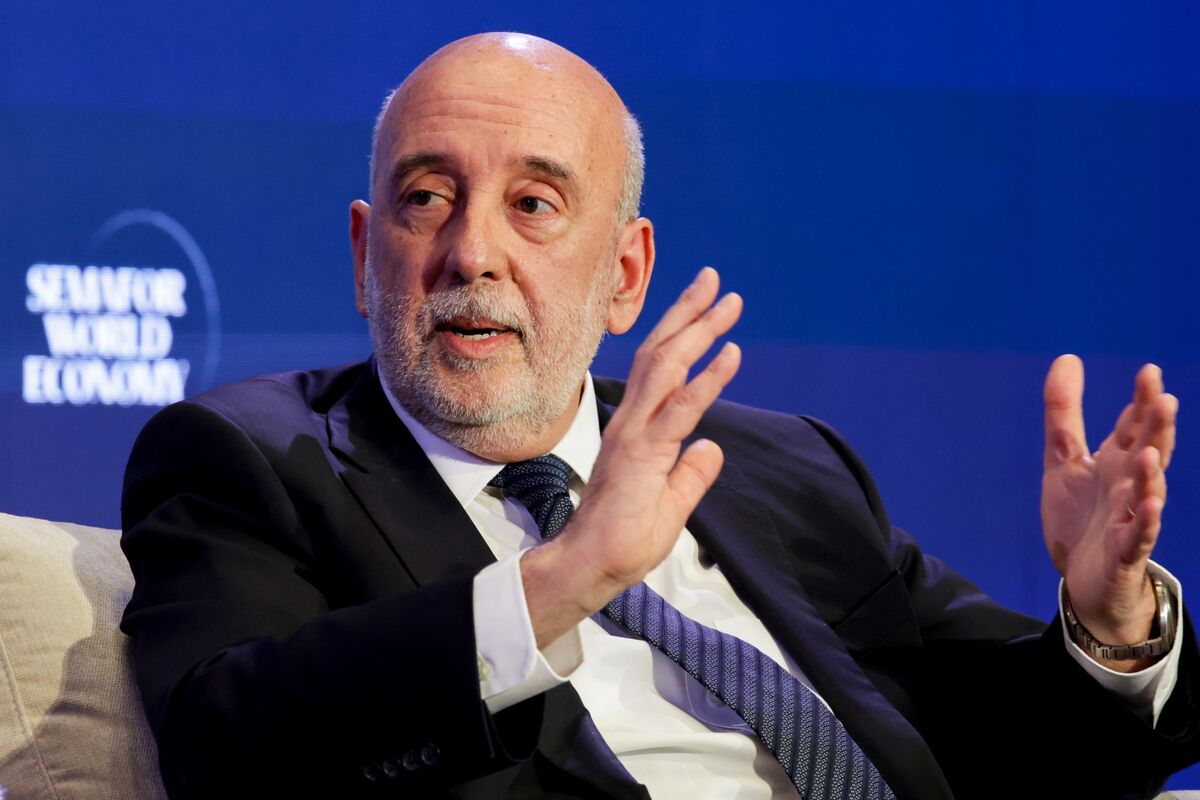
ECB Governing Council member Gabriel Makhlouf said the central bank is committed to bringing inflation back to its 2% target and will take whatever action is needed to achieve it. He declined to comment on whether an interest-rate increase is likely in June, leaving policy expectations unchanged but reinforcing a hawkish stance. The remarks are relevant for euro area rate and yield expectations, but they contain no new decision or data point.
This is less about a single speech and more about the ECB preserving optionality while keeping terminal-rate expectations from drifting lower. The key second-order effect is on front-end rates: if markets had begun pricing a faster easing path, repeated hawkish signaling should keep the 2y euro swap and bund yield curve from re-steepening too early, which matters more for European banks and rate-sensitive domestics than the headline currency move. The most vulnerable assets are the long-duration, high-multiple parts of Europe — real estate, utilities, and unprofitable tech/industrial software — because even a small repricing in terminal policy can compress equity duration multiples quickly. Conversely, large European banks and insurers retain a relative advantage if the ECB stays restrictive longer, as deposit betas tend to lag while reinvestment yields stay elevated. That creates a second-order winner/loser split inside the same region rather than a simple Europe-bear trade. The catalyst risk is asymmetrical: if upcoming inflation prints reaccelerate or wage data stays sticky, the market can quickly price out any near-term easing and push the first cut farther out by 1-2 meetings. The reverse is also true — softer core inflation would make this rhetoric look like standard central-bank calibration rather than a policy pivot, so the trade should be expressed with defined risk rather than outright beta if conviction is low. Contrarian view: the market may already be positioned for “higher for longer,” so additional hawkish language has diminishing marginal impact unless it is backed by action. In that case, the better expression is not to chase euro strength, but to position for curve flattening and equity dispersion: banks outperforming rate-sensitive defensives while long-duration European equities underperform.
AI-powered research, real-time alerts, and portfolio analytics for institutional investors.
Request DemoOverall Sentiment
neutral
Sentiment Score
0.00
