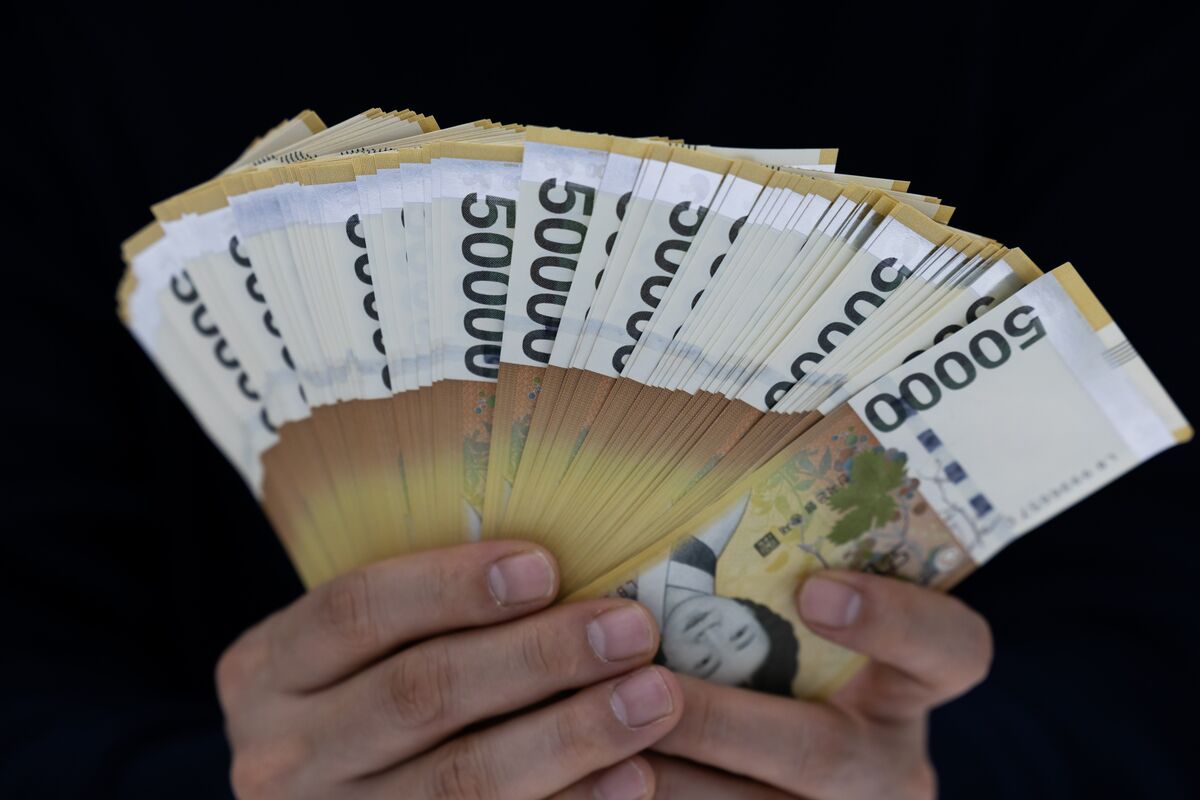
South Korea Finance Minister Koo Yun Cheol said officials are closely monitoring speculative, one‑sided moves in the won and will "sternly respond" if foreign‑exchange volatility widens, as the currency trades near a seven‑month low. The statement signals readiness to deploy policy tools or intervention to stabilize the won, a development that could influence FX flows, hedging activity and risk sentiment around Korean assets.
Market structure: A weaker won near a seven-month low benefits large, dollar-priced Korean exporters (Samsung 005930.KS, SK Hynix 000660.KS) via higher local-currency margins and hurts importers, energy-intensive names and domestic-consumption sectors. FX intervention risk compresses realized upside for speculative USDKRW moves — limiting momentum trades while increasing demand for short-dated FX hedges and central-bank-sensitive instruments. Cross-asset: expect higher implied vols on USDKRW and KRW-denominated options, widening CDS spreads if outflows accelerate; Korean bond yields may spike on reserve use or policy shifts, pressuring long-duration local bonds.
Risk assessment: Tail risks include abrupt capital controls, heavy FX intervention depleting reserves, or a policy rate shock if inflation from a weak won accelerates — each could move markets violently within days–weeks. Near term (days–weeks) the key trigger is a >2% move in USDKRW from current spot; short-term (1–3 months) a sustained depreciation >5% risks higher CPI and BoK tightening; long-term (3–12 months) structural flows (rates differentials, global risk appetite) will set direction. Hidden dependencies: foreign investor equity flows and Korean FX derivatives positioning (one-sided carry trades) amplify moves; intervention announcements can cause rapid mean reversion.
Trade implications: Tactical long exposure to exporters/KOSPI (EWY) with explicit FX hedges is attractive for 3–12 months; short-dated USDKRW call spreads can monetize expected intervention caps. Reduce duration in KRW sovereign exposure and hedge FX on existing Korean equity holdings; maintain optionality via 1-month ATM USDKRW puts/premiums to protect against a sudden re-strengthening of the won following intervention.
Contrarian angles: Consensus assumes intervention will only cap downside — but swift, credible intervention can trigger a 2–4% rapid won appreciation as speculators unwind, hurting carry trades and unhedged exporters in the short run. Markets may be overpaying for long USDKRW vol if authorities act; the mispricing appears in 1-month vol skew, where selling carefully sized call spreads (with protection) can be favourable. Historical parallels: 2011–2016 episodes show central-bank warnings often precede short squeezes rather than protracted trends.
AI-powered research, real-time alerts, and portfolio analytics for institutional investors.
Request DemoOverall Sentiment
moderately negative
Sentiment Score
-0.35
