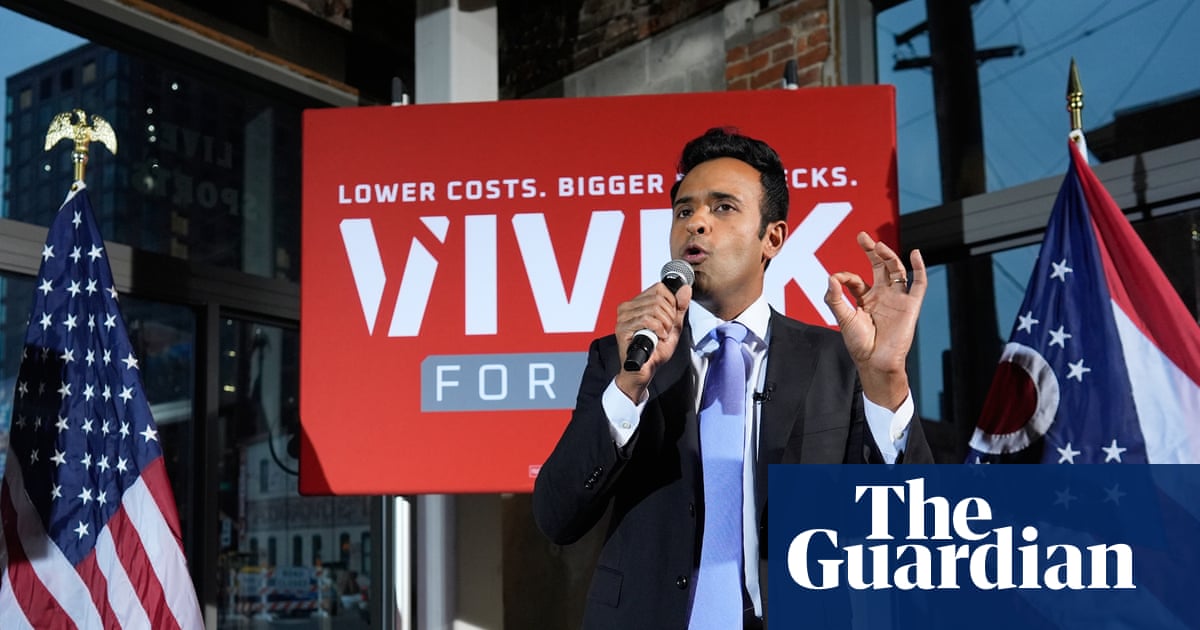
Vivek Ramaswamy won the Republican nomination for Ohio governor, setting up a Nov. 3 general election against Democrat Amy Acton, while Sherrod Brown also advanced in a separate Ohio special election. The article highlights Ramaswamy’s proposed property and income tax cuts, energy and technology reforms, and a competitive race in a state Cook Political Report now rates as leaning Republican. Market impact is limited, but the outcome has modest relevance for Ohio policy, taxes, healthcare, and broader domestic political positioning.
The immediate market read is not the governor’s race itself, but the probability of a cleaner GOP sweep narrative in Ohio into November, which matters for tax, spending, and education-policy signaling more than for state-level fundamentals. A Ramaswamy victory keeps the state in the “pro-growth / deregulation / tax-cut” bucket, but the bigger second-order effect is on the national Republican message: he is a visible proxy for Trump-aligned fiscal restraint plus tech-forward rhetoric, which can amplify volatility in names exposed to school curricula, local tax policy, and energy permitting.
The more tradable angle is on policy distribution rather than headline ideology. If his affordability platform gains traction, the beneficiaries are likely to be utilities, homebuilders, and consumer staples more than the obvious “tax cut” beneficiaries, because Ohio households are still budget-constrained and lower property/income taxes would translate into incremental housing demand and discretionary spend rather than a near-term capex boom. The loser set is local public-sector unions, K-12 contractors dependent on state funding growth, and any company selling into regulated education/health systems where budget discipline and parental-rights politics can slow purchasing cycles.
The Brown-Husted special election is a cleaner read on national Senate control expectations than the governor’s race, and that is where the first-order market impact sits: if Democrats outperform in a state Republicans should own, it raises the tail risk that the Senate map tightens and shifts the odds of a split-government outcome. That would be modestly negative for regulated sectors and very slightly supportive for long-duration growth if investors start discounting less aggressive fiscal expansion, but the effect should remain more narrative-driven than earnings-driven unless polling swings sharply in the next 6-8 weeks.
Contrarian view: the consensus may be overestimating how much a candidate-brand race changes Ohio policy outcomes. Even with a Republican win, fiscal reality likely limits aggressive tax rollback, and a lot of the campaign rhetoric is more valuable as national signaling than state implementation. The better trade is to fade any knee-jerk move in politically exposed sectors and wait for county-level polling, fundraising gaps, and education-policy drafts before taking directional exposure.
AI-powered research, real-time alerts, and portfolio analytics for institutional investors.
Request DemoOverall Sentiment
neutral
Sentiment Score
0.05
