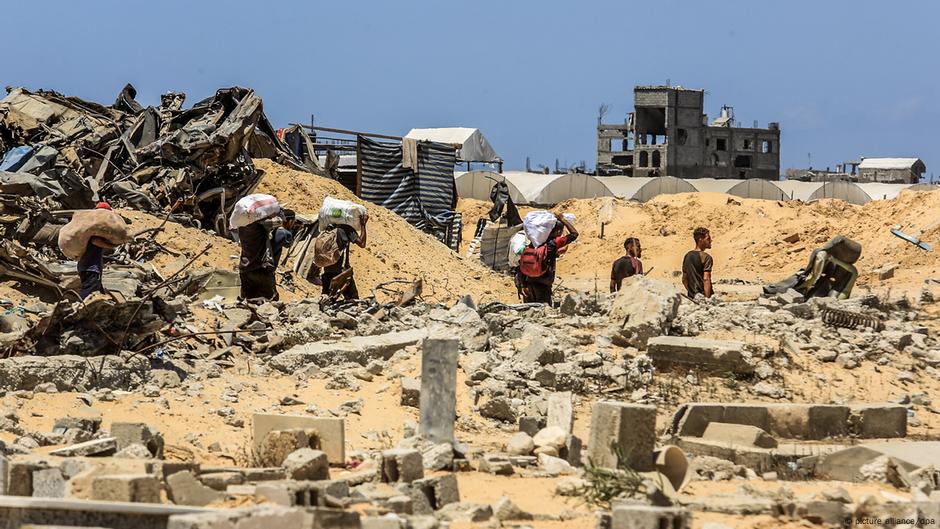
Geopolitical tensions in the Middle East are escalating, marked by German Foreign Minister Wadephul's warning of Israel's potential international isolation amid the Gaza humanitarian crisis, and Slovenia's halt of arms trade to Israel. The US is actively engaged in Gaza aid while simultaneously sanctioning Palestinian Authority officials, as Israel targets Hezbollah infrastructure in Lebanon. Broader regional instability is underscored by Western accusations of Iranian malign activities and a new trade dispute between the US and Canada following Canada's intent to recognize Palestinian statehood, signaling complex diplomatic and economic ramifications.
The geopolitical landscape in the Middle East is marked by escalating tensions and a high degree of volatility, underscored by a strongly negative sentiment score (-0.7) and a high market impact rating (0.7). A primary development is the increasing international pressure on Israel, with German Foreign Minister Johann Wadephul explicitly warning of the risk of 'international isolation' over the humanitarian crisis in Gaza. This diplomatic pressure is materializing in concrete economic actions, as evidenced by Slovenia becoming the first EU nation to halt all weapons trade with Israel. Meanwhile, the United States is pursuing a dual-track policy that introduces significant uncertainty; a special envoy is being dispatched to address the aid crisis in Gaza, while simultaneously, new sanctions are being imposed on Palestinian Authority and PLO officials, potentially destabilizing governance in the West Bank. The conflict's scope is widening, demonstrated by Israeli strikes on what it termed key Hezbollah missile manufacturing and storage infrastructure in Lebanon. Broader regional instability is fueled by a coordinated statement from the US and over a dozen allies accusing Iran of orchestrating assassination and kidnapping plots in Western nations. This geopolitical friction is now spilling directly into international trade, with the US threatening Canada with a potential 35% tariff after its government signaled its intent to recognize a Palestinian state, linking foreign policy decisions directly to severe economic consequences.
AI-powered research, real-time alerts, and portfolio analytics for institutional investors.
Overall Sentiment
strongly negative
Sentiment Score
-0.70
Ticker Sentiment
