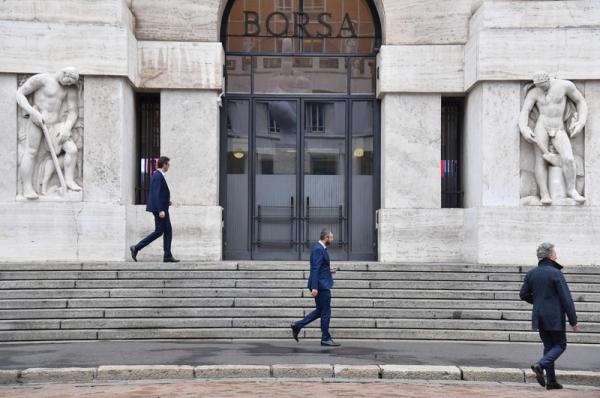
Crude oil July futures slipped 0.04% to $76.57 a barrel, while Brent August gained 0.93% to $80.59, leaving oil on pace for a weekly decline amid postponed U.S.-Iran talks. Gold fell 1.86% to $4,166.87, the U.S. Dollar Index futures eased 0.02% to 100.60, and EUR/USD was essentially flat at 1.15. Italy's stocks rose 0.41% to a new all-time high, led by Prysmian (+3.69%), Fincantieri (+3.39%) and Saipem (+2.37%).
The immediate market read-through is not about the headline postponement itself, but about the preservation of a geopolitical risk premium that had been leaking out of crude. When diplomatic resolution gets delayed while prices fail to break down, the market is signaling that supply-side downside remains capped; that keeps the entire energy complex from de-rating even if outright spot is soft. For European cyclicals, this is a margin tax story more than a demand story: airlines, transport, chemicals, and discretionary travel names should continue to underperform on any renewed oil bid, while upstream service providers and integrateds retain convexity to any escalation.
The more interesting second-order effect is in cross-asset positioning: the combination of firmer Brent, a flat EUR/USD, and weaker gold suggests investors are not broadening into a macro risk-off hedge; they are rotating within commodities. That tends to favor relative-value long energy versus industrials rather than a blanket commodity long. In that setup, high-beta oil equities can outperform the commodity itself because the equity market discounts sustained free-cash-flow durability when the geopolitical floor holds for weeks rather than days.
RACE is a useful barometer of whether the consumer can absorb higher energy input costs without visible elasticity. The stock’s weakness alongside a firm oil tape implies the market is starting to price in margin compression or demand sensitivity for premium discretionary goods, which is consistent with a broader rotation away from long-duration luxury exposure. If crude stabilizes above the mid-$70s for several weeks, the next derivative losers are not energy consumers broadly, but those with the highest discretionary ticket sizes and the least pricing power in Europe and the Gulf-linked travel ecosystem.
The contrarian takeaway is that a delayed negotiation is not the same as a failed negotiation, and the market may be over-assigning persistence to the current risk premium. If talks are rescheduled with even modest progress, prompt crude could mean-revert quickly because positioning is likely still leaning cautious rather than crowded long. That creates a tradeable asymmetry: energy equities can keep grinding higher on headline risk, but the downside in crude may be sharper than the equities if diplomacy re-enters the tape within 1-3 weeks.
AI-powered research, real-time alerts, and portfolio analytics for institutional investors.
Request DemoOverall Sentiment
neutral
Sentiment Score
-0.10
Ticker Sentiment
