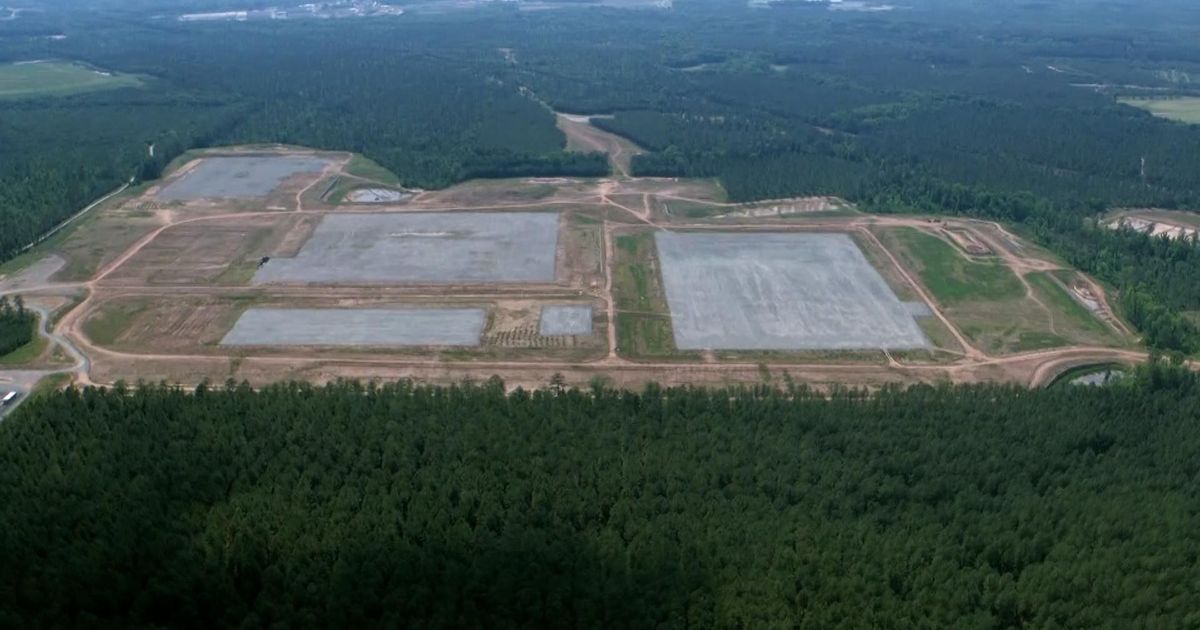
North Carolina is suing VinFast to reclaim Chatham County land after the company allegedly missed construction deadlines tied to a 2022 buyback agreement. The state says VinFast failed to begin vertical construction by January 1, 2024 and is unlikely to commence operations by July 1, 2026, putting at risk a project originally expected to bring more than $2 billion of investment, 7,500 jobs, and up to $316.1 million in tax reimbursements. The dispute could delay or derail the EV factory and preserve the site for other economic development uses.
The real tradeable signal here is not about one failed plant; it is about the repricing of subsidy-backed greenfield EV manufacturing as a class. State-level incentives look more contingent now, but the larger second-order effect is that localities will likely tighten clawback language and increase diligence, raising the hurdle rate for future EV and battery projects across the Southeast. That favors incumbents with existing U.S. footprint and scale, while hurting late-stage entrants that still depend on public support to make domestic production economics work.
VinFast’s North Carolina setback also reinforces a competitive asymmetry in the U.S. EV market: companies with cash-rich balance sheets and flexible product pipelines can absorb the loss of federal consumer credits, but thinner names with heavy capital commitments cannot. The immediate impact is on capital allocation credibility, not just one factory; once a marquee site gets reclaimed, suppliers, contractors, and local governments become more cautious on pre-investment, which can delay adjacent industrial buildouts for months. That makes the broader EV supply chain more selective, with premium attached to OEMs that already have operating plants and proven execution.
The contrarian read is that this may be more of a timing reset than a terminal failure. If VinFast can secure an extension or re-baseline the project at a lower pace, the market may eventually treat the site issue as a non-cash legal overhang rather than an existential problem. But the burden of proof is now squarely on management, and until there is visible vertical construction or a financing reset, the path of least resistance is lower confidence in its U.S. growth narrative.
AI-powered research, real-time alerts, and portfolio analytics for institutional investors.
Request DemoOverall Sentiment
strongly negative
Sentiment Score
-0.58
