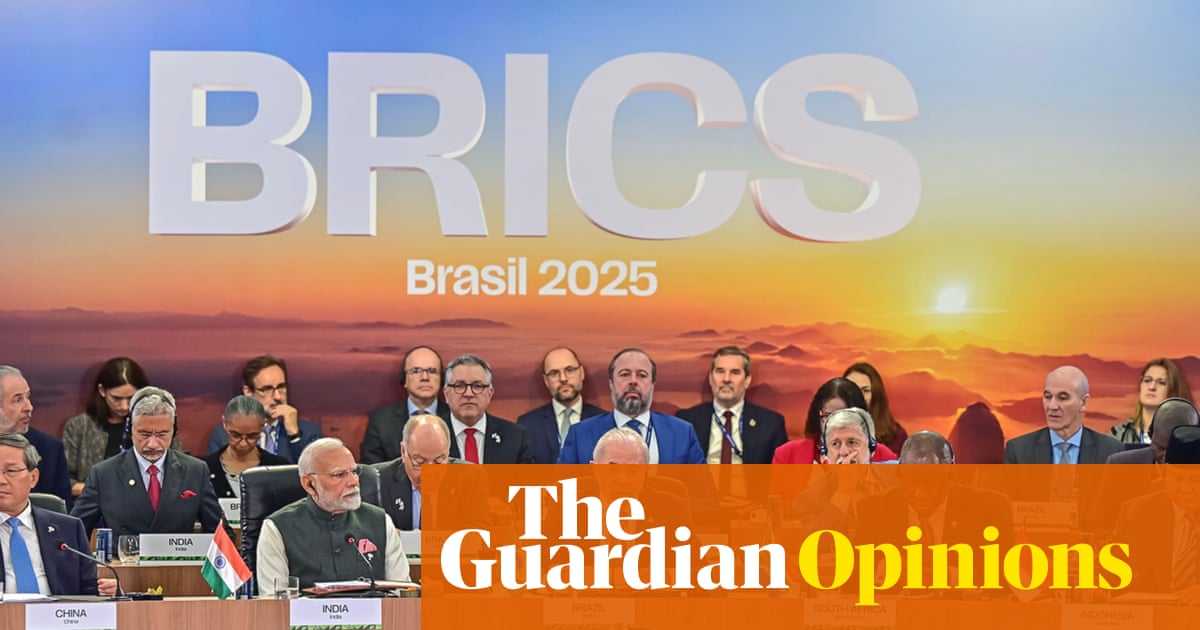
The recent Brics summit underscored the bloc's significant expansion to 11 members, now economically surpassing the G7 and representing a strategic pivot towards insulating members from Western influence. Driven by perceived shortcomings of existing global institutions and US trade policies, the group is actively developing its own financial "plumbing" to bypass Western systems and pursuing green industrialization through initiatives like its own development bank. This move, despite internal contradictions, signals a complex but determined push for a more multipolar global order, impacting trade flows and financial architecture.
The Brics alliance has expanded into a significant economic and geopolitical bloc, now comprising 11 member states that collectively represent half the world's population and 40% of global GDP, surpassing the G7's economic output by $20 trillion. This evolution is driven by a strategic ambition to build a joint high-tech industrial base and insulate members from US economic influence, a response to perceived failures in Western-led institutions like the IMF and aggressive trade policies such as US tariffs. Key initiatives underscore this pivot, including the development of independent financial "plumbing" to bypass Western systems—a direct reaction to sanctions and credit exclusion—and a focus on green industrialization, evidenced by fossil fuels now accounting for less than half of the bloc's electricity generation. However, the alliance's effectiveness is challenged by significant internal contradictions, including a prevalence of autocracies, inconsistent foreign policy stances, and member anxiety over China's potential dominance, which was highlighted by Xi Jinping's absence from the recent summit. This dynamic is already redirecting capital, with Chinese firms facing Western tariffs pivoting investment and technology transfers to Brics partners like the UAE, signaling a tangible shift in global economic flows.
AI-powered research, real-time alerts, and portfolio analytics for institutional investors.
Overall Sentiment
mixed
Sentiment Score
0.10
