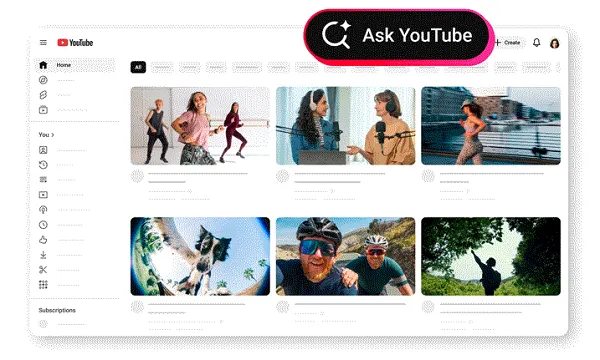
Google is expanding AI Mode concepts to YouTube with a new Ask YouTube test for U.S. Premium subscribers, enabling more conversational, context-aware search responses. The feature returns structured answers using long-form videos, Shorts, and text, and supports follow-up queries tied to prior context. The rollout is early-stage and limited in scope, but it signals continued product innovation in AI-driven search.
This is less about near-term monetization and more about widening Google’s control point in the user journey. The strategic value is that conversational search reduces the need for an external intent layer, which should modestly lift engagement and make Google’s first-party surfaces harder to disintermediate, especially in high-intent categories like travel, local services, and commerce. The second-order win is not ad load expansion immediately, but better query resolution that can improve downstream conversion quality and ultimately support pricing power in search ads over 12-24 months.
The competitive read-through is negative for standalone AI search assistants and review/itinerary discovery apps that rely on being the starting point for planning. If YouTube can bundle video, text, and contextual follow-ups into one workflow, it compresses the value of several fragmented apps that monetize attention rather than transaction completion. More subtly, it may also shift creator traffic toward fewer, higher-quality queries, favoring channels with evergreen utility content and punishing low-signal entertainment inventory that depends on browse behavior.
The main risk is execution and trust: if answers feel generic, hallucinated, or commercially biased, user adoption will stall and the feature becomes a demo rather than a habit. The realistic catalyst window is months, not days, because this needs repeated use cases and clear retention data before it matters to revenue estimates. A tail risk for bulls is that any meaningful consumer adoption accelerates regulatory scrutiny around self-preferencing and advertising disclosure, which could cap the margin uplift even if usage grows.
Consensus is likely underestimating how incrementally defensive this is for Google versus how immediately offensive it is for competitors. The near-term P&L impact is probably modest, but the strategic optionality is large because conversational search inside YouTube creates a proprietary dataset loop: query intent, viewing behavior, and follow-up refinement all in one ecosystem. That makes this more important as a moat extension than as a standalone product launch.
AI-powered research, real-time alerts, and portfolio analytics for institutional investors.
Request DemoOverall Sentiment
mildly positive
Sentiment Score
0.20
Ticker Sentiment
