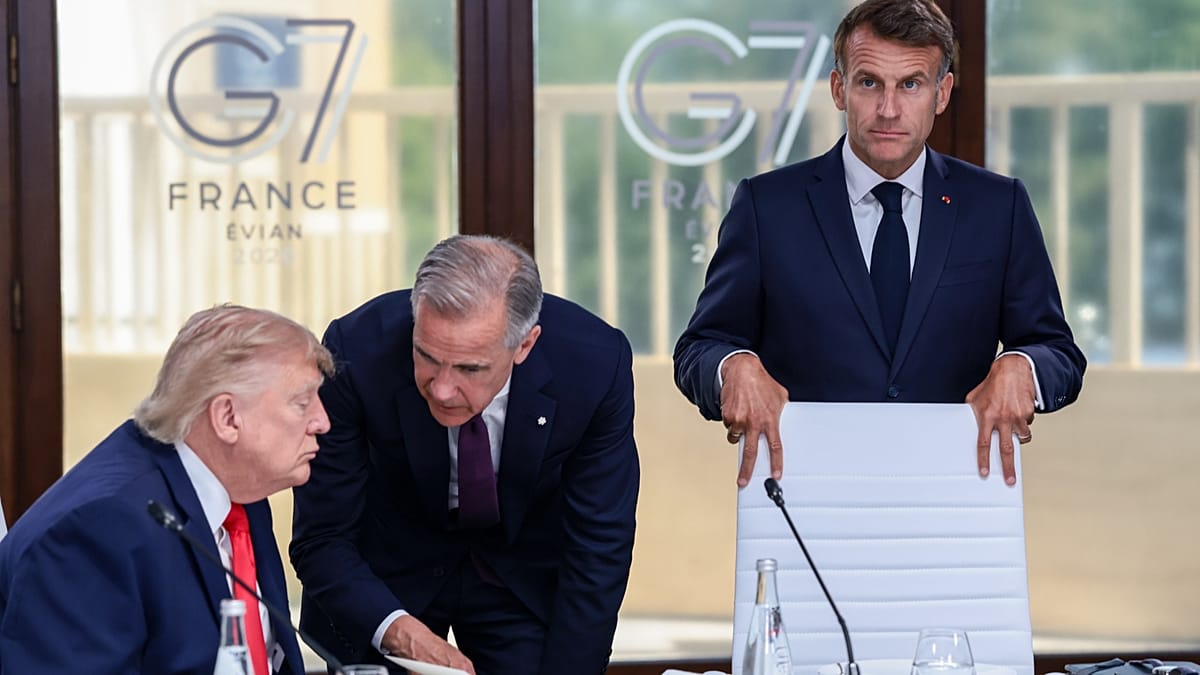
G7 leaders issued a joint declaration reaffirming "unwavering support" for Ukraine and pledging faster deliveries of air defense systems, interceptors, and long-range capabilities, while also signaling tougher sanctions on Russia's oil and gas sectors. Ukraine said the statement includes new steps to strengthen its defense, air defense, and energy resilience. The summit also turned to economic imbalances and China, with European leaders warning about a "new China shock" from subsidized exports.
The immediate equity read-through is not the headline support for Ukraine itself, but the implied tightening of the Western defense procurement cycle. That matters most for firms with already-validated production lines and scarce bottleneck components: air-defense interceptors, radar, fire-control software, and integration services. RTX has the cleaner second-order exposure because incremental Patriot demand tends to cascade into sustainment, spares, and munitions revenue with better visibility than new platform awards; LMT benefits more if allied governments move from one-off transfers to licensed local production, which extends the revenue runway and reduces headline risk around inventory depletion.
The larger medium-term implication is margin support for the defense primes, not just top-line growth. The market still prices much of the sector as if Europe can replenish inventory without crowding out U.S. programs, but extended air-defense demand can tighten capacity across seekers, solid rocket motors, and high-end electronics for 12-24 months. That creates a favorable mix shift toward higher-return aftermarket and sustainment revenue, while smaller subcontractors and missile-component suppliers become the true bottlenecks rather than the primes themselves.
The contrarian risk is that this reads as a diplomatic burst that may not translate into near-term budget authority, especially if U.S. policy softens again after the next bilateral cycle. If authorization lags appropriations, the initial move in defense names could fade within days, while the real monetization arrives over quarters through replenishment orders and allied co-production deals. A separate, underappreciated risk is that broader sanctions on Russian energy could tighten oil markets and force governments to reprioritize fiscal spending toward fuel support, delaying some defense procurement.
For broader markets, the China framing is a second-order trade-policy signal: if G7 alignment hardens, expect more export-control rhetoric around industrial policy and critical inputs, which is bearish for multinational cyclicals with China-heavy revenue and mixed for industrials reliant on Asia supply chains. The most interesting positioning is not outright defense beta, but relative value between winners with backlog leverage and those with execution risk or single-program dependence.
AI-powered research, real-time alerts, and portfolio analytics for institutional investors.
Request DemoOverall Sentiment
neutral
Sentiment Score
0.10
Ticker Sentiment
