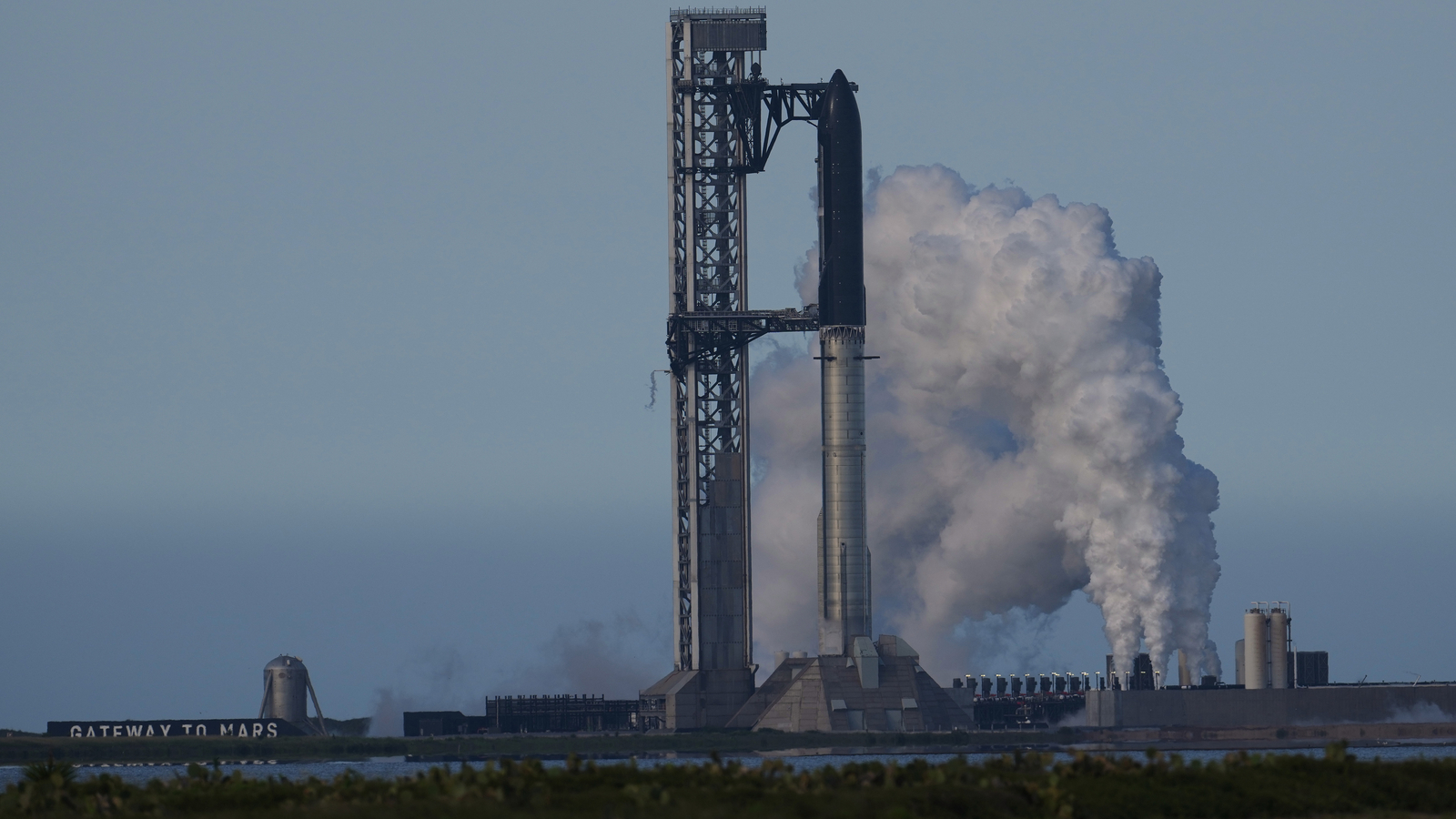
SpaceX’s newest 407-foot Starship test launch was aborted within 30 seconds of liftoff due to a launch-pad hydraulic pin failure at Starbase, delaying what would have been the 12th Starship test flight. Musk said another attempt could be made Friday if the issue is fixed quickly. The article also notes SpaceX will go public, adding a separate strategic financing angle, but the immediate news is a launch setback rather than a fundamental business change.
The immediate market read is not on SpaceX itself, but on the reliability premium embedded in the broader space stack. Repeated pad/launch-systems friction at a critical test cadence raises the cost of capital for adjacent private space names, because the market tends to underwrite compressed time-to-orbit assumptions that only hold when launch throughput is high. The second-order beneficiary is the established launch ecosystem: any delay that slows Starship’s maturation extends the useful life of legacy launch providers, satellite bus makers, and ground/integration vendors that would otherwise face pricing pressure once SpaceX scales.
The bigger issue is timeline slippage, not a single failed countdown. If Starship’s next attempt slips by days, the signal is operational nuisance; if this becomes a multi-month cadence reset, it pushes out NASA’s lunar architecture milestones and increases the probability of interim contracting changes, design redundancy, and political scrutiny around schedule risk. That dynamic tends to favor companies with existing certified hardware and diversified government exposure over single-platform moonshot narratives.
The IPO comment adds another layer: public-market investors will likely demand a much cleaner execution record before assigning a premium multiple to a capital-intensive, failure-tolerant model. That means any “growth at any cost” enthusiasm is vulnerable to a reset if launch cadence remains erratic, while suppliers with real revenue today can quietly benefit from stretched program timelines. The contrarian point is that one scrub does not damage the long-term thesis; it may actually improve the near-term competitive position of incumbents by delaying a pricing and capacity shock from SpaceX.
AI-powered research, real-time alerts, and portfolio analytics for institutional investors.
Overall Sentiment
mildly negative
Sentiment Score
-0.12
