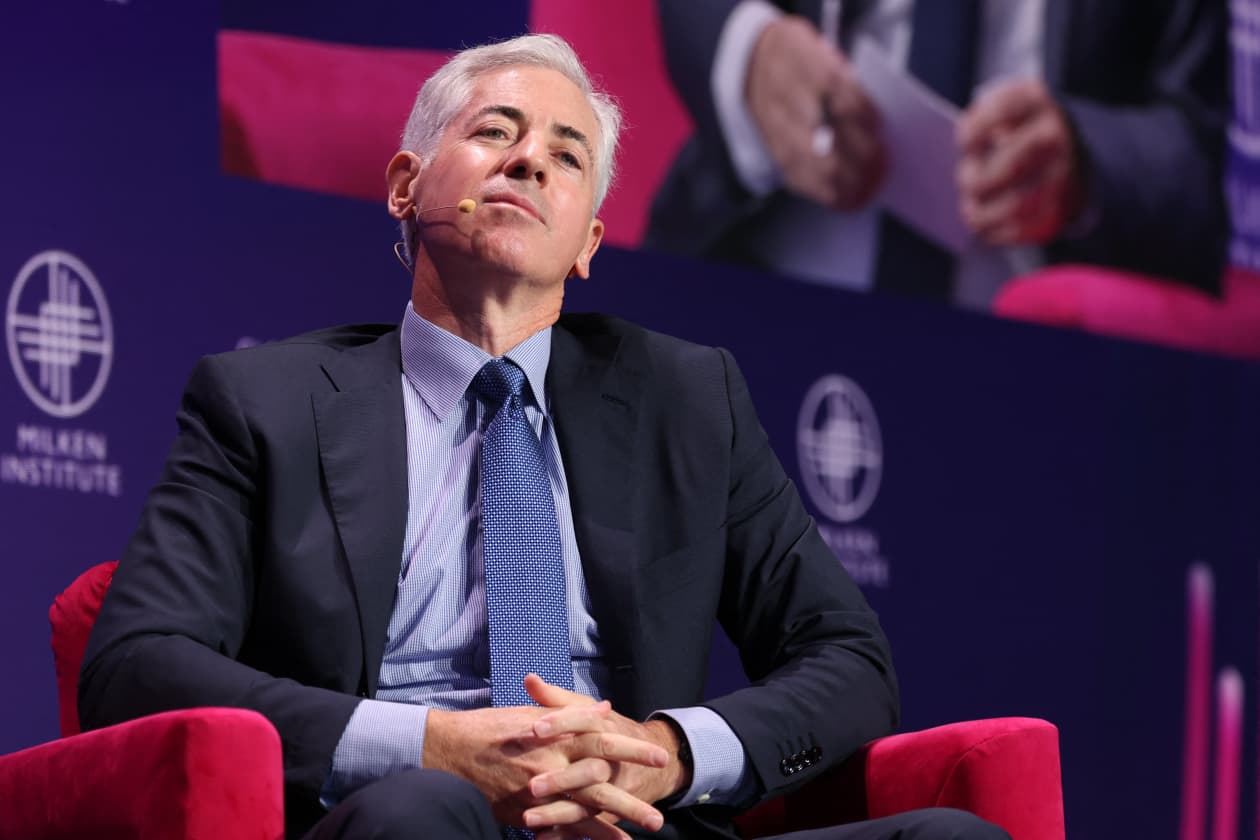
Bill Ackman is taking Pershing Square public while simultaneously launching a new closed-end fund IPO, with a retail-focused distribution strategy that includes giving free shares to investors buying five or more shares. The move is notable for widening access to a traditionally exclusive hedge fund structure, but the article is primarily descriptive and does not provide pricing, valuation, or demand data. Market impact should be limited unless the offerings show strong retail uptake.
This is less about one fund launch than a stress test of whether retail flow can be manufactured into a durable asset-gathering channel for “elite” alternative products. If it works, the second-order winner is every sponsor with a recognizable brand and a strategy that can be packaged as scarce access; the loser is the traditional private-wealth gatekeeper model, because distribution economics get reset when an issuer subsidizes customer acquisition with free equity. The real signal is not the IPO itself but whether retail brokerages can turn a novelty allocation into repeatable AUM inflows over the next 1-3 quarters.
The market should also treat this as a positioning event, not just a capital raise. A retail-friendly structure with free-share incentives can create a short-lived demand spike, but those flows are often lower-conviction and more price-insensitive on the way in than on the way out, which raises post-listing volatility risk once the promotional window closes. If initial demand is strong, expect copycat behavior from other managers and platforms; if it disappoints, the broader theme of democratizing alternatives gets set back for months and may tighten the premium investors assign to brand-driven public vehicles.
The contrarian read is that the giveaway itself is a warning sign: when issuers need to subsidize participation, the product may be more compelling as a marketing story than as a long-duration vehicle. That creates a potential mean-reversion setup in anything that benefits from “retail democratization” narratives if the market extrapolates too far from a single branded launch. Over a 30-90 day horizon, the key catalyst is aftermarket retention data; if turnover is high and the shares trade off once allocation chasing subsides, the tradeable lesson is that retail demand can be summoned quickly but not necessarily converted into sticky capital.
AI-powered research, real-time alerts, and portfolio analytics for institutional investors.
Request DemoOverall Sentiment
mixed
Sentiment Score
0.15
