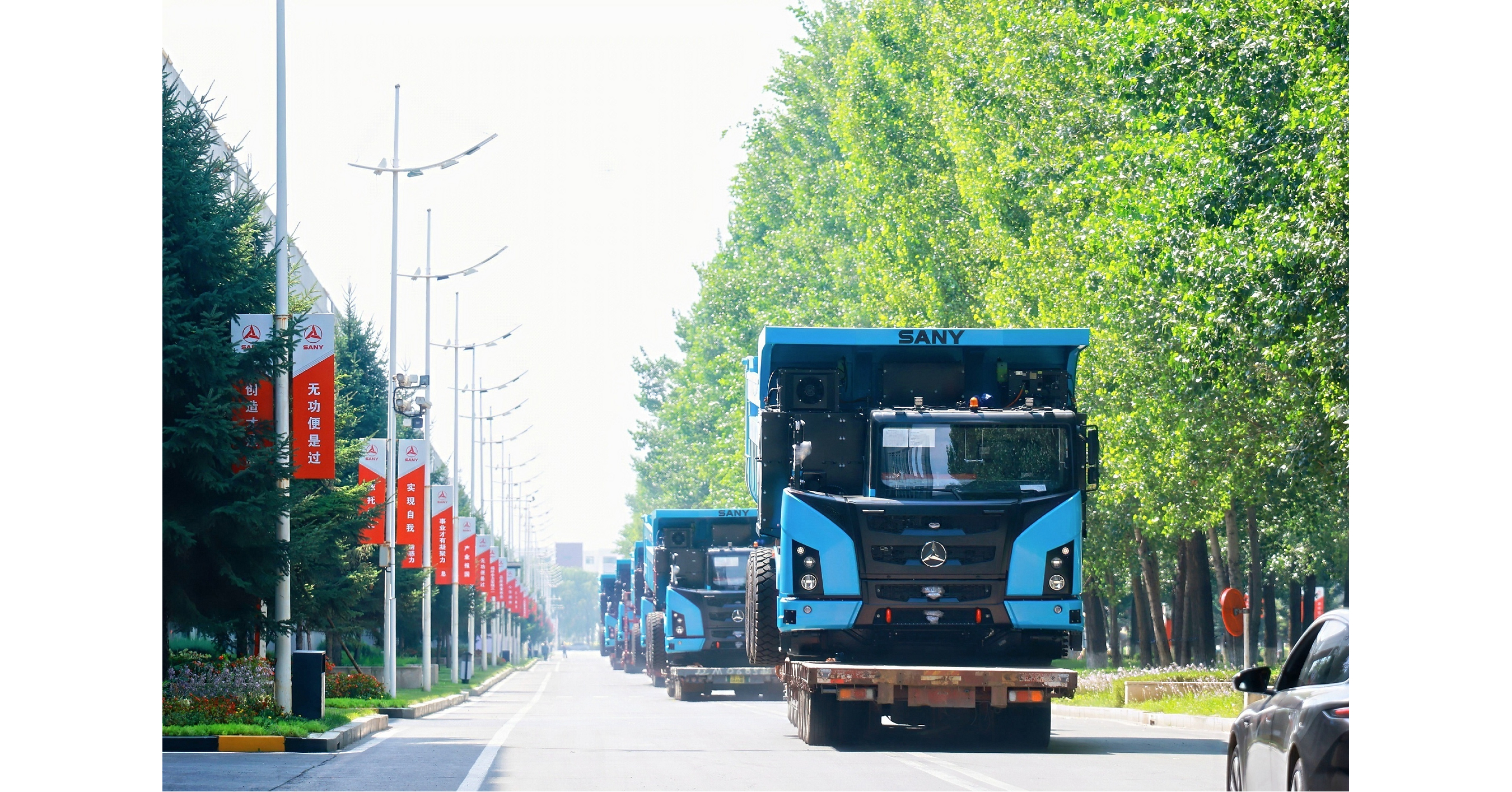
SANY hat die erste Charge rein elektrischer, autonomer Bergbau-Lkw (SKT110Ei) nach Südamerika ausgeliefert und startet damit sein erstes Projekt mit autonomen Bergbau-Lkw in der Region (Flotte plus intelligentes Dispositionssystem sowie Betriebs- und Wartungsservice). Das Unternehmen adressiert Themen wie Sicherheitsrisiken, Fahrerknappheit und steigende Arbeitskosten mit einer cloudbasierten Disposition und integrierter autonomer Fahrlösung; bis Juli 2026 seien über 300 autonome Lkw im Einsatz gewesen (13+ Mio. km, 41+ Mio. m³ Transport). Als zusätzliche Produktankündigung stellte SANY auf dem Mining Summit 2026 einen kabinlosen, vollelektrischen Bergbau-Lkw vor. Insgesamt ist die Meldung strategisch positiv, dürfte aber kurzfristig nur begrenzt marktbewegend sein.
This is less a single-order revenue event than a proof point that autonomous haulage is moving into a more commercially defensible phase in frontier mining geographies. The economic implication is that mine operators will increasingly compare autonomy on a fully loaded cost-per-ton basis, not as a capex novelty; that favors vendors with end-to-end systems, remote ops, and service annuities over pure hardware OEMs. The second-order winner is likely the broader mining automation stack—fleet management, industrial connectivity, sensors, and charging infrastructure—because once a mine commits to autonomy, switching costs rise materially.
For incumbents, the competitive threat is not just SANY taking share; it is margin compression across the haul-truck ecosystem if Chinese OEMs bundle equipment, software, and lifecycle service more aggressively than Western peers. That could pressure Caterpillar (CAT), Komatsu (KMTUY), and Epiroc (EPOKY) in price-sensitive jurisdictions, even if global unit volumes remain resilient. Conversely, CAT and Komatsu may actually benefit if this accelerates customer acceptance of autonomous fleets and expands the addressable replacement cycle for higher-spec equipment.
The key risk is execution: uptime in South American mining conditions, cybersecurity for cloud dispatch, and service responsiveness. If the project shows stable availability over the next 1-3 quarters, it becomes a lead indicator for broader adoption; if it slips on reliability or maintenance costs, the market should discount the press release heavily. Over 6-18 months, the main structural effect is on mine labor economics and diesel consumption, which should modestly favor electrification-related suppliers and reduce the relative moat of operators reliant on manual trucking.
My contrarian view is that the market may overfocus on SANY’s international ambition and underfocus on the fact that autonomy lowers the total cost of mine expansion. That makes this potentially bullish for the mining-capex cycle as a whole, but only if commodity prices stay supportive; if iron ore or copper roll over, adoption gets deferred and the implied TAM remains aspirational rather than near-term.
AI-powered research, real-time alerts, and portfolio analytics for institutional investors.
Request DemoOverall Sentiment
mildly positive
Sentiment Score
0.25
