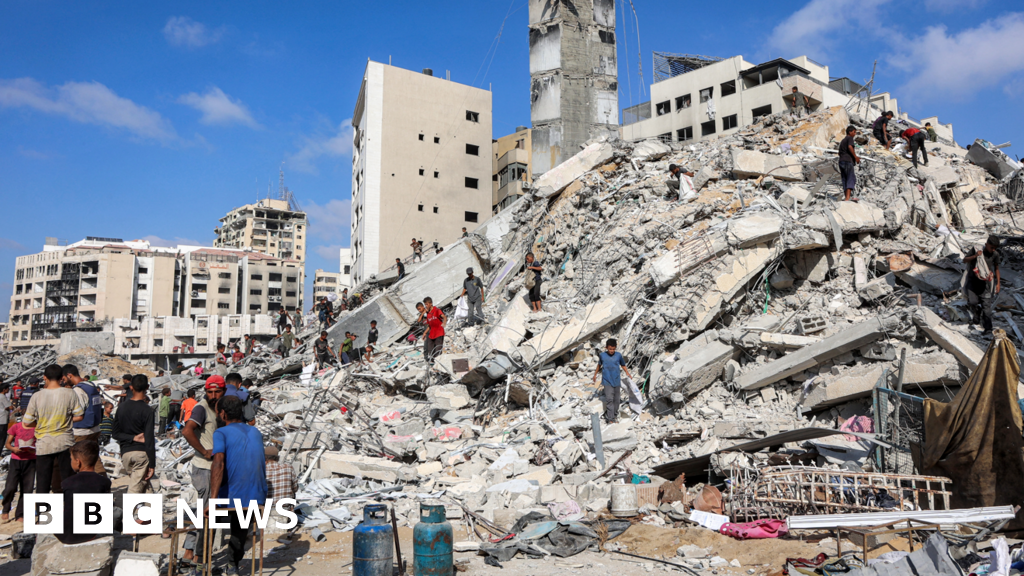
Israel has escalated its Gaza City assault, destroying a second high-rise, the Sussi Tower, amid claims of Hamas use, intensifying the conflict. This action occurs as the UN warns of famine for the nearly one million remaining residents, despite Israeli calls for relocation to overcrowded and unsafe zones. Prime Minister Netanyahu's stated intent to seize the Gaza Strip, following failed ceasefire talks, signals a prolonged conflict with severe humanitarian and geopolitical ramifications, with reported casualties exceeding 63,000.
The intensification of Israel's military campaign in Gaza City, marked by the sequential destruction of high-rise structures such as the Sussi and Mushtaha towers, signals a new phase of the conflict with significant geopolitical and humanitarian implications. The Israeli government's explicit intent to seize the Gaza Strip, following the collapse of ceasefire negotiations in July, points to a prolonged engagement rather than a near-term resolution. This escalation is occurring amid a severe humanitarian crisis, with the United Nations declaring a famine in Gaza City, where nearly one million people remain. Reports of overcrowded and unsafe conditions in designated humanitarian zones, coupled with a death toll exceeding 63,000 according to the Hamas-run health ministry, underscore the extreme social and political instability. The destruction of these towers, which were symbols of economic development following the 1993 Oslo Accords, also carries a symbolic weight, representing the dismantling of past hopes for Palestinian autonomy and infrastructure.
AI-powered research, real-time alerts, and portfolio analytics for institutional investors.
Request DemoOverall Sentiment
strongly negative
Sentiment Score
-0.80
