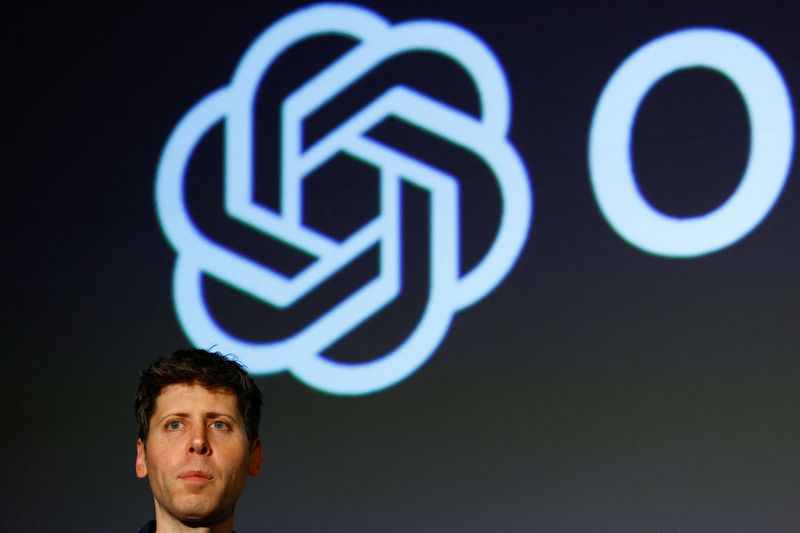
OpenAI has proposed that the U.S. government take a 5% ownership stake, a move Altman discussed in early conversations with the Trump administration to reduce political pressure and share AI upside. Separately, the U.S. government is in advanced talks with AI firms to create voluntary standards for releasing new, advanced/cyber-capable models, potentially announced as soon as next week. The proposal’s likelihood of being pursued and how other AI companies would respond remain unclear.
This reads as a governance shock to the AI stack, not a direct earnings event. If Washington starts taking a quasi-equity claim or imposing release standards, the value migrates away from frontier-model scarcity and toward firms with distribution, cash flow, and bargaining power. That is marginally constructive for AAPL because its AI monetization depends on owning the endpoint and the user relationship, not on winning the model race; anything that compresses model-vendor rents makes the OS layer more defensible.
The near-term market move should be muted unless the administration formally endorses the framework. The more relevant catalyst window is 1-3 months, when any standards announcement could pressure private AI multiples and reduce the odds of a single model winner disintermediating device makers. The structural effect over 6-18 months is more important: a slower, regulated cadence for advanced model launches increases the odds that iPhone upgrade cycles remain the primary consumer monetization channel for AI, rather than a standalone model platform capturing the economics.
Contrarian take: the consensus may read this as broadly anti-AI, but for Apple it is closer to a moat-preservation mechanism. The main falsifier is if the standards evolve into de facto licensing that materially delays Apple Intelligence features or if consumers stop paying for hardware upgrades despite AI feature parity. In that case, the policy would shift from helping incumbents to taxing the entire ecosystem and could cap AAPL multiple expansion.
AI-powered research, real-time alerts, and portfolio analytics for institutional investors.
Request DemoOverall Sentiment
neutral
Sentiment Score
0.10
Ticker Sentiment
