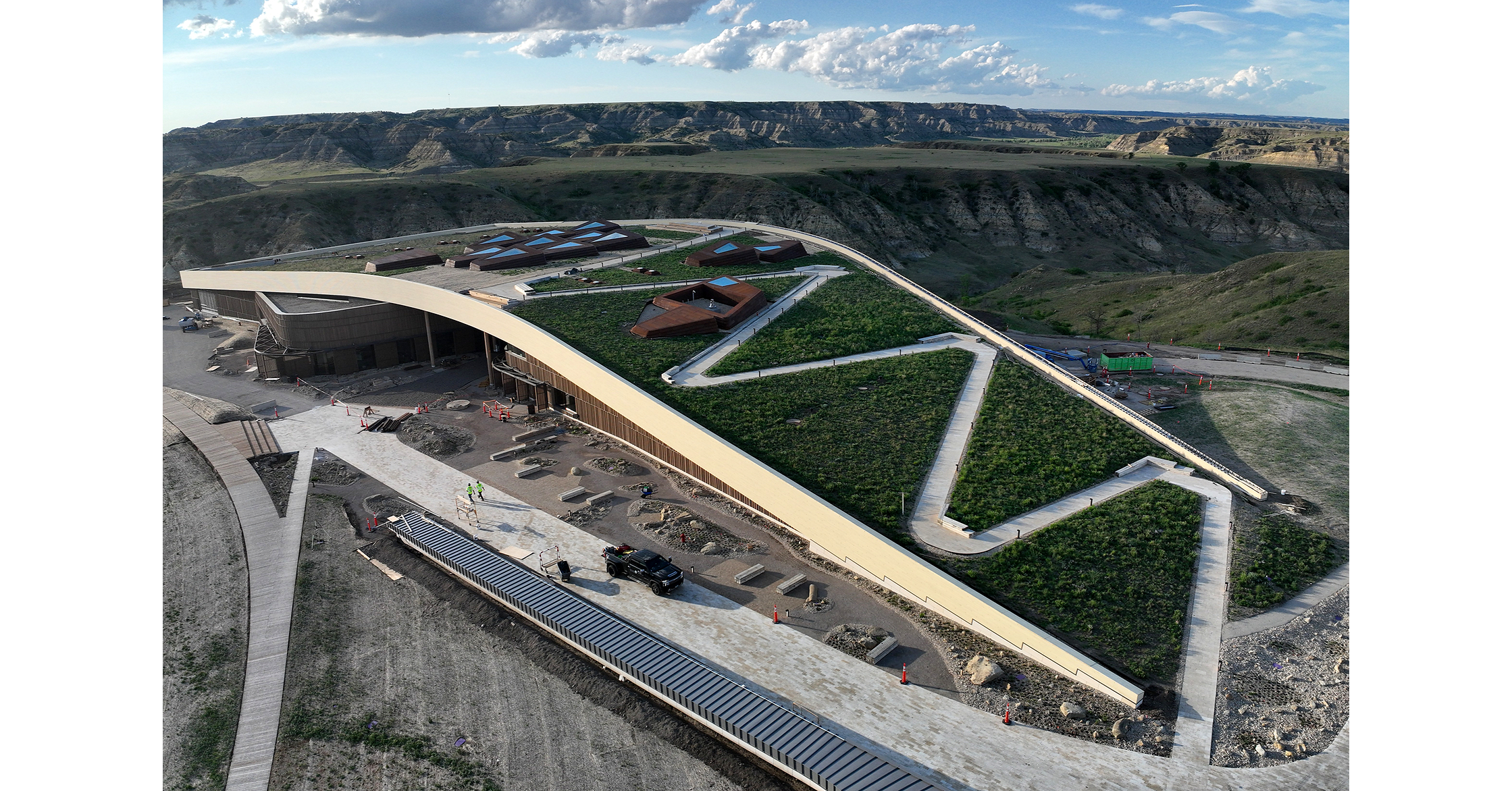
The Theodore Roosevelt Presidential Library opened July 4, 2026, with Resource Environmental Solutions (RES) as ecological lead, planting 400,000 native plants across a 93-acre site. RES also implemented a two-acre green roof and a seed bank, and claims 100% on-site stormwater management that cuts potable water demand by 50% while supporting Living Building Challenge certification goals. Overall, the news is positive for RES’s nature-based/green infrastructure positioning but is not presented as financially material.
This is a demand-validation event for the niche of nature-based infrastructure, not a revenue event for the sponsor. The economic prize sits with firms that can bundle ecological design, permitting, materials sourcing, and multi-year maintenance guarantees; that favors scaled environmental-services platforms such as TTEK, ACM, and NVEE, and secondarily roofing/water-management suppliers, while bid-only landscapers and low-bid civil contractors face margin compression if specs shift toward performance warranties.
The second-order effect is procurement, not publicity: projects like this create a template for institutions to justify higher upfront capex in exchange for lower stormwater and water-utility costs. If copied, the margin pool shifts from one-off installation labor toward seed-bank, monitoring, membrane, and O&M revenue, which is stickier and more recurring. Timing matters: no earnings impact in days, modest read-through over 1-3 months if RFPs broaden, and only 6-18 month structural upside if certification language starts appearing in municipal and campus budgets.
Contrarian view: the market may overread this as broad ESG acceleration when it is more likely a branded showcase with limited budget scale. The thesis is falsified if public or philanthropic capex tightens, if living-building standards add cost without follow-on awards, or if environmental-services backlogs do not improve on the next earnings cycle. Until there is evidence of repeat procurement, this is an alert, not a thesis.
AI-powered research, real-time alerts, and portfolio analytics for institutional investors.
Overall Sentiment
mildly positive
Sentiment Score
0.25
Ticker Sentiment
