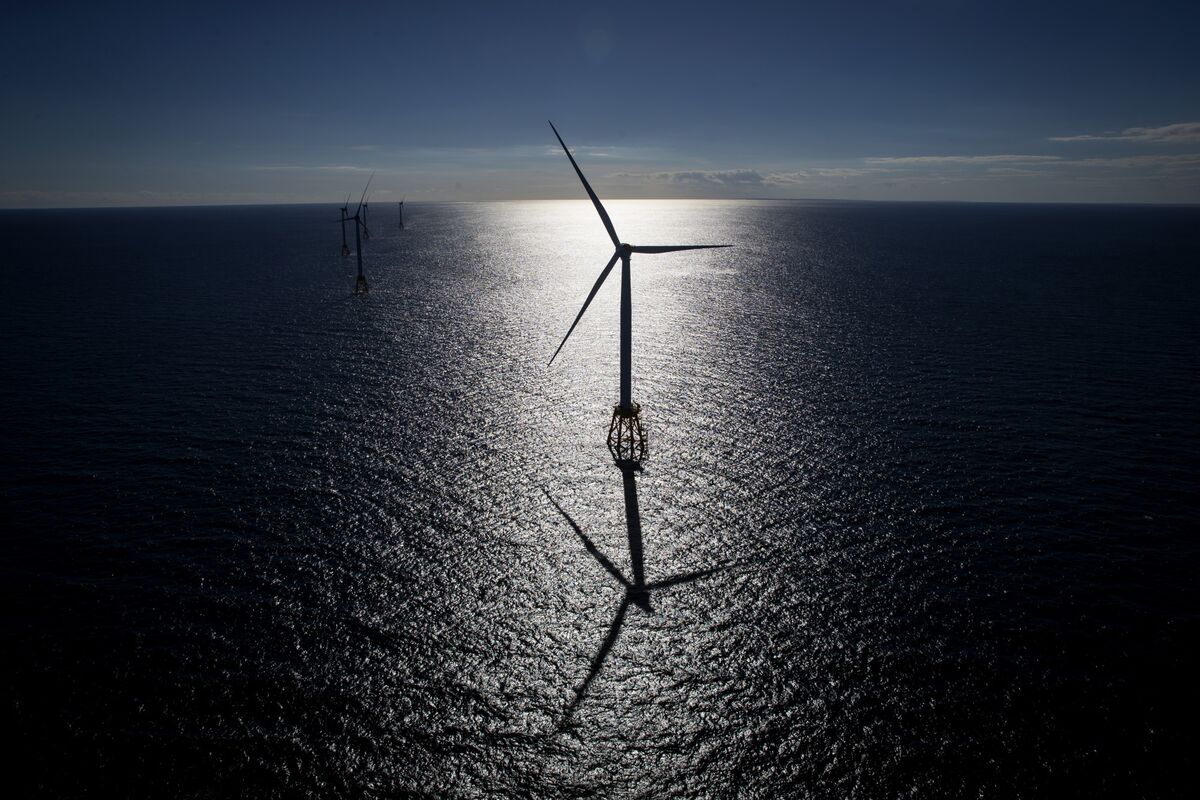
Two offshore wind developers will surrender federal leases and redirect capital to fossil fuel projects under agreements with the Trump administration. The move is the latest in the administration’s effort to slow the US offshore wind industry and support oil and gas investment. It is negative for renewable energy developers and wind-leasing prospects, with broader sector implications for US energy policy.
This is less about near-term power generation and more about capital allocation signaling. When permitting/lease risk becomes politically fungible, the cost of capital for offshore wind rises disproportionately versus the economics of the projects themselves, because developers now have to price a regulatory discount that can persist through election cycles. The second-order beneficiary is not just fossil fuel incumbents, but also midstream, services, and inland power infrastructure that can absorb redirected capex faster than capital-intensive offshore assets.
The market is likely underestimating the asymmetry between sentiment damage and physical supply response. Offshore wind losses show up immediately in equity multiples and project financing, while any incremental oil/gas investment takes quarters to years to translate into barrels or cubic feet; in the meantime, the policy noise reinforces a higher hurdle rate across the entire renewable complex. That creates a crowded downside in pure-play renewables, but only a gradual upside in traditional energy, which argues for relative-value rather than outright directional exposure.
The key contrarian risk is that this policy can become self-limiting if it tightens power markets or raises utility procurement costs in coastal load centers. If offshore wind attrition starts worsening regional reserve margins or electricity prices over the next 6-18 months, states and utilities may accelerate procurement elsewhere, but at materially higher cost, creating a political backlash that supports a partial rebound in developer multiples. In other words, the initial bearish read on wind could be overdone if investors ignore replacement-cost inflation and grid reliability concerns.
For the broader market, this is also a higher-beta signal for climate policy dispersion: U.S. renewables face a policy premium discount, while fossil-linked infrastructure may enjoy a lower required return. The cleanest trade is not to bet on oil prices, but to short the capital-intensive, policy-sensitive end of the energy transition and own assets with existing cash flow, tariff protection, or regulated returns. Expect the main impact to play out over weeks in equities and over months in financing conditions and order books.
AI-powered research, real-time alerts, and portfolio analytics for institutional investors.
Request DemoOverall Sentiment
moderately negative
Sentiment Score
-0.35
