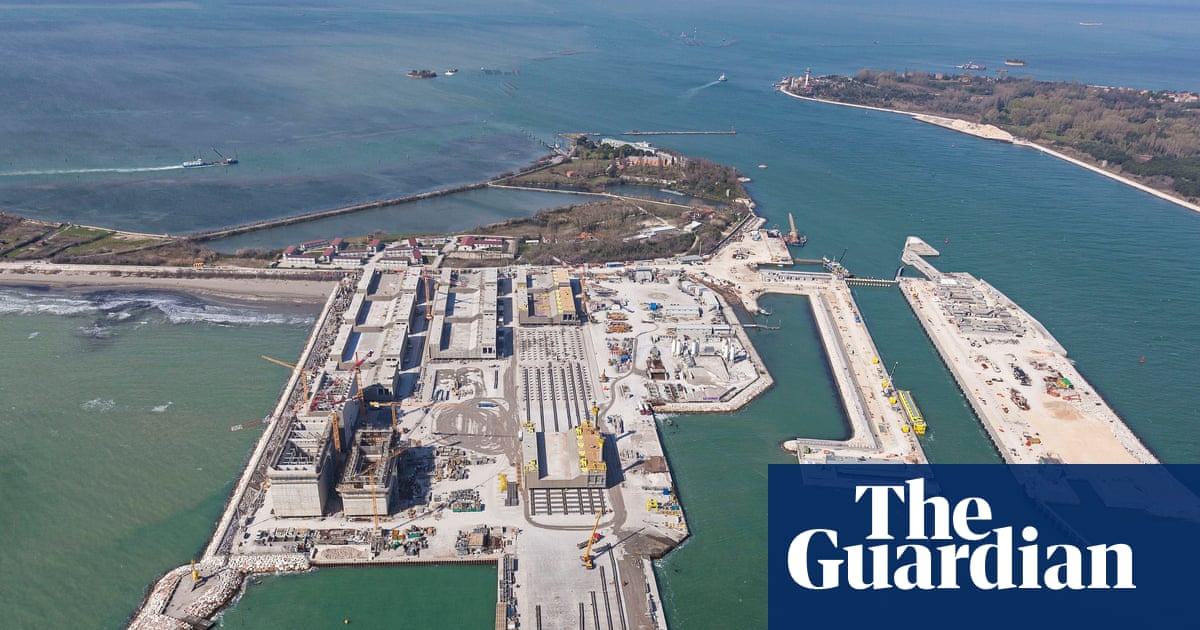
Venice’s Mose flood barrier system has protected the city 154 times since 2020, but authorities are already seeking a replacement as sea levels rise and climate-driven flooding worsens. Engineers warn that an estimated extra 1 meter of sea-level rise by century-end could force the barriers to close about 200 times a year, damaging the lagoon ecosystem and disrupting port traffic. The article also highlights significant operating costs, with closures costing over €200,000 each and more than €5m during this year’s carnival alone.
The market implication is not a direct commodity or equity read-through, but a policy signal: climate adaptation is moving from discretionary capex to forced infrastructure replacement. That tends to favor firms with recurring revenue in monitoring, controls, water treatment, geotechnical engineering, and coastal infrastructure, while punishing leisure, inland logistics, and asset-heavy operators exposed to recurring shut-in costs. The second-order winner is the “picks and shovels” layer around resilience projects, not the marquee civil works contractors, because procurement will likely fragment across advisory, sensors, software, and maintenance rather than one mega-build.
The more interesting bearish angle is on cities and assets that depend on uninterrupted maritime flow and high footfall tourism. If closures become more frequent, the economic value of “just-in-time” waterfront commerce deteriorates faster than headline flood damage suggests; insurance repricing and deductible resets can hit municipal budgets and adjacent real estate before physical losses do. That creates a slow-burn underperformance risk over 12-36 months in coastal hospitality, port-adjacent logistics, and European municipal credit proxies, especially where political willingness to subsidize adaptation is already stretched.
Consensus likely underestimates how quickly adaptation can become self-defeating: once protection systems are used too often, they degrade the very ecosystem and commercial rhythm they were built to preserve. The contrarian takeaway is that this is less a binary “protected/unprotected” story and more a path-dependent collapse in operating optionality; the tipping point is not complete failure, but rising activation frequency. That argues for looking at volatility structures and relative-value shorts tied to high-exposure coastal revenue streams rather than outright catastrophe bets.
AI-powered research, real-time alerts, and portfolio analytics for institutional investors.
Request TrialOverall Sentiment
moderately negative
Sentiment Score
-0.35
