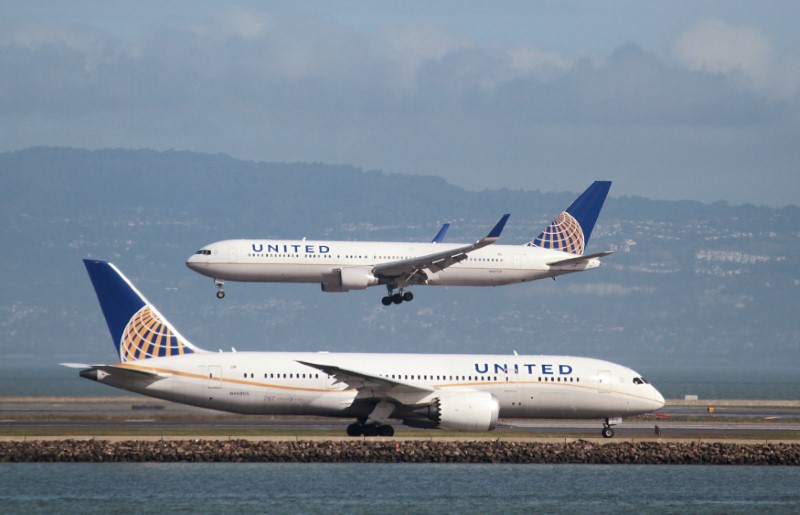
United Airlines cut its 2026 earnings outlook to $7-$11 per share from $12-$14 as the Iran war-driven surge in crude prices lifted fuel expense by $340 million in the quarter. Revenue rose more than 10% to $14.61 billion, slightly above the $14.39 billion consensus, and adjusted EPS came in at $1.19. Despite the weaker outlook, shares rose 1.2% premarket as investors focused on the in-line-to-better-than-feared guide and resilient demand.
The first-order read is that the market is treating this as an earnings reset, but the more important signal is that pricing discipline is still intact even as input costs jump. That implies the industry is not yet in a classic oil-shock demand break; instead, carriers with better network utility and premium mix should take share from weaker peers that need to discount harder to fill seats. United’s willingness to trim capacity matters because it helps preserve yields, which usually means the eventual losers are the marginal capacity providers, not the best-in-class networks.
The second-order effect is on the spread between fuel exposure and pricing power. If crude stays elevated for several weeks, airlines with weaker ancillary revenue or more domestic-leisure mix should see estimates drift down faster than United, because they have less ability to offset fuel via fare and fee increases. That creates a relative-value opportunity inside airlines rather than a clean sector-wide short; the market is likely underestimating how quickly analysts will differentiate among carriers over the next 1-2 earnings cycles.
The contrarian angle is that this guide cut may be close to a trough if geopolitical risk continues to ease, which would make the current de-rating less durable than the market is pricing. Conversely, if the ceasefire fails and crude re-risks, today’s numbers are likely too optimistic because fuel expense hits with a lag while capacity cuts and fare actions take time to flow through. So the real catalyst window is 2-8 weeks: either fuel normalizes and airlines rerate, or the industry enters a second downward revision wave.
The stock reaction suggests investors are anchoring on trough multiples rather than absolute earnings, which can keep UAL supported, but that also sets up disappointment if the next quarter shows any demand softness. The clearest tell will be whether revenue per available seat mile holds while capacity is cut; if it does, the premium carriers deserve the premium multiple. If not, the market will quickly rotate toward names with lower fuel sensitivity and stronger domestic pricing power.
AI-powered research, real-time alerts, and portfolio analytics for institutional investors.
Request TrialOverall Sentiment
mixed
Sentiment Score
-0.10
Ticker Sentiment
