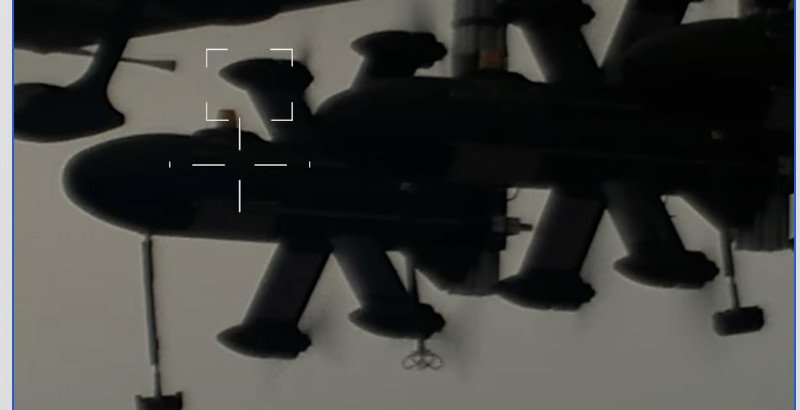
Ukraine has begun using modified An-28 aircraft as airborne launch platforms for P1-SUN interceptor drones, with footage showing at least three mounts per wing and up to six drones carried per aircraft. The setup is designed as a lower-cost alternative to air-to-air missiles for countering Russian Shahed-type drones, improving flexibility and reducing interception time versus ground-based launches. The development underscores Ukraine’s expanding improvised air-defense capability, though it is unlikely to directly move markets outside defense-related names.
This is a signal that the air-defense problem is migrating from a capital-intensive missile contest to a distributed kill-chain contest. If Ukraine can reliably add airborne launch capacity, the binding constraint shifts from interceptor scarcity to sensor fusion, pilot training, and sortie availability — a favorable setup for firms supplying small UAV propulsion, cameras, datalinks, and edge-compute rather than traditional missile primes. The most important second-order effect is that cheap interceptors reduce the marginal value of each additional Russian drone in saturation attacks, potentially compressing the effectiveness of massed strikes over the next 1-3 months if sortie rates scale.
The more interesting implication is budget reallocation. Every successful low-cost intercept weakens the argument for expensive high-end point-defense stockpiles and increases procurement urgency for layered, attritable systems; that is structurally bullish for the ecosystem around small autonomous drones, counter-UAS software, and ruggedized optical payloads. It is less positive for legacy air-defense missile makers on a relative basis, because the battlefield is validating a cost-exchange ratio that favors software-defined, reusable, or expendable systems over premium interceptors.
The main risk is that this remains a tactical workaround rather than a scalable doctrine: airborne launch platforms are vulnerable to weather, maintenance, and pilot shortage constraints, and adversaries can respond by changing altitude, routing, and emission discipline. If Russia adapts by reducing drone predictability or increasing electronic warfare pressure, the effectiveness curve could flatten within weeks. The contrarian view is that the market may overestimate near-term scalability; the real bottleneck may be operational throughput, not technology, meaning the concept matters more as a procurement signal than as an immediate battlefield game-changer.
AI-powered research, real-time alerts, and portfolio analytics for institutional investors.
Request TrialOverall Sentiment
neutral
Sentiment Score
0.05
