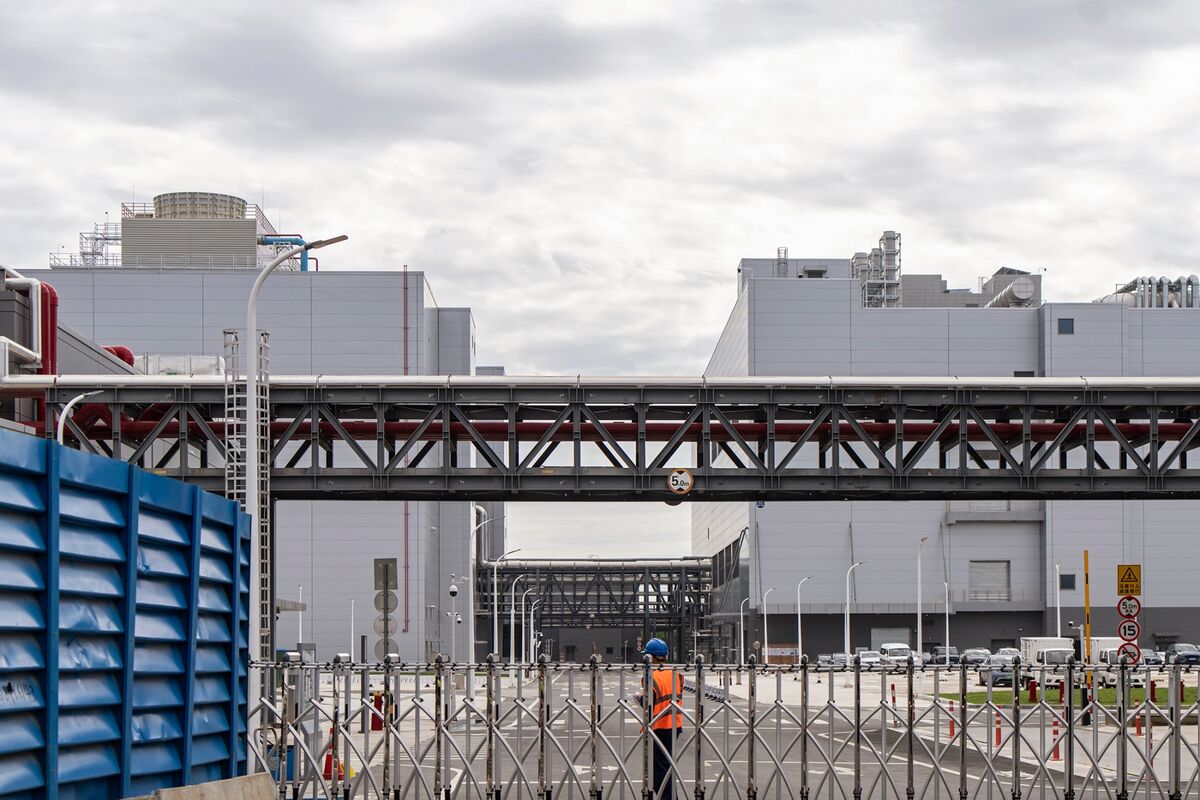
ChangXin Memory Technologies (CXMT) is launching the biggest IPO of 2026 next week (as CXMT Corp.), targeting upwards of $4.3B after reporting seven-fold revenue growth in the first half. The company is positioning itself as a domestic, US-curb-resistant supplier to reduce China’s reliance on foreign memory chips amid supply shortages. The move is aimed at accelerating Beijing’s AI ambitions and potentially reshaping the $1T memory-chip market.
The near-term read-through is not “China wins memory,” but “memory pricing gets more fragile.” If CXMT scales, the first-order effect is margin compression across the cycle for the incumbents most exposed to commodity DRAM/NAND pricing; the second-order effect is that buyers with China exposure may delay orders, expecting a cheaper domestic alternative to improve. That is bearish for high-multiple memory names if spot prices roll over, because the market tends to discount downturns in this group 1-2 quarters before reported ASPs.
The more interesting winner is China’s AI hardware stack: a credible domestic memory source reduces one of the hardest import bottlenecks for servers, phones, and edge devices. That could support incremental demand for local foundry, packaging, and system integrators, but only if yield and reliability are good enough to qualify in volume; until then, this is more of a policy-option value than an immediate earnings boost. Over 6-18 months, the bigger risk is structural: even partial substitution can cap global memory upside and keep valuation multiples from expanding in a cyclical rebound.
The contrarian point is that the market may be overestimating how quickly a domestically supplied memory business can displace best-in-class global products. Memory is brutally sensitive to process control, defect density, and capex intensity; if CXMT is forced to chase share before it has stable yields, it can trigger a race-to-the-bottom that hurts everyone without creating a durable moat. The falsifier for the bearish-global-memory view is sustained CXMT qualification at scale plus evidence that spot DRAM prices remain firm despite new capacity.
AI-powered research, real-time alerts, and portfolio analytics for institutional investors.
Overall Sentiment
mildly positive
Sentiment Score
0.35
Ticker Sentiment
