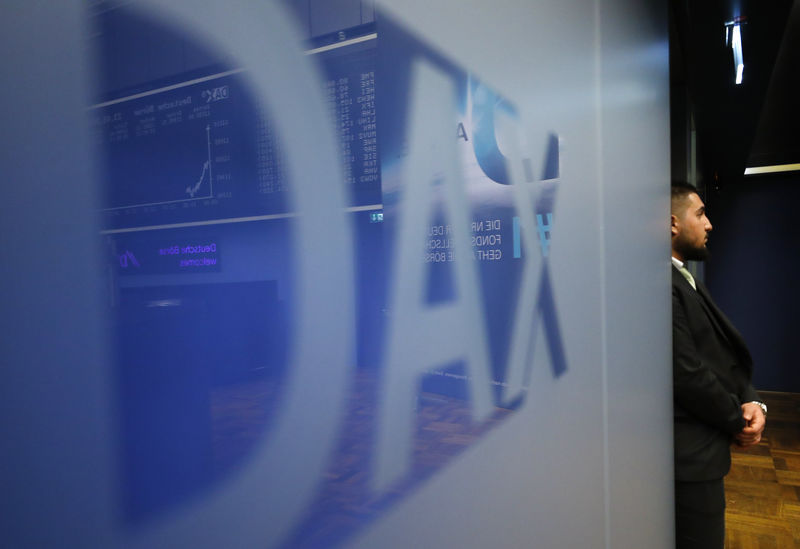
German equities closed modestly higher with the DAX up 0.25%, the MDAX +1.31% and the TecDAX +0.78%, led by Retail, Technology and Food & Beverages. Notable movers included Deutsche Boerse +2.22% and Infineon +1.74%, while Rheinmetall and Daimler Truck declined; Delivery Hero jumped 14.6% to 20.10 and 11 AG hit a 3-year high at 24.25. Market breadth was positive (407 advancers vs 209 decliners) and the DAX volatility index fell 6.8% to 18.38, while commodities saw mixed moves — gold futures +1.0% and Brent ~+0.25% — and FX was largely flat (EUR/USD ~1.16, USD index 99.45).
Market Structure: The session shows a mild risk-on tilt (DAX +0.25%, MDAX +1.31%) with rotations into Retail/Tech (Delivery Hero +14.6%, HelloFresh +5.9%) and AI/compute beneficiaries (positive sentiment for SMCI/APP). Lower DAX VIX (18.38, -6.8%) and rising commodities (Brent ~$63, WTI ~$59) imply liquidity chasing beta and real assets; this benefits high-velocity e-commerce and AI hardware demand while pressuring defensive/diagnostic names like QGEN. Expect continued flow into names levered to AI workloads if earnings confirmation arrives in 1–3 months.
Risk Assessment: Tail risks include sudden rate repricing (Fed surprise tightening) or a semiconductor supply shock that would flip the AI-hardware narrative; regulatory/antitrust actions on ad-tech (APP) or diagnostic reimbursement cuts (QGEN) are 5–15% probability but 20–50% price shock events. Time horizons: immediate (days) momentum trades; short-term (weeks) earnings and data-driven rerating; long-term (quarters) structural gains for AI-capable infrastructure. Hidden dependencies: SMCI concentration risk (few hyperscalers) and APP’s ad-revenue cyclicality tied to CPI and consumer spend.
Trade Implications: Direct long bias to high-growth AI compute (SMCI) and selective ad-tech (APP) with disciplined size; hedge market tail via index or single-name puts given low IV. Pair trades: long AI-capex beneficiaries vs. short diagnostics/defensive names where consumer testing demand is fading (QGEN). Use options spreads to cap cost (3–6 month calls/call spreads for longs, put spreads for shorts), and set stop-losses at 12–15% per position.
Contrarian Angles: Consensus may be underpricing operational concentration and valuation multiple risk in SMCI/APP; momentum can overshoot—look for >20% pullbacks to add. QGEN may be oversold but could attract strategic buyers if price drops >25%—avoid unconditional shorting beyond a tactical 1–2% position. Historical parallel: 2016-17 cloud capex spikes show 3–6 month consolidation after an initial rally before earnings validate multiples.
AI-powered research, real-time alerts, and portfolio analytics for institutional investors.
Request DemoOverall Sentiment
mildly positive
Sentiment Score
0.25
Ticker Sentiment
