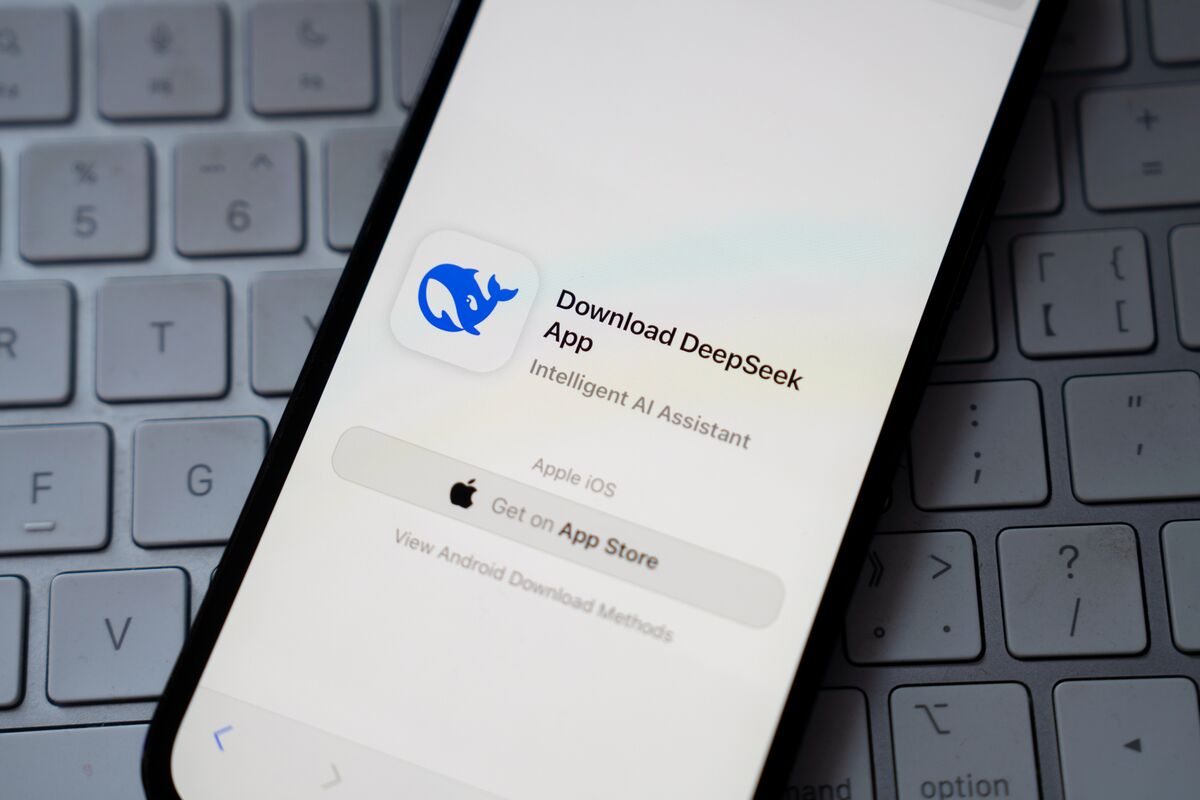
DeepSeek cut pricing on its new flagship DeepSeek-V4-Pro by 75% and slashed input cache-hit fees to one-tenth of prior levels, signaling an aggressive push to win developers in China’s AI market. The move intensifies price competition across the domestic AI industry and could pressure rivals’ monetization. The article is primarily about competitive positioning and lower costs for users rather than near-term financial results.
This is less a pricing event than a distribution grab. By compressing inference economics at the model layer, the vendor is trying to turn price into the default moat before customers fully benchmark multi-model workflows; if it works, the competitive damage shows up first in developer adoption curves, then in enterprise procurement, and only later in revenue. The near-term beneficiaries are application-layer builders and enterprises with high request repetition, because lower cache and inference costs improve unit economics immediately and widen the gap between teams that can optimize prompt reuse versus those that cannot.
The second-order loser set is broader than incumbent Chinese AI labs: cloud platforms that were counting on margin-rich model hosting, API resellers, and systems integrators whose service bundles implicitly relied on model pricing staying sticky. If aggressive discounting is sustained for 2-4 quarters, it forces a move down the stack into compute efficiency and custom silicon rather than pure model quality, which should pressure GPU demand growth rates even if absolute demand still rises. That said, a price war can be self-funding only if utilization stays high; if usage fails to scale fast enough, the market will start questioning whether this is strategic land-grab behavior or a signal that monetization is weaker than implied.
The main reversal catalyst is not a better rival model; it is capital discipline. Any sign of subsidy fatigue, tighter regulatory scrutiny around predatory pricing, or a shift to enterprise contracts with minimum commits would likely re-rate the move as temporary rather than structural. Timing matters: the next 30-90 days should tell us whether this is pulling forward workloads or merely compressing realized ARPU across the sector.
The contrarian view is that the market may be underestimating how deflationary this is for the whole AI stack. Cheaper inference expands TAM by making previously uneconomic use cases viable, which can ultimately benefit the lowest-cost compute providers and the most efficient infra names more than the model vendor itself. In other words, the headline is bearish for pricing power, but potentially bullish for usage volume and the companies that monetize picks-and-shovels rather than model markup.
AI-powered research, real-time alerts, and portfolio analytics for institutional investors.
Request DemoOverall Sentiment
mildly positive
Sentiment Score
0.25
