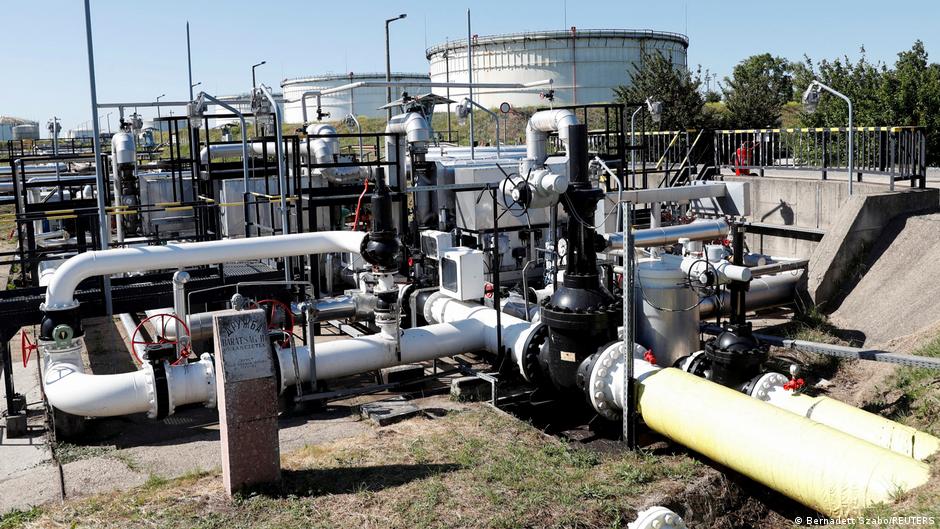
Russian oil flows to Hungary and Slovakia via the Druzhba pipeline restarted after a monthslong interruption, with first shipments expected by Thursday. The restart removes a key obstacle to activating the EU's €90 billion loan package for Ukraine, which Hungary and Slovakia had blocked pending resumed deliveries. The development is modestly supportive for Kyiv's financing outlook, but it also comes amid elevated energy-market तनाव from the Iran war and wider Middle East tensions.
This is less a commodity story than a short-term reduction in EU policy risk premium. The immediate beneficiary is not Russian barrels themselves but any European asset sensitive to a widening of the EU fiscal backstop: once the funding channel for Ukraine is unblocked, a second-order relief trade should show up in Eastern European sovereign spreads, regional banks, and EUR credit more broadly. The key point is that the market had started to price a persistent governance deadlock; removing one veto catalyst can compress tails even if the underlying war-risk remains unchanged.
The bigger medium-term dynamic is that Hungary is likely to become less useful as a spoiler once the domestic political transition takes hold. That matters because the market has been treating Budapest as a durable single-point failure for EU unanimity; if that assumption weakens, the probability of future Ukraine aid approvals rises materially over the next 1-3 months. For energy, restored flows are bearish only at the margin for Central European refinery crack spreads; the larger effect is to stabilize Hungarian and Slovak industrial input costs and reduce the chance of politically motivated emergency interventions in fuel pricing.
The contrarian read is that the oil restart may be viewed as a de-escalation signal even though it does not resolve the underlying structural vulnerability of landlocked Europe to transit disruptions. If the Iran conflict keeps crude elevated, the restart simply delays rather than eliminates pressure on regional inflation and current accounts. Any renewed attack on pipeline infrastructure or a fresh stalemate over the EU loan would quickly reprice the same risk premium, likely over days rather than months.
From a trading perspective, the cleanest expression is to own the normalization of Eastern European policy risk rather than the oil flow itself. The setup favors short-dated downside protection on EU sovereign spread wideners and selective longs in Hungarian and Slovak credit-sensitive financials, while avoiding a broad directional bet on crude until the market confirms the political resolution sticks.
AI-powered research, real-time alerts, and portfolio analytics for institutional investors.
Request TrialOverall Sentiment
neutral
Sentiment Score
0.10
