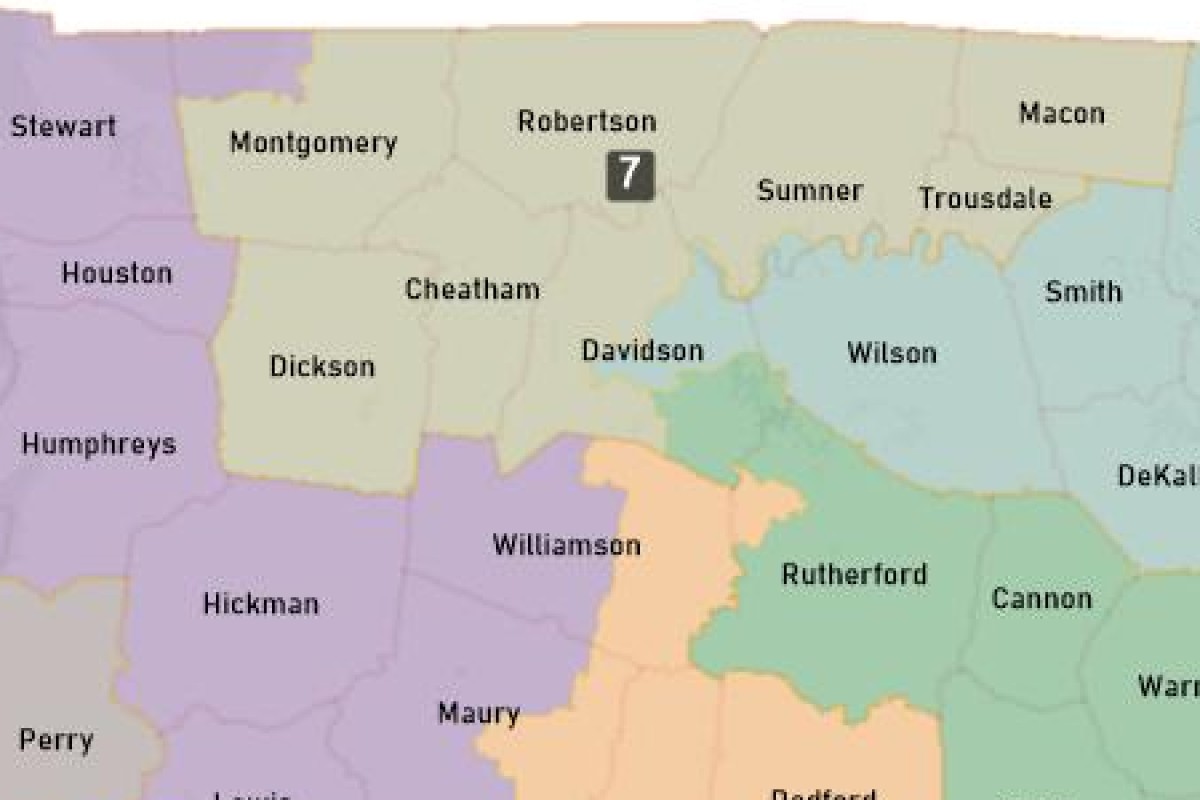
Tennessee lawmakers filed House Bill 7003/Senate Bill 7004 to redraw the state’s congressional map, potentially shifting Montgomery County into new District 5 and District 7 boundaries. The proposal is intended to make the delegation more conservative and remove racial data from the mapmaking process, drawing opposition from local Democrats who say it would dilute Clarksville’s political influence. The redistricting plan is set for committee review with floor votes expected Thursday.
This is less about near-term electoral optics than about institutionalizing a structural incumbent advantage. The important second-order effect is that the state is signaling willingness to optimize for seat-maximization using partisan criteria, which raises the probability of copycat behavior in other red states and keeps the redistricting issue alive through the next 12-24 months of court review and legislative imitation. For markets, the direct earnings impact is nil, but the policy regime implication is real: a more durable conservative congressional bloc marginally improves odds of tax, permitting, and industrial-policy outcomes favorable to Tennessee-based employers over a multi-year horizon.
The near-term catalyst path is binary and fast: committee passage and floor votes can happen within days, but the more tradeable move is the legal and procedural overhang that follows. If the map survives initial challenges, it likely becomes a template for aggressive mid-cycle redraws elsewhere; if litigation stalls or blocks implementation, the signal fades and the political premium reverses. The market should also note that redistricting that splits a metro labor pool can create municipal coordination frictions, but those effects are usually too small to matter unless they alter state funding or infrastructure priorities.
The contrarian point is that the headline is probably already priced into local political risk, while the bigger opportunity is in the beneficiaries of a more reliably pro-business statehouse rather than any election-specific names. The consensus focuses on voting dilution, but the more material investment lens is whether a strengthened conservative delegation increases the odds of business-friendly zoning, permitting, and property-tax discipline in Tennessee over the next 1-3 legislative sessions. That creates a modest but real relative-value tailwind for Tennessee-exposed industrials, logistics, and defense-adjacent assets versus peers in less predictable jurisdictions.
AI-powered research, real-time alerts, and portfolio analytics for institutional investors.
Request DemoOverall Sentiment
neutral
Sentiment Score
-0.05
